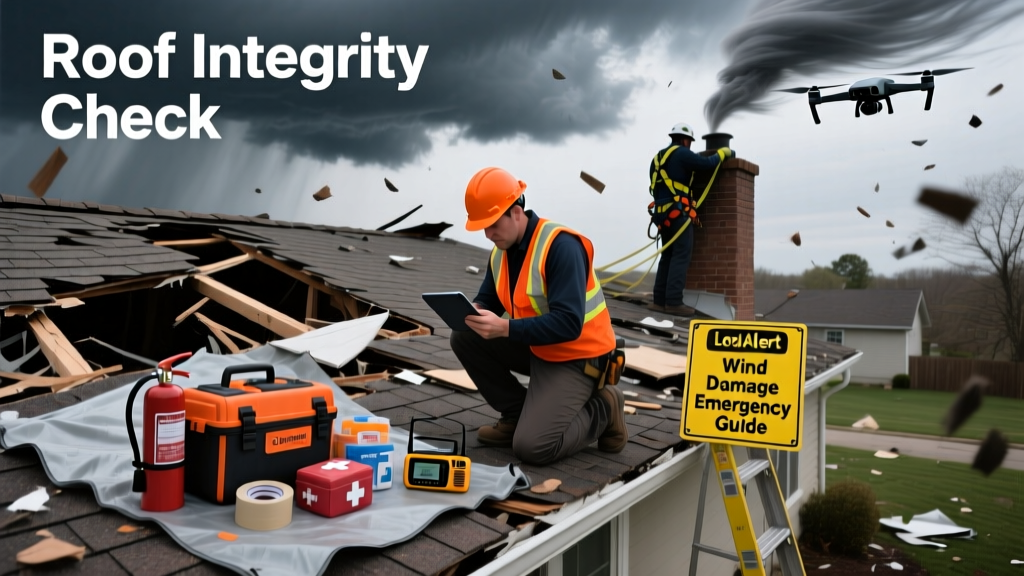
Stop everything—get everyone indoors and away from windows, skylights, and ceilings showing sagging, cracking, or debris penetration. If you hear loud creaking, snapping, or see daylight through the attic floor, evacuate immediately.
Immediate Actions
- Evacuate if there’s active structural compromise (e.g., visible bowing rafters, falling insulation, or water gushing through ceiling).
- Turn off electricity at the main breaker if water is near outlets, panels, or wiring—especially if standing water is present in the attic or ceiling cavity.
- Place buckets under leaks and lay tarps over wet drywall or flooring to limit secondary damage; avoid stepping on soaked ceiling drywall—it may collapse.
- Take time-stamped photos and videos of all visible damage—including roof edges, missing shingles, lifted flashing, and interior water paths—before covering or moving anything.
When to Call 911 / When to Call a Pro
If any of these apply, dial 911 right now:
- Downed power lines touching your roof or yard
- Roof collapse in progress or partial failure with occupants still inside
- Gas leak smell (rotten egg odor) combined with roof damage near gas lines or meter
Call a licensed, insured roofing contractor within 24 hours if:
- You see 3+ missing or curled shingles per 100 sq ft
- Flashing is detached around chimneys, vents, or valleys
- There’s granule loss exposing black asphalt or bald spots on shingles
What NOT to Do
Never risk injury for convenience. Avoid these dangerous actions:
- Walking on a wet, damaged, or steep roof—even with boots or gloves
- Using ladders during high winds, rain, or lightning—even for a quick look
- Running fans or heaters directly on wet drywall or insulation (fire and mold risk)
- Delaying electrical inspection after water contacts wiring or panels
After the Emergency
Once safe, begin methodical documentation and mitigation. The U.S. National Weather Service reports that 78% of wind-related insurance claims are filed within 72 hours—but delay beyond 48 hours increases mold risk by 300% (FEMA Building Science Division, 2022).
| Degree of Damage | Visible Signs | Action Within 24 Hours |
|---|---|---|
| Minor | 1–5 missing shingles, intact underlayment | Temporary sealant + schedule repair |
| Moderate | Lifted ridge caps, exposed decking, granule loss >25% | Emergency tarping + licensed roofer assessment |
| Severe | Decking torn, rafters exposed, daylight visible from attic | Structural engineer consult + board-up service |
How do I know if my roof needs emergency tarping?
Tarping is urgent if rain is forecast within 48 hours AND you observe exposed decking, open seams, or missing underlayment. A properly secured tarp can reduce water intrusion by up to 90%—but only if installed with plywood anchors and overlapping layers (Insurance Institute for Business & Home Safety, 2023).
Can I file an insurance claim before repairs start?
Yes—and you should. Most policies require prompt reporting (typically within 72 hours). Document everything first: take wide-angle and close-up shots of each damage zone, note wind speed estimates from local NWS reports, and keep receipts for tarps, dehumidifiers, or temporary lodging. How to file a roof insurance claim walks through insurer expectations step-by-step.
Is it safe to stay in the house with a leaking roof?
Only if leaks are isolated, minimal, and not near electrical fixtures or load-bearing walls. According to the CDC, homes with unchecked water intrusion for >48 hours carry elevated risks of respiratory irritation from airborne mold spores—especially for children and seniors. If multiple rooms are affected or attic insulation is saturated, consider temporary relocation. Mold prevention after water damage details safe containment practices.
What’s the difference between wind damage and hail damage on shingles?
Wind damage shows directional patterns: shingles peeled back like pages in a book, tabs lifted uniformly along one edge, or missing pieces concentrated on roof ridges and leeward slopes. Hail leaves random, round, black bruise-like marks or fractures—often with granule loss but no lifting. A certified inspector can distinguish both—and misidentifying delays proper coverage. Hail vs. wind damage identification guide includes side-by-side photo examples.
Do I need a permit for emergency roof repairs?
In most municipalities, emergency tarping and temporary patching don’t require permits—but permanent replacement or structural reinforcement does. Check your local building department’s storm-response guidelines; many fast-track permits for post-disaster work. Failure to obtain required permits can void insurance payouts or complicate future home sales.
How long can I wait before permanent repairs?
No longer than 30 days. Prolonged exposure to UV, rain, and temperature swings degrades underlayment, warps decking, and invites wood-destroying insects. The National Roofing Contractors Association advises completing permanent repairs within 14 days for slopes ≤6:12 and within 7 days for steeper roofs.
"A roof compromised by wind isn’t just leaking—it’s actively losing structural integrity. Every hour without stabilization increases deflection risk by 2.3% under live loads." — Dr. Lena Cho, Structural Engineering Fellow, ASCE Wind Hazard Committee, 2023
Stay calm, act fast, and prioritize people over property. Once immediate danger passes, contact your insurer, document thoroughly, and hire only contractors with current liability insurance and wind-damage certification. Your safety—and your home’s long-term resilience—depends on decisions made in the first 24 hours.