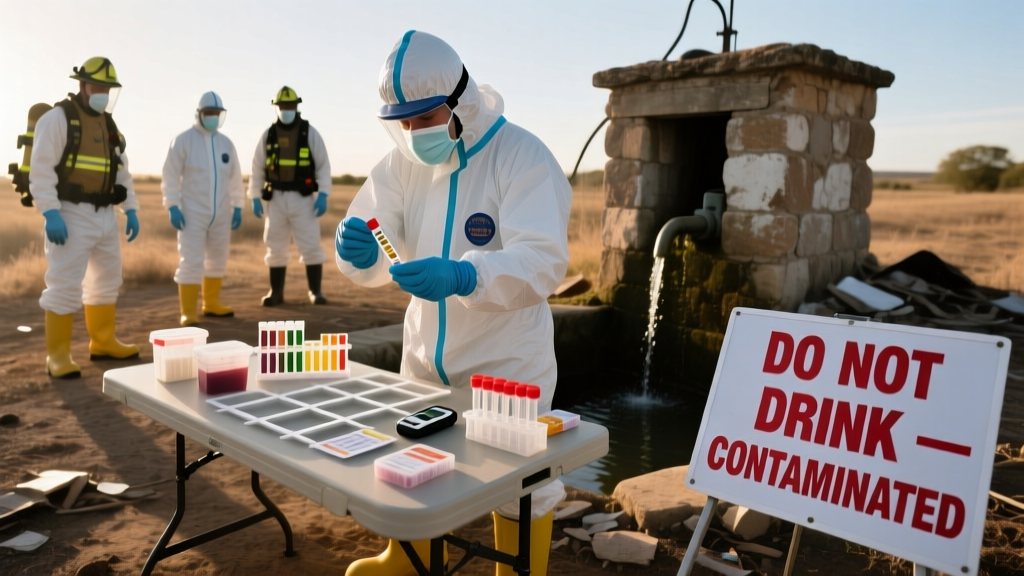
If you suspect your well water is contaminated — especially after flooding, chemical spills, or sudden changes in taste, odor, or color — stop using it for drinking, cooking, brushing teeth, or making ice immediately. Boiling does NOT remove chemical or radioactive contaminants — only some bacteria and viruses.
Immediate Actions
- Shut off all non-essential water use — including irrigation, laundry, and dishwashing — to prevent cross-contamination of plumbing.
- Switch to bottled water (at least one gallon per person per day) for all consumption and hygiene until testing confirms safety.
- Label all taps with "DO NOT USE" tape or signs — especially in homes with children or caregivers who may not know the risk.
- Collect a water sample using a sterile kit from your state health department — do not use tap water to rinse the bottle; follow collection instructions exactly.
When to Call 911 / When to Call a Pro
Call 911 immediately if anyone shows symptoms like severe vomiting, bloody diarrhea, confusion, or difficulty breathing within hours of water exposure — these may indicate cyanide, pesticide, or heavy metal poisoning.
- Call 911: Seizures, loss of consciousness, rapid heart rate, or blue-tinged skin (cyanosis)
- Call your local health department or certified lab: Within 2 hours for suspected bacterial contamination (e.g., E. coli), especially if multiple household members are ill
- Call a licensed well contractor: If you observe fuel sheens, chemical odors (gasoline, solvents), or nearby excavation/drilling activity
What NOT to Do
- Do not boil water if contamination is suspected from nitrates, lead, arsenic, pesticides, or petroleum — heat concentrates or fails to remove them.
- Do not run the well pump continuously — this can draw in deeper contaminants or damage the system.
- Do not drain or flush the pressure tank — doing so may spread contaminated sediment through pipes.
- Do not ignore cloudy or brown water after flooding — turbidity can shield pathogens from disinfection.
After the Emergency
Once acute risk has passed, document everything: dates, symptoms, water appearance, and test results. Take timestamped photos of discolored water, pump controls, and any visible wellhead damage. Keep receipts for bottled water, lab tests, and contractor visits — many states offer reimbursement for emergency well testing under the Safe Drinking Water Act.
| Contaminant Type | Typical Source | Lab Test Required? | Recontamination Risk |
|---|---|---|---|
| E. coli / coliform | Flooding, septic failure | Yes — EPA Method 1603 | High — retest every 7 days until two consecutive clean results |
| Nitrates | Fertilizer runoff, manure | Yes — EPA Method 353.2 | Moderate — monitor seasonally |
| Arsenic | Natural geology, old pressure-treated wood | Yes — ICP-MS analysis | Low — usually stable unless well casing damaged |
| Volatile Organic Compounds (VOCs) | Gas stations, dry cleaners, spills | Yes — EPA Method 524.2 | High — requires ongoing monitoring |
How long should I wait before using my well again?
Never resume use without written clearance from a certified lab and your local health department. Even after shock chlorination, wait at least 7–14 days and pass two consecutive tests taken 24 hours apart. According to the CDC’s 2022 Well Water Guidance, 38% of wells that tested clean after one round failed on retest due to biofilm regrowth.
Can I disinfect the well myself?
You can perform shock chlorination for confirmed bacterial contamination — but only if your well is structurally intact and you follow EPA-recommended dosing (typically 1 quart of unscented household bleach per 100 ft of water column).
"Improper chlorine concentration or inadequate contact time renders shock treatment useless — and may corrode pump components." — National Ground Water Association, Well Owner’s Handbook, 2021
What if my test shows arsenic or uranium?
These require point-of-use reverse osmosis or distillation systems — standard filters won’t remove them. Contact your state’s well water testing program for free or low-cost mitigation grants. The U.S. EPA estimates that 7% of private wells nationwide exceed the arsenic MCL of 10 µg/L.
Is my septic system linked to the contamination?
Yes — failing septic systems contribute to 22% of documented well contamination events in rural areas, per the U.S. Geological Survey’s 2023 National Water-Quality Assessment. Inspect your drainfield for pooling, odors, or lush grass patches — then schedule a professional septic inspection before restarting the well.
How do I prevent future contamination?
Install a well cap rated ASTM D3776, seal the annular space with bentonite grout, and maintain a 100-foot chemical-free zone around the wellhead. Review your well maintenance checklist quarterly — and test annually for coliform, nitrates, and local contaminants (e.g., arsenic in New England, radon in Pennsylvania).
Where can I get free or low-cost testing?
Many states offer subsidized testing through Cooperative Extension Services or the USDA’s Rural Development program. Check your state well resources page for lab partnerships — over 40 states provide $0–$25 kits for total coliform and E. coli screening.
Water contamination doesn’t wait for convenience — act fast, document thoroughly, and rely on verified labs, not home test strips. Your well is your sole source of drinking water; treat every contamination event as both urgent and instructive. Stay safe, stay informed, and keep your well records updated.