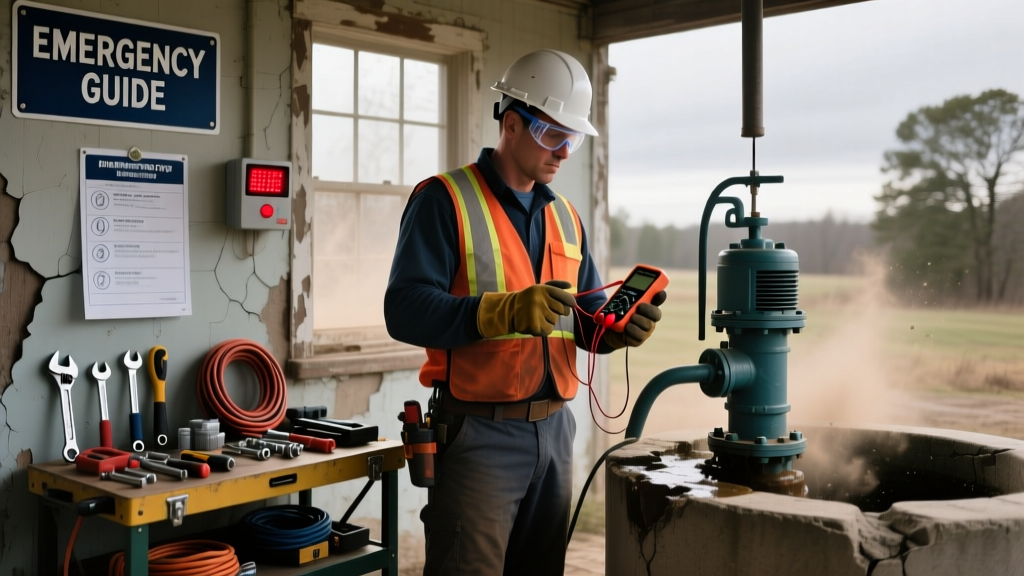
Your water just stopped — no pressure, no flow, maybe a humming noise or silence from the pump house. Don’t wait. Shut off power to the pump at the breaker panel *first* to prevent electrical hazard or motor burnout. Then check for obvious signs: tripped breaker, blown fuse, or visible damage like pooling water or burnt wiring.
Immediate Actions
- Cut power at the main breaker serving the well pump — never touch wet controls or attempt reset if you smell burning or see scorch marks.
- Shut off the pressure tank’s outlet valve (usually a gate or ball valve near the tank) to preserve residual pressure and prevent backflow into the well.
- Test for water contamination: Fill a clean glass with cold tap water. If it’s cloudy, smells of sulfur or fuel, or tastes metallic, assume contamination — stop using it for drinking, cooking, or brushing teeth.
- Switch to emergency water supply — open your stored jugs, fill clean buckets from a known-safe source (e.g., neighbor’s municipal tap), or activate your 72-hour water reserve.
When to Call 911 / When to Call a Pro
If you detect electrical arcing, smoke, or fire near the pump control box or pressure tank, evacuate and call 911 immediately. Also dial 911 if someone shows symptoms of waterborne illness (vomiting, diarrhea, fever) after using well water — especially children or immunocompromised individuals.
Call a licensed well contractor if:
- The breaker trips repeatedly after resetting;
- You hear grinding, clicking, or no sound at all when power is restored;
- Water pressure is weak or intermittent even after checking valves;
- You suspect a broken pipe, frozen line (common in wells with shallow laterals), or dropped pump.
According to the National Ground Water Association’s 2022 Well Owner’s Handbook, 68% of well pump failures stem from electrical issues or pressure switch malfunctions — both requiring certified technicians, not DIY fixes.
What NOT to Do
- Don’t repeatedly flip the breaker — this can overheat wiring and ignite insulation.
- Don’t pour bleach or chemicals into the well without lab-confirmed contamination and professional guidance — improper dosing risks toxic byproducts.
- Don’t run the pump dry — even 30 seconds without water flow can warp impellers and seize bearings.
- Don’t ignore a foul odor or rust-colored water — these may signal a compromised well seal or corroded casing, increasing vulnerability to surface runoff.
"A single hour of dry-running can reduce a submersible pump’s lifespan by up to 40%. Always verify water level in the well before restoring power." — U.S. Department of Energy, Residential Well System Maintenance Guide, 2021
After the Emergency
Once power is safely off and water use is controlled, document everything: time of failure, sounds observed, breaker status, and water appearance/odor. Take photos of the pressure tank gauge, control box, and any visible damage. This helps contractors diagnose faster and supports insurance claims.
Before resuming use, have your well tested by a state-certified lab for coliform bacteria, nitrates, and arsenic — especially if flooding occurred nearby or the pump was submerged. The EPA estimates that 1 in 5 private wells has at least one contaminant exceeding health-based standards (EPA, National Survey of Drinking Water Wells, 2023).
| Use Case | Safe? | Notes |
|---|---|---|
| Drinking & cooking | No | Use bottled or boiled water (rolling boil for 1 minute) |
| Handwashing | Yes (with soap + safe water) | Or use alcohol-based sanitizer if no safe water available |
| Toilet flushing | Yes | Pour 1–2 gallons per flush; avoid chemical cleaners that stress septic |
| Laundry | Conditional | Only if water tests clear; avoid hot washes until system is verified |
How long can I go without well water?
Most households with a standard 120-gallon pressure tank and conservative use can stretch 6–12 hours before reserves run dry. But if your family relies on irrigation, livestock, or medical equipment (e.g., CPAP humidifiers), plan for 24–72 hours of backup supply — review your water storage checklist now.
Can a frozen well line cause pump failure?
Yes — especially in shallow horizontal runs or above-ground piping. Ice blockage creates backpressure that tricks the pressure switch into cycling endlessly, overheating the motor. Inspect exposed pipes in crawlspaces and pump houses; wrap with heat tape *before* temperatures drop below 20°F.
Why does my pump click but not start?
A rapid clicking sound usually means the pressure switch is failing or the control box capacitor is dead. Both are high-voltage components — do not open the box. A licensed well technician can test voltage, continuity, and ground-fault integrity in under 30 minutes.
Is it safe to drink boiled well water after a failure?
Boiling kills bacteria and viruses but *not* heavy metals, nitrates, pesticides, or petroleum compounds. Only boil if lab testing confirms microbial-only contamination. Otherwise, rely on certified bottled water until full water quality results return.
How much does emergency well pump service cost?
Diagnostic visits average $125–$200. Submersible pump replacement runs $1,200–$2,800 (including labor, new wire, and drop cable). Surface pumps cost less ($600–$1,400) but aren’t suitable for deep wells. Ask contractors upfront if they charge overtime for weekend/holiday calls — many do.
Should I install a backup power source for my well?
Yes — especially if you live in storm-prone or rural areas. A 2,000-watt inverter generator can run most 1/2 HP pumps for 8–12 hours on 5 gallons of gas. Pair it with an automatic transfer switch (see wiring guidelines) to eliminate manual startup delays during outages.
Well pump failure isn’t just inconvenient — it’s a cascading risk to health, plumbing, and septic function. Act fast, prioritize safety over speed, and treat every outage as a potential contamination event until proven otherwise. Keep your contractor’s number taped inside your breaker panel — and test your emergency water supply quarterly.