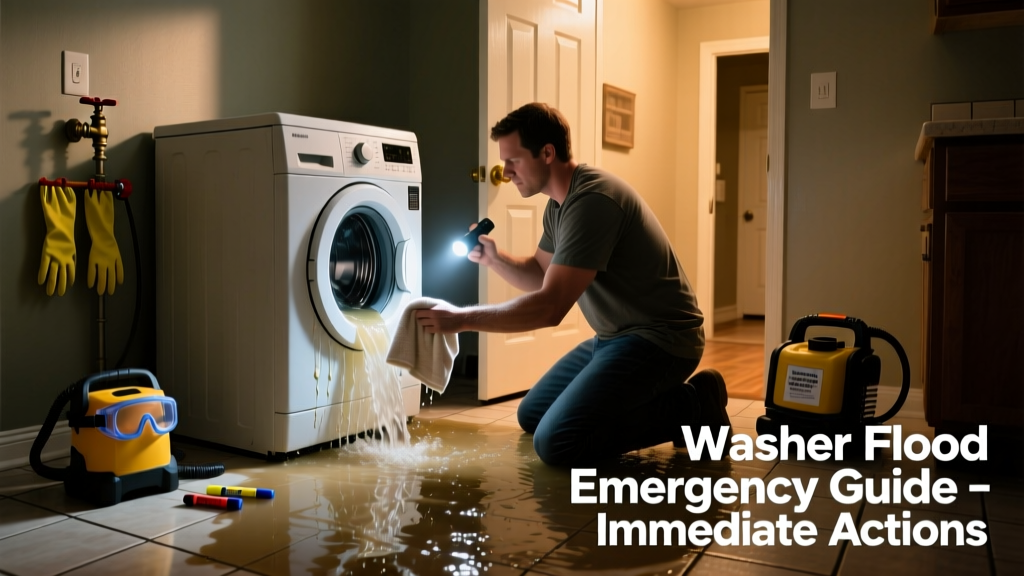
Water is already spraying, pooling, or gushing from your washing machine — act now. Your first move isn’t grabbing towels. It’s cutting power and water supply — within 10 seconds.
Immediate Actions
- Shut off the water supply valves behind the washer (both hot and cold). Turn handles clockwise until tight — don’t force them.
- Unplug the washer immediately — but only if the outlet is dry and you can reach it safely without stepping in standing water.
- Turn off the circuit breaker for the laundry room if water has reached outlets, baseboards, or the washer’s electrical panel. Use a dry wooden stick or insulated tool if needed.
- Stop the leak at its source: If the hose burst, clamp it with a C-clamp or wrap tightly with duct tape *as a temporary seal* — then shut off valves again.
- Evacuate children and pets from the area — especially if water is near electrical panels, gas lines, or stairs.
When to Call 911 / When to Call a Pro
If any of these apply, dial 911 immediately:
- Water contacting live electrical outlets, breakers, or GFCI units that are sparking or buzzing
- Flooding spreading toward gas meter, furnace, or water heater in basement or utility closet
- Standing water over 6 inches deep and rising fast — especially with sump pump failure
Call a licensed plumber or water damage restoration pro (not just a handyman) if:
- Hose burst, inlet valve failed, or drum seal ruptured — confirmed by visible cracks or warped metal
- Water soaked subfloor, insulation, or drywall beyond the laundry room (≥12 inches)
- You smell mold, mildew, or mustiness within 24 hours — indicates microbial growth has begun
What NOT to Do
- Never operate the washer again until a technician clears it — even if water stopped flowing
- Don’t use fans or space heaters to dry carpet or walls — this spreads mold spores and risks fire (per NFPA 2023 Fire Risk Bulletin)
- Avoid walking barefoot — standing water may be electrified or contaminated with detergent, bleach, or sewage (if washer shares drain with toilet)
- Don’t delay shutting off water because “it might be just a drip” — 87% of major washer floods start as small leaks ignored for >48 hours (Insurance Institute for Business & Home Safety, 2023)
After the Emergency
Once water flow stops and electricity is confirmed off, begin documentation and mitigation:
| Area | Check For | Action Required |
|---|---|---|
| Washer itself | Cracked hoses, bulging drum, leaking pump housing | Replace both supply hoses|
| Floor & subfloor | Spongy feel, discoloration, lifting tiles | Call IICRC-certified restorer within 24 hrs|
| Walls & baseboards | Bubbling paint, warped trim, damp drywall above floor line | Test for hidden moisture with a pinless meter|
| Electrical outlets | Corrosion, white powder residue, burnt odor | Require licensed electrician inspection before reuse
Take timestamped photos and video of all wet areas, damaged appliances, and visible mold before cleanup begins. Save receipts for all supplies — most insurers require itemized proof for claims.
How long can water sit before mold starts growing?
Mold spores begin colonizing damp materials within 24–48 hours. The U.S. EPA states that drying must begin within 24 hours to prevent irreversible microbial damage — especially in humid climates or carpeted rooms.
Can I reuse my washing machine after a flood?
Only if a certified appliance technician confirms no internal corrosion, motor winding damage, or control board shorting. Never assume “it still spins” means it’s safe — 63% of post-flood washer failures occur within 3 weeks due to latent electrical faults (AHAM Appliance Reliability Report, 2022).
Are braided stainless steel hoses worth it?
Yes — they reduce burst risk by 92% compared to rubber hoses (per UL 1251 testing, 2021). But they’re not foolproof: replace every 5 years, inspect monthly for kinks or loose fittings, and never overtighten connections.
What’s the average cost of washer flood repairs?
Minor leaks with quick response: $200–$600 (hoses, labor, minor drywall patch). Major flooding with subfloor replacement and mold remediation: $5,200–$18,900 (ServiceMaster Restore 2023 national averages). Insurance typically covers sudden/accidental water damage — but excludes wear-and-tear hose failure unless endorsed.
Should I file an insurance claim for every washer flood?
Only if damages exceed your deductible by ≥2×. Filing small claims raises premiums and may trigger underwriting review. Document everything, but consult your agent first — some policies exclude “failure of supply lines” unless upgraded coverage is purchased.
How do I prevent future washer floods?
Install an auto-shutoff leak detector like the Zircon Leak Alert or Moen Flo — they cut water in under 6 seconds when detecting flow anomalies. Pair with annual hose inspections and replacing all supply lines every 5 years, regardless of appearance.
"A single washer hose failure costs U.S. homeowners an average of $5,640 in insured losses — more than frozen pipe bursts in non-winter months." — Insurance Information Institute, Water Damage Claims Report 2023
Washer floods escalate faster than most people expect. Your speed in the first 90 seconds determines whether it’s a $120 hose replacement or a $15,000 rebuild. Re-read the Immediate Actions section — then post it on your laundry room wall.