Drop everything and get to your designated shelter space *now*—tornadoes can strike with less than 10 minutes’ notice. If a Tornado Warning is issued (not just a Watch), move immediately to your safest interior room on the lowest floor, away from windows.
Immediate Actions
- Get inside—no matter where you are, enter a sturdy building immediately. Never try to outrun a tornado in a vehicle.
- Go to your pre-identified shelter: basement corner under stairs, interior bathroom or closet on ground floor, or FEMA-approved safe room.
- Cover yourself: Use a mattress, heavy blankets, or helmet to protect against flying debris—the leading cause of tornado injuries (NWS, 2022).
- Assume the 'duck-and-cover' position: Kneel facing inward, head down, hands over ears and neck.
- Stay put until local authorities issue an all-clear—do not leave shelter during the warning period, even if the wind dies down.
When to Call 911 / When to Call a Pro
If someone is injured, trapped, or unconscious—or if there’s an active fire, gas leak, or structural collapse—call 911 immediately. Do not delay.
- Call 911 for: Life-threatening injury, uncontrolled bleeding, breathing difficulty, carbon monoxide exposure, or downed power lines near your shelter.
- Call a licensed contractor or restoration pro for: Roof damage, compromised foundation, water intrusion, or broken HVAC systems—especially before re-entry if structural integrity is uncertain.
According to the National Weather Service, 75% of tornado-related fatalities occur in mobile homes or vehicles—making early sheltering the single most effective life-saving action (NWS Fatality Report, 2023).
What NOT to Do
- Do NOT open windows to ‘equalize pressure’—this wastes precious seconds and offers zero protection.
- Do NOT stay in a vehicle unless absolutely unavoidable; if caught outside, lie flat in a ditch and cover your head—but never under an overpass.
- Do NOT use elevators or exterior rooms—even if they have reinforced doors.
- Do NOT assume your garage or attached shed is safe—it lacks structural anchoring and often collapses first.
"A properly anchored, FEMA P-361–compliant safe room provides near-absolute protection—even in EF5 winds. But even a small interior closet with no windows cuts fatality risk by 90% compared to staying in a bedroom." — Dr. Joseph Wozniak, NOAA National Severe Storms Laboratory, 2021
After the Emergency
Wait at least 30 minutes after the last tornado warning expires before exiting shelter. Then assess carefully—many injuries happen during post-storm cleanup.
| Priority | Action | Timeframe |
|---|---|---|
| 1 | Check for injuries and administer first aid | Immediately |
| 2 | Sniff for gas leaks—if detected, evacuate and call utility company | Within 5 minutes |
| 3 | Document damage with photos/video before moving debris | Within 1 hour |
| 4 | Contact insurance agent and file claim | Within 24 hours |
How do I know if my basement is safe enough?
Not all basements offer equal protection. Avoid corners with cinderblock walls unsupported by steel beams. The safest spot is under interior stairs or near load-bearing walls. If your basement has windows or is partially above grade, consider installing FEMA-approved safe room panels or reinforcing with plywood and anchor bolts.
Can I use my storm shelter if it’s underground but not FEMA-certified?
Yes—if it’s structurally sound, fully below grade, and built with reinforced concrete or steel. However, non-certified shelters lack third-party testing for debris impact resistance. For new builds or retrofits, always verify compliance with FEMA P-361 standards.
What should be in my tornado shelter kit?
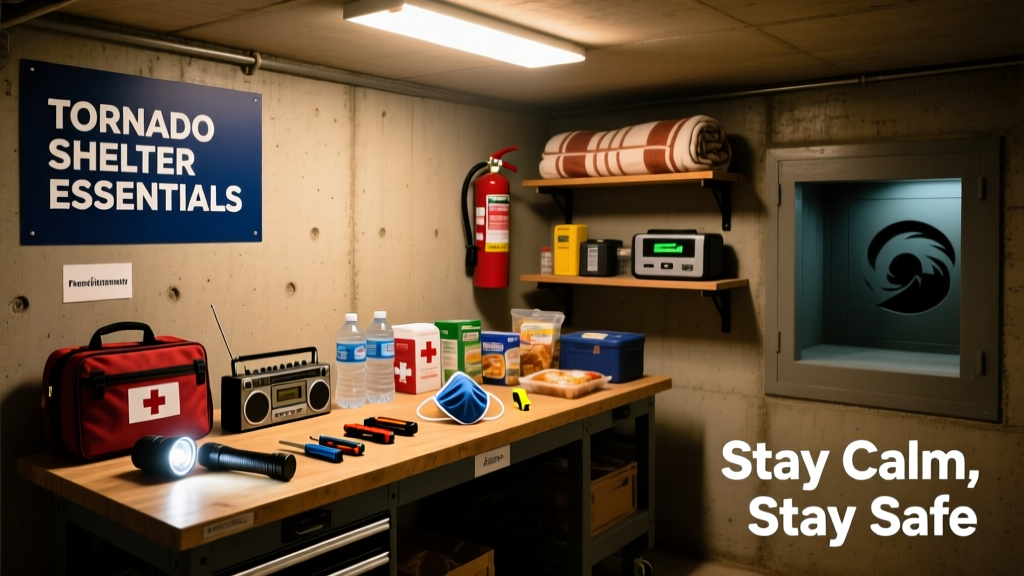
- Flashlight with extra batteries (LED, waterproof)
- NOAA Weather Radio with hand crank
- First aid kit + tourniquet
- 72-hour water (1 gallon/person/day) and non-perishable food
- Whistle, dust masks, work gloves, and duct tape
Is it safe to go back inside after the tornado passes?
Only if you’ve confirmed no downed power lines, visible structural damage (cracked walls, sagging floors), or gas smell. Wear N95 masks and sturdy boots during initial entry—debris may include asbestos, mold spores, or broken glass. If in doubt, wait for emergency personnel clearance or contact a licensed structural engineer.
How soon should I file an insurance claim?
File within 24–48 hours. Delaying increases risk of denied claims due to missing evidence or policy deadlines. Take timestamped photos of all damage—including roof, siding, windows, and interior water intrusion—and save receipts for temporary repairs like tarps or boarding.
What if my shelter flooded during the storm?
Flooding compromises electrical systems and promotes mold growth within 48 hours. Shut off main power *only* if dry and standing on non-conductive surface. Contact a certified water damage specialist immediately—do not attempt DIY drying for more than 2 inches of standing water.
Once the danger has passed, prioritize mental health as much as physical safety. Talk to loved ones, contact crisis counselors via the Disaster Distress Helpline (1-800-985-5990), and avoid prolonged media exposure. Your safety plan works best when practiced monthly—review your emergency plan template today.