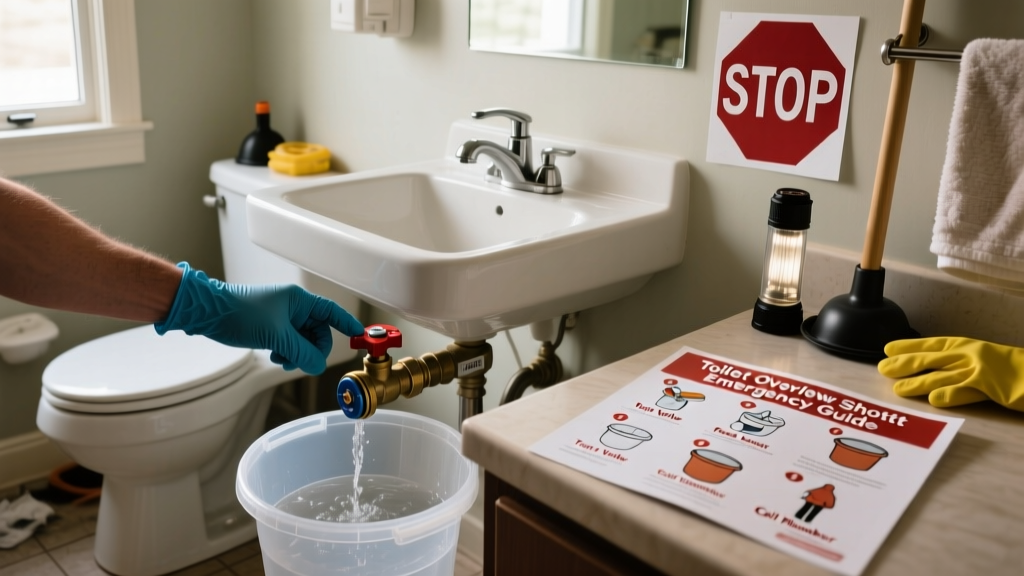
Your toilet is gurgling, rising, or already spilling water onto the floor. Do not flush again. Shut off water at the supply valve behind the toilet—immediately. If that fails or water is rising fast, locate your home’s main water shutoff (usually near the water meter or basement entry) and turn it clockwise until tight.
Immediate Actions
- Shut off water at the toilet’s supply valve (small knob on wall or floor behind tank). Turn clockwise until snug—don’t force it.
- Stop flushing—even once more can push sewage over the rim.
- Place towels or rags around the base to contain spread; avoid stepping in standing water if outlets or appliances are nearby.
- Lift the tank lid and press down the flapper manually to halt inflow if water is still rushing into the bowl.
- Wear rubber gloves and waterproof boots—toilet overflow contains pathogens like E. coli and norovirus (CDC, 2022).
When to Call 911 / When to Call a Pro
If sewage is backing up into multiple drains—or you smell raw sewage in walls, floors, or vents—call 911 immediately. That signals a main sewer line blockage or septic failure, posing acute health and gas hazard risks.
- Call 911 if: water is rising rapidly with no visible drain path, electrical outlets are submerged, or you see black, oily, or foul-smelling liquid.
- Call a licensed plumber within 1 hour if: water is contained, only one fixture is affected, and no sewage odor is present. According to the Plumbing-Heating-Cooling Contractors Association (PHCC), 78% of overflow incidents escalate to pipe damage if unaddressed beyond 90 minutes.
What NOT to Do
- Don’t use chemical drain cleaners—they can react with standing sewage and release toxic fumes.
- Don’t run the garbage disposal or dishwasher—this adds pressure to an already compromised system.
- Don’t ignore wet drywall or subfloor—even 24 hours of moisture exposure raises mold risk by 300% (EPA Mold Remediation Guidelines, 2021).
- Don’t attempt to remove the toilet yourself unless trained. Improper removal can crack the wax seal or break the closet bolt, worsening leakage.
After the Emergency
Once water flow stops and hazards are cleared, document everything before cleanup begins. Photograph standing water, damaged flooring, and visible sewage residue. Note time, date, and actions taken—this supports insurance claims.
| Area | Check for | Action if Present |
|---|---|---|
| Flooring | Squishy spots, discoloration, buckling | Mark area; do not walk on—subfloor may be compromised |
| Baseboards & Walls | Dark streaks, peeling paint, musty odor | Use moisture meter; if >15% reading, consult a water damage specialist |
| Ceiling Below | Stains, sagging, dripping | Place bucket and contact structural inspector—possible joist rot |
Clean non-porous surfaces with a solution of 1 cup bleach per gallon of water. Porous materials (carpet, drywall, insulation) exposed to sewage must be discarded—sewage cleanup safety guidelines require full removal per CDC standards.
Where is my toilet’s supply valve?
It’s typically a small, round or lever-style valve on the wall or floor behind the toilet, connected to a flexible supply line. If hidden behind baseboard or tile, check your home’s plumbing diagram—or look for a label near the water meter. In older homes, it may be under the vanity or in the basement directly below.
Can I use a plunger safely after overflow?
Only if water level has dropped below the rim and no sewage odor is present. Use a flange plunger—not a cup style—and apply steady, controlled pressure. Never plunge repeatedly if water rises—stop and shut off main water instead. Over-pressurizing can blow out seals or crack pipes.
Why did this happen overnight with no warning?
Most clogs develop gradually: toilet paper buildup, mineral deposits, or foreign objects (like wipes labeled “flushable”) constrict the trap or drain line. A 2023 study by the Water Environment Federation found that 62% of residential overflows occur between midnight and 5 a.m., often because slow clogs worsen as water sits undisturbed.
Is my toilet’s fill valve related to the overflow?
No—the fill valve refills the tank *after* flushing. Overflow is almost always caused by a blocked drain, failed flapper, or obstructed vent stack. However, a stuck-open fill valve can cause tank overflow (water running into the overflow tube), which is a separate issue requiring tank leak repair.
How do I prevent future overflows?
Install a toilet shutoff alarm (e.g., Moen Flo or Phyn Plus) that detects abnormal flow and auto-shuts water in under 10 seconds. Also, replace wax rings every 5–7 years, avoid flushing anything beyond toilet paper and human waste, and schedule annual drain camera inspections—especially in homes over 15 years old.
Should I file an insurance claim?
Yes—if sewage or contaminated water contacted flooring, drywall, or HVAC systems. Most standard homeowners policies cover sudden, accidental discharge—but exclude long-term neglect. Document everything before cleaning, and notify your insurer within 24 hours. For help navigating coverage, see our water damage insurance guide.
"A toilet overflow isn’t just messy—it’s a biohazard event. Every minute of standing sewage increases pathogen load and corrosion risk to copper pipes." — Dr. Lena Cho, Environmental Health Specialist, CDC Waterborne Disease Prevention Branch, 2023
Once water is secured and documentation complete, ventilate the room with fans (not AC—avoid spreading aerosols), discard protective gear, and wash hands thoroughly with soap and warm water for at least 20 seconds. If skin contact occurred with sewage, monitor for fever, vomiting, or diarrhea—and seek medical care promptly.