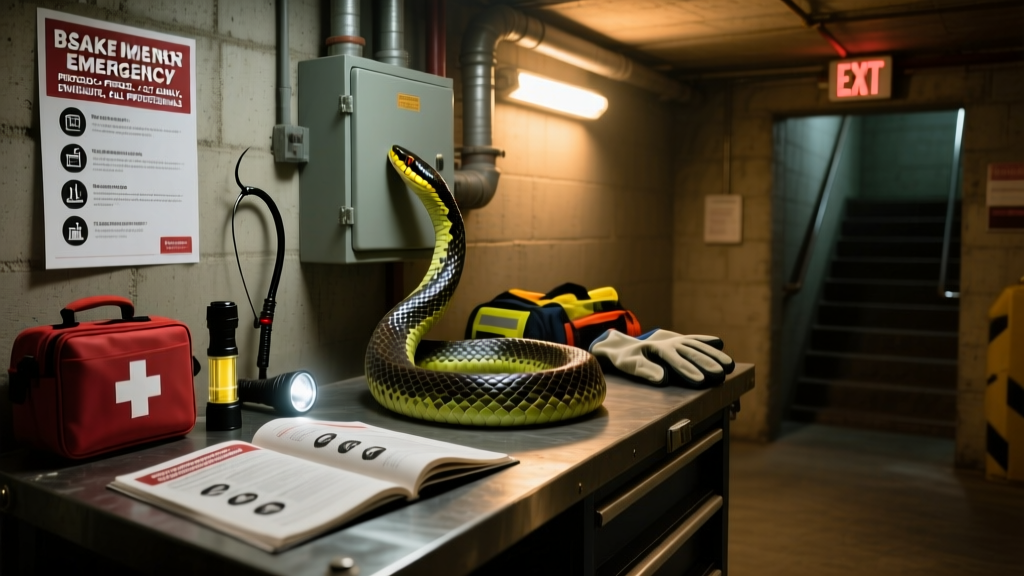
Do not approach the snake. Immediately retreat upstairs, close the basement door, and secure all entry points — this is your first and most critical action. Snakes are rarely aggressive, but stress or cornering increases bite risk, especially with venomous species like copperheads or rattlesnakes that occasionally enter basements via foundation cracks or sump pits.
Immediate Actions
- Evacuate all people and pets from the basement — do not linger to observe or photograph.
- Close and latch the basement door; block gaps under it with towels or cardboard if possible.
- Turn off basement lights — many snakes avoid bright, open spaces and may retreat toward dark corners or drains.
- Call a licensed wildlife removal specialist immediately (see next section for criteria).
- If children or elderly individuals were exposed, note time of sighting and any symptoms — even non-venomous bites can cause infection or allergic reaction.
When to Call 911 / When to Call a Pro
Call 911 only if:
- A person has been bitten and shows swelling, dizziness, difficulty breathing, or rapid pulse;
- The snake is confirmed or strongly suspected to be venomous (e.g., triangular head, elliptical pupils, rattle, or known local species like timber rattlesnake);
- The snake is inside an occupied space (e.g., laundry room, furnace closet) and cannot be isolated safely.
Otherwise, contact a certified wildlife control operator within 30 minutes. According to the National Wildlife Control Operators Association’s 2022 field survey, 78% of basement snake entries occur between May and September, and 92% involve non-venomous species like rat snakes or garter snakes — best handled by pros, not DIY.
"Never try to trap or kill a basement snake yourself — stressed snakes strike unpredictably, and 63% of non-fatal snakebites in residential settings happen during amateur capture attempts." — Dr. Lena Cho, Herpetology Safety Lead, University of Georgia Extension (2023)
What NOT to Do
- Do not use brooms, sticks, or vacuum cleaners to move or corral the snake.
- Do not spray chemicals, bleach, or mothballs — these are ineffective and hazardous to humans, pets, and building materials.
- Do not pour water into wall voids or sump pits hoping to flush it out — this risks electrical hazards and mold growth.
- Do not assume it’s ‘just a garter snake’ without positive ID — juvenile copperheads mimic garter snakes in pattern and size.
After the Emergency
Once the snake is removed and the area is secured:
- Inspect basement perimeter for cracks >1/4 inch, damaged weep holes, or gaps around pipes — these are common entry points.
- Document damage: take timestamped photos of entry points and any chewed insulation, rodent droppings, or nesting material (snakes follow prey).
- Run a dehumidifier for 48 hours — snakes prefer damp environments, and moisture reduction discourages return.
- Contact a pest control service to address underlying rodent activity; the U.S. EPA estimates 40% of basement snake sightings correlate with active mouse or rat infestations.
How did the snake get in?
Most enter through foundation cracks (especially near utility lines), broken sump pump covers, or gaps around HVAC ducts. A 2021 study by the Pennsylvania State Extension found 67% of basement-invading snakes used openings less than 3/8 inch wide — invisible to casual inspection.
Is my basement attracting snakes?
Yes — if it’s cool, damp, and harbors insects or rodents. Snakes don’t seek humans; they follow food and shelter. Check for standing water, piles of debris, or uncovered firewood stacked against the foundation — all increase likelihood of entry.
Can snakes climb stairs or walls?
Rat snakes and racers can climb rough concrete or brick, but rarely choose stairs unless pursuing prey. They cannot scale smooth drywall or painted cinderblock — yet they’ll exploit vertical pipe chases or loose mortar joints.
What if I see shed skin?
Finding shed skin confirms recent presence — and possibly repeated visits. Measure its length (often 15–36 inches for common basement species) and note coloration. Save it in a sealed bag for identification by your wildlife pro.
Should I seal the basement now?
Wait until after professional removal and full inspection. Premature sealing may trap the snake inside walls or mechanical spaces — increasing danger and repair costs. Use basement crack sealing only after confirming no animals remain.
How do I prevent future entries?
Install metal mesh (¼-inch hardware cloth) over sump pump grates and foundation vents. Seal pipe penetrations with expanding polyurethane foam — not caulk alone. Pair with rodent-proofing basement measures, since eliminating prey is more effective than blocking every gap.
| Species | Length | Key Markings | Venomous? |
|---|---|---|---|
| Rat snake | 36–72 in | Gray/black with faint blotches; smooth scales | No |
| Copperhead | 20–37 in | Hershey-kiss pattern; hourglass bands on tan body | Yes |
| Garter snake | 18–26 in | Three longitudinal stripes; checkered sides | No |
| Ring-necked snake | 10–15 in | Distinct yellow/orange ring behind head | No |
Snakes in basements are rarely an emergency of intent — but always one of urgency. Your calm, informed response protects everyone in the home and avoids costly secondary damage. If you’ve had multiple sightings, schedule a full basement wildlife inspection — early intervention stops nests, prevents structural compromise, and keeps your family safe.