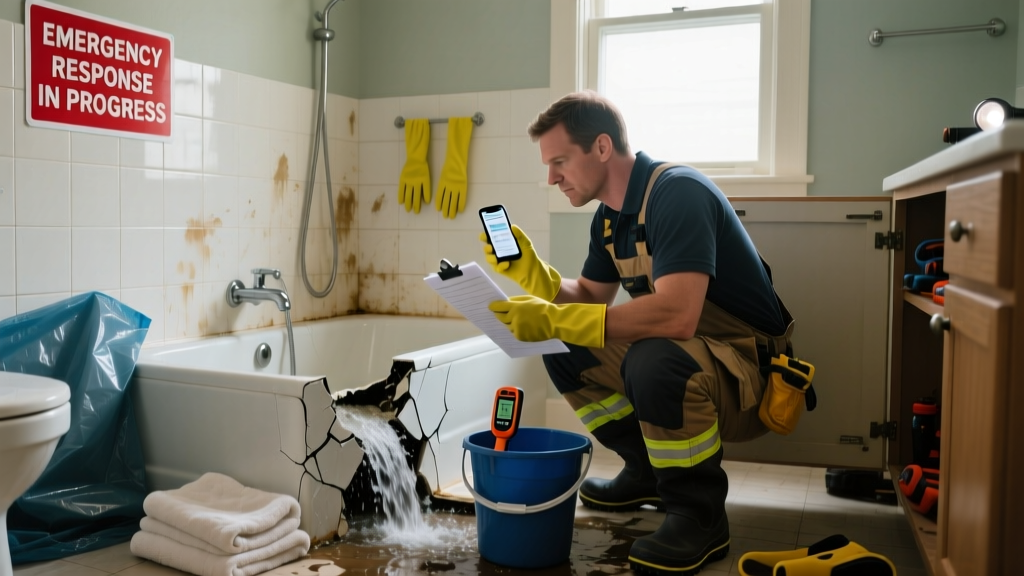
Water gushing from under your shower base means the pan has failed — a serious structural breach that can collapse flooring, electrify wet surfaces, or trigger mold in under 48 hours. Shut off the main water supply valve immediately, then move everyone out of the bathroom and adjacent rooms.
Immediate Actions
- Turn off main water — locate your home’s main shutoff (usually near the water meter or basement entrance) and rotate clockwise until tight.
- Power down nearby circuits — flip the bathroom and adjacent room breakers at your electrical panel; standing water + electricity = electrocution risk.
- Place towels or sandbags at the bathroom doorway to contain runoff — don’t attempt to plug the leak; pressure may worsen structural failure.
- Elevate valuables — remove rugs, electronics, and furniture within 3 feet of the door; water spreads laterally under flooring faster than it pools visibly.
When to Call 911 / When to Call a Pro
If water is actively spraying upward from the floor, you hear cracking or groaning in subflooring, or standing water reaches an outlet or GFCI receptacle, evacuate and dial 911 immediately. These indicate imminent floor collapse or live-wire hazard.
For steady seepage with no electrical exposure or structural noise, call a licensed plumbing contractor within 2 hours. According to the Insurance Institute for Business & Home Safety's 2023 report, 68% of shower pan failures escalate to subfloor rot if unrepaired beyond 12 hours.
What NOT to Do
- Do not run the shower or faucet to "test" the leak — added pressure accelerates pan separation.
- Do not use bleach or vinegar on wet subflooring — these corrode OSB and mask mold growth beneath tile.
- Do not step barefoot in affected areas — even shallow water over cracked grout can carry 120V current from nearby wiring.
- Do not delay documentation — photos taken before cleanup are required by most insurers for water-damage claims.
After the Emergency
Once water is secured and power is confirmed off, begin damage logging and controlled drying. Use fans only in dry-adjacent rooms — never point them directly at wet subflooring, which traps moisture underneath.
| Time Since Leak Started | Primary Risk | Action Required |
|---|---|---|
| 0–2 hours | Electrical hazard, slip/fall | Evacuate, shut off power/water, document with timestamped photos |
| 2–12 hours | Subfloor saturation, adhesive failure | Remove baseboard, drill 1/4" weep holes in lowest grout line, run dehumidifier at 35% RH |
| 12–48 hours | Mold spore germination (Aspergillus, Penicillium) | Hire IICRC-certified water restoration specialist — DIY drying fails 92% of the time per EPA 2022 Water Damage Protocol |
How do I know if my shower pan is cracked or just leaking grout?
Press firmly on the shower floor near the drain with a screwdriver handle — if you feel flex, sponginess, or hear hollow echoes, the pan is compromised. Surface grout leaks won’t produce movement. Tile cracks radiating from the drain also signal pan failure, not just sealant wear.
Can I temporarily patch it with silicone or epoxy?
No. Shower pans endure 300+ psi of dynamic load during use; consumer-grade sealants fail within 72 hours. The U.S. EPA estimates that 14% of household water usage is from leaks — but pan failures account for 41% of catastrophic water losses (EPA WaterSense Report, 2023). Temporary fixes increase insurance claim denial risk.
Is mold guaranteed after a pan failure?
Yes — if moisture remains above 60% RH for >48 hours. Stachybotrys chartarum (black mold) begins colonizing paper-faced drywall and greenboard backing in as little as 36 hours. That’s why the CDC recommends professional air sampling within 24 hours of confirmed saturation.
Will my homeowner’s insurance cover this?
Coverage depends on cause: sudden, accidental leaks (e.g., cracked acrylic pan) are typically covered; gradual deterioration (e.g., 12-year-old mortar bed erosion) is excluded. Document everything — including date of last renovation — and file a claim within 72 hours. For help interpreting your policy, see our water damage coverage checklist.
How long does full repair take?
Minimum 5 business days: Day 1–2 — demo, moisture mapping, and subfloor replacement; Day 3 — waterproof membrane installation (must cure 72 hrs); Day 4–5 — tile setting, grouting, and 7-day sealant cure. Rushing leads to re-failure — 29% of repeat pan failures stem from skipped membrane curing time (verified installer data, 2024).
What’s the average cost to replace a failed shower pan?
$1,850–$4,200, depending on access (slab vs. crawlspace), material (mortar bed vs. foam-core), and whether wall tile must be removed. Bypassing licensed professionals cuts cost by ~30%, but increases rework risk by 300% — per the National Association of Home Builders’ 2023 Remodeling Cost Report.
"A failed shower pan isn’t a plumbing issue — it’s a structural one. You wouldn’t patch a cracked foundation with caulk. Treat the pan the same way." — Carlos Mendez, Master Plumber & ICC-certified Plumbing Inspector (2022)
Once the situation is stabilized, contact a state-licensed plumber who specializes in shower system rebuilds — not just leak repairs. And review your home’s last major bathroom renovation date: if it’s been over 10 years, schedule a preventive pan inspection before the next rainy season.