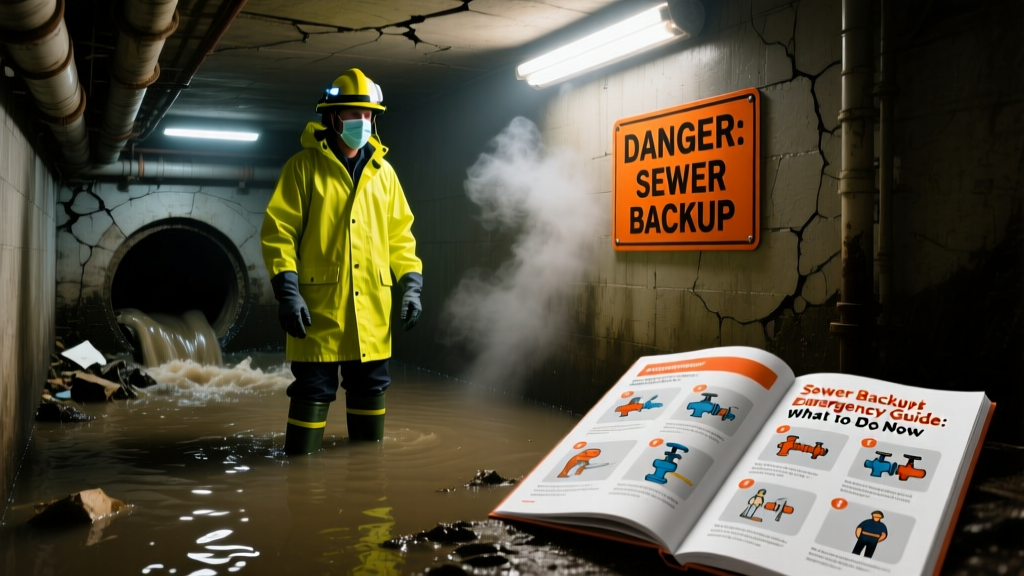
Stop using all water fixtures immediately—no flushing, no sinks, no showers. Sewer backups release raw sewage containing bacteria, viruses, and toxins; exposure can cause hepatitis A, E. coli infection, or respiratory illness within hours.
Immediate Actions
- Evacuate children, pets, and vulnerable adults from affected areas—especially basements or ground-floor rooms with standing sewage.
- Turn off electricity at the main breaker if standing water is near outlets, panels, or appliances (only if you can do so safely—do NOT step in water to reach the panel).
- Wear waterproof boots, N95 respirator, disposable gloves, and goggles before entering contaminated zones—even for brief assessment.
- Shut off the main water supply valve (usually near your water meter or basement wall) to prevent additional wastewater from entering pipes.
- Open windows for ventilation—but only if outdoor air quality is safe and weather permits.
When to Call 911 / When to Call a Pro
Call 911 immediately if:
- Raw sewage is rising rapidly into living spaces with no visible drain outlet;
- You smell hydrogen sulfide (rotten egg odor) and feel dizziness, nausea, or shortness of breath—this signals dangerous gas buildup;
- Electrical outlets or appliances are submerged and energized;
- A person has swallowed sewage or developed vomiting/diarrhea after exposure.
Call a licensed plumber or certified water damage restoration company (like water damage restoration specialists) if:
- The backup is isolated to one drain and stopped after shutting off water;
- You see slow drainage in multiple fixtures but no visible overflow;
- You suspect tree roots or collapsed pipe—confirmed via camera inspection.
According to the U.S. EPA’s 2022 Wastewater Exposure Response Guidelines, 68% of sewer backup injuries occur during attempted DIY cleanup without PPE.
"Never assume 'small' backups are safe—just 1/4 inch of sewage water contains up to 1 billion E. coli organisms per liter." — CDC Environmental Health Services, 2023
What NOT to Do
- Do NOT run dishwashers, washing machines, or garbage disposals—this forces more waste into compromised lines.
- Do NOT use bleach alone on sewage-soaked carpets or drywall—it masks odor but doesn’t kill parasites like Giardia or Cryptosporidium.
- Do NOT enter flooded basements barefoot or in sandals—even clean-looking water may contain needle sticks or broken glass.
- Do NOT wait to document damage: photos taken before cleanup are essential for insurance claims.
After the Emergency
Once the line is cleared and sewage flow stops:
- Photograph all damage—including walls, flooring, baseboards, and HVAC vents—with timestamps.
- Discard porous materials soaked for >48 hours: carpet padding, drywall below 12 inches, insulation, upholstered furniture.
- Hire an IICRC-certified firm for antimicrobial fogging and ATP testing—required before reoccupancy in most municipalities.
- File a claim with your insurer within 72 hours; note that standard homeowners policies typically exclude sewer backups unless you added endorsement HO-04-11 (sewer backup coverage).
Is it safe to stay in the house during cleanup?
No. The CDC recommends vacating until post-remediation clearance testing confirms airborne mold spores and coliform bacteria are below EPA-recommended thresholds. Even with fans and dehumidifiers running, volatile organic compounds (VOCs) from decomposing waste persist for days.
Can I use my toilet after the backup stops?
Only after a plumber clears the main line AND performs a smoke test or camera inspection. Flushing too soon can trigger a second backup—especially if blockage remains downstream of your property line. Municipalities often require a permit for sewer line repairs affecting public infrastructure.
Why did this happen in the first place?
Common causes include: tree root intrusion (62% of residential line failures, per National Association of Plumbing Inspectors 2023 data), aging clay or cast-iron pipes, heavy rainfall overwhelming municipal systems, or grease buildup from kitchen drains. Older homes built before 1975 are 3x more likely to experience collapse, according to the American Society of Civil Engineers’ Infrastructure Report Card.
Does renter’s insurance cover sewer backup?
Rarely—most basic policies exclude it. Renters must purchase optional sewer backup endorsement (often under “water backup” coverage) separately. Tenants should notify landlords immediately: under most state laws, landlords are responsible for main sewer line maintenance up to the property line.
How long does safe cleanup take?
Minimum 3–5 days for minor backups (<2 sq ft), 10–14 days for full-basement events. Drying must achieve ≤15% moisture content in subflooring—verified with a moisture meter—not just surface dryness. Skipping third-party verification risks insurance denial and hidden microbial growth behind walls.
Should I test well water after a sewer backup?
Yes—if your home uses a private well and the backup occurred within 100 feet of the wellhead. The EPA requires coliform and nitrate testing within 72 hours. Contamination can take 5–14 days to appear in lab results, so boil-water advisories should remain in effect until certified clear.
Recovery starts with safety—not speed. Prioritize health over haste: every minute spent avoiding exposure saves days of medical recovery. For long-term prevention, consider installing a backwater valve (cost: $1,200–$2,500) and scheduling annual sewer line inspections—especially if your home is near mature trees or built before 1980. Learn more about flood damage response and post-sewage mold remediation.
| Timeframe | Action | Responsible Party |
|---|---|---|
| 0–15 minutes | Shut off water, evacuate, ventilate | Homeowner/tenant |
| 15–60 minutes | Call 911 (if hazardous) or plumber | Homeowner/tenant |
| 1–24 hours | Document damage; contact insurer | Homeowner/tenant |
| 24–72 hours | Begin professional remediation | Certified restoration firm |
| 72+ hours | Post-remediation clearance testing | Third-party industrial hygienist |