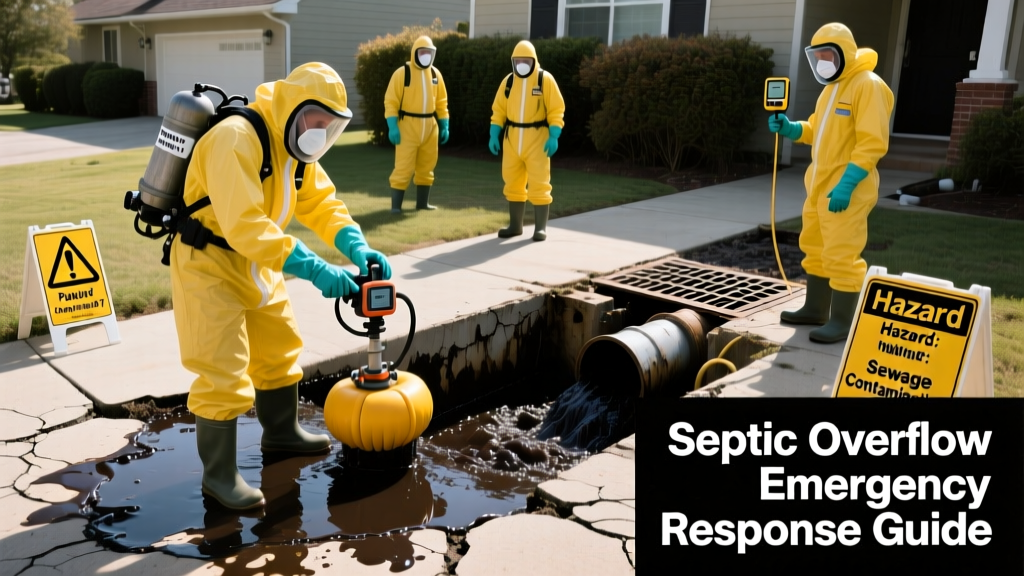
Stop using all water fixtures immediately — no flushing, washing, or running taps. Septic overflow means raw sewage is backing up into your home or yard, posing serious health hazards from bacteria, viruses, and parasites like E. coli and hepatitis A.
Immediate Actions
- Evacuate children, pets, and vulnerable individuals (elderly, immunocompromised) from affected areas — especially basements or bathrooms with standing sewage.
- Turn off electricity at the main breaker if standing wastewater is near outlets, switches, or the electrical panel (only if you can do so safely and dry-footed).
- Shut off the main water supply valve — usually near your water meter or where the line enters the house — to prevent further flow into the failing system.
- Open windows for ventilation (if safe), but avoid using fans or HVAC systems that could aerosolize pathogens.
- Wear waterproof gloves, rubber boots, N95 mask, and eye protection before approaching any contaminated area.
When to Call 911 / When to Call a Pro
Call 911 immediately if:
- Sewage is entering your home’s living space (e.g., kitchen floor, bedroom carpet) and you cannot isolate it;
- Someone has ingested sewage or shows symptoms like vomiting, high fever, or bloody diarrhea;
- Overflow is contaminating a nearby well, stream, or playground — especially in flood-prone or rural areas.
Call a licensed septic contractor (not just a plumber) within 2 hours if:
- Overflow is confined to your drainfield or yard (no indoor backup);
- You see slow drains, gurgling sounds, or persistent foul odors without visible sewage;
- Your system is older than 20 years or hasn’t been pumped in 3+ years.
According to the U.S. EPA’s 2022 Onsite Wastewater Treatment report, over 25% of septic failures result from delayed response to early warning signs like pooling water or sulfur smells — turning minor issues into hazardous emergencies.
What NOT to Do
- Do NOT use toilets, sinks, showers, dishwashers, or washing machines — even once.
- Do NOT attempt to “clear” the blockage with chemical drain cleaners — they won’t fix septic failure and can damage pipes or contaminate groundwater.
- Do NOT walk barefoot or allow pets in contaminated zones — hookworm larvae and Giardia cysts survive in soil for weeks.
- Do NOT hose down or pressure-wash sewage — this spreads pathogens instead of containing them.
After the Emergency
Once professionals confirm the system is secured and wastewater is removed:
- Document everything: photograph overflow location, depth, odor intensity, and visible damage — insurers require this for claims.
- Hire a certified industrial hygienist (not just a cleaning company) for biohazard remediation — standard bleach doesn’t neutralize norovirus or parasitic eggs.
- Request a full septic inspection and dye test from a state-licensed provider before resuming normal water use.
- File a claim with your homeowner’s insurance — note that most policies exclude routine maintenance but may cover sudden, accidental discharge (per ISO Homeowners Policy Form HO-3, 2023 edition).
How long does cleanup take?
Professional biohazard remediation typically takes 1–3 days for a single-point basement backup. Full septic system repair or replacement (e.g., new drainfield or pump station) requires 5–14 business days — weather and permit approvals affect timelines.
Can I stay in my home during cleanup?
No — not if sewage entered living areas. The CDC advises temporary relocation until air quality testing confirms pathogen levels are below 1 CFU/m³ for total coliforms. Mold growth can begin in under 48 hours on damp drywall or carpet padding.
Is septic overflow covered by insurance?
Only if caused by sudden, accidental events — like tree root intrusion cracking a pipe or a failed pump. Routine neglect (e.g., skipping pumping for 7 years) is excluded. Review your policy’s ‘water backup’ endorsement — fewer than 40% of standard HO-3 policies include it (Insurance Information Institute, 2023).
What’s the average cost of emergency septic service?
| Service Type | Average Cost | Time to Dispatch |
|---|---|---|
| Emergency pump-out + diagnostics | $450–$850 | 2–6 hours |
| Drainfield excavation & repair | $8,200–$15,600 | 3–10 days |
| Full system replacement (gravity) | $12,000–$25,000 | 2–6 weeks |
Costs vary significantly by region — New England and Pacific Northwest rates run 22–35% higher due to soil testing and permitting complexity.
How do I prevent future overflows?
Install a septic alarm system ($180–$320) that detects rising effluent levels before backup occurs. Pair it with quarterly inspections and pumping every 3 years for households of 4 or fewer — or every 2 years if you use a garbage disposal or have a high-efficiency toilet (which increases hydraulic load). For long-term resilience, consider upgrading to an aerobic treatment unit if your county allows it — they reduce failure risk by 68% compared to conventional tanks (National Small Flows Clearinghouse, 2021).
Where can I find a licensed septic contractor?
Start with your state’s environmental or health department — most maintain searchable databases of certified providers. In Texas, use the Texas Commission on Environmental Quality portal; in Florida, check the Florida Department of Health’s Licensed Septic Professionals list. Avoid contractors who ask for full payment upfront or don’t carry liability insurance — verify credentials at VerifySepticLicense.org.
"A septic overflow isn’t a plumbing clog — it’s a public health event. Every minute you delay evacuation or professional response multiplies pathogen exposure risk." — Dr. Lena Torres, Environmental Health Specialist, CDC Waterborne Disease Prevention Branch, 2023
Act fast, protect your people first, and never assume 'it’ll stop on its own.' Your septic system has zero margin for error once overflow begins — treat it like the biological hazard it is.