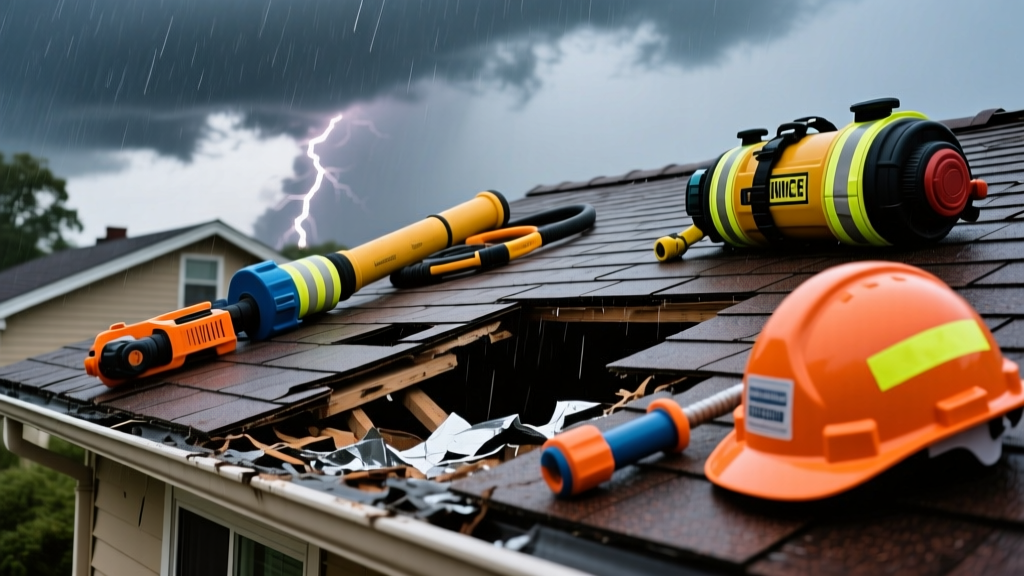
Water is already dripping — don’t wait for the storm to pass. Move people and pets away from the leak immediately, then place buckets and towels directly under active drips. Every minute counts before ceiling collapse or electrocution risk rises.
Immediate Actions
- Evacuate anyone beneath the leak — especially near light fixtures, ceiling fans, or outlets (risk of shock).
- Place clean buckets, pots, or plastic bins directly under each drip point — center them, not just nearby.
- Lay thick towels or tarps on the floor to absorb runoff and prevent slip hazards.
- If safe and accessible, climb into the attic with a flashlight — look for water streaming down rafters or pooling near vents (do NOT stand on wet insulation).
- Turn off power to that area at the breaker panel if you see water near wiring or outlets.
When to Call 911 / When to Call a Pro
Call 911 if:
- You hear cracking, popping, or sagging in the ceiling or roof structure;
- Water is contacting live electrical wires, outlets, or your main panel;
- There’s visible smoke, burning smell, or sparking near the leak.
Call a licensed roofing contractor or emergency restoration service (not a general handyman) if:
- The leak is steady but no structural sounds or electrical hazards exist;
- It’s raining heavily and water is entering faster than buckets can catch it;
- You spot daylight through the roof deck or missing shingles from inside the attic.
According to the National Fire Protection Association’s 2023 Electrical Safety Report, 12% of residential electrical fires begin with water intrusion near junction boxes — making prompt power shutdown critical.
What NOT to Do
- Do NOT climb onto the roof during high winds, rain, or lightning — 68% of storm-related roof injuries occur during attempted DIY repairs (OSHA, 2022).
- Do NOT use extension cords or appliances near wet floors or standing water.
- Do NOT remove soaked ceiling drywall yourself — it may be unstable and could collapse without warning.
- Do NOT ignore small leaks — the U.S. EPA estimates that a single 1/8-inch hole in roofing can let in over 15 gallons of water per hour during heavy rain.
After the Emergency
Once the storm passes and the area is confirmed safe:
- Photograph every drip location, ceiling stain, wet insulation, and attic entry point — timestamped and wide-angle + close-up.
- Label each photo with location (e.g., “Master bedroom ceiling, NW corner”) and time.
- Contact your insurer within 24 hours — most policies require prompt reporting to avoid claim delays.
- Run dehumidifiers and fans in affected rooms (if power is safe) — keep humidity below 50% for 72+ hours to prevent mold growth (per CDC guidelines, 2023).
| Source | Typical Sign | Urgency | Action Window |
|---|---|---|---|
| Failed flashing around chimney | Dark streaks on chimney brick + ceiling stain below | High | 24–48 hrs |
| Lifted or missing shingle | Visible gap, granule loss, localized drip | Moderate | Within 3 days |
| Rotted roof deck (wood) | Spongy feel in attic, black mold on underside | Critical | Immediate pro assessment |
| Clogged gutter overflow | Water backing up behind fascia, dripping at soffit | Low-Moderate | Within 1 week |
Can I cover the leak with a tarp myself?
Only if the roof is dry, wind is calm (<15 mph), and you have fall protection. Never attempt during or right after rain. A poorly secured tarp can tear loose and become a projectile — or worsen water infiltration by trapping moisture underneath. For safe temporary fixes, see our roof tarping safety checklist.
Is it safe to sleep in the room with a leak?
No — even small leaks can cause hidden structural weakening or mold spores to aerosolize overnight. Relocate sleeping areas until a professional confirms dryness and integrity. The CDC advises avoiding prolonged exposure to damp indoor environments due to respiratory risks.
Will my homeowner’s insurance cover storm-related roof leaks?
Most standard policies do — but only if the damage resulted directly from a covered peril (e.g., wind-driven rain, hail impact). Wear-and-tear or pre-existing neglect (e.g., unaddressed moss buildup for 2+ years) may be denied. Document everything before cleanup — read our full breakdown in roof insurance claims guide.
How fast can mold grow after a roof leak?
Mold spores can colonize within 24–48 hours in humid, porous materials like drywall or insulation. The CDC states visible mold growth often appears by day 3–5 if moisture remains above 60% RH. That’s why drying must start within hours — not days.
Should I replace the whole roof or just patch it?
Depends on age and extent. Roofs older than 15 years with multiple leaks, curling shingles, or granule loss in gutters usually need full replacement. Isolated damage under 5% of total area may qualify for repair — but only after an inspector rules out decking rot. Get quotes from at least two licensed, insured roofers before deciding.
What if the leak stops after the storm ends?
Don’t assume it’s fixed. Intermittent leaks often indicate compromised flashing or subtle deck warping — problems that worsen with the next rain. Hire a certified inspector within 5 business days. Thermal imaging and moisture meters can detect hidden saturation invisible to the eye.
"A roof leak isn’t just about water coming in — it’s about what’s already compromised beneath: insulation R-value drops 40% when wet, and untreated wood loses 30% of its structural strength within 72 hours." — Dr. Lena Cho, Building Science Fellow, IBHS, 2023
Storms don’t wait — neither should your response. Prioritize safety over savings, document everything before wiping a single drop, and never hesitate to call 911 when electricity and water mix. Your roof may need repair, but your family’s safety is non-negotiable.