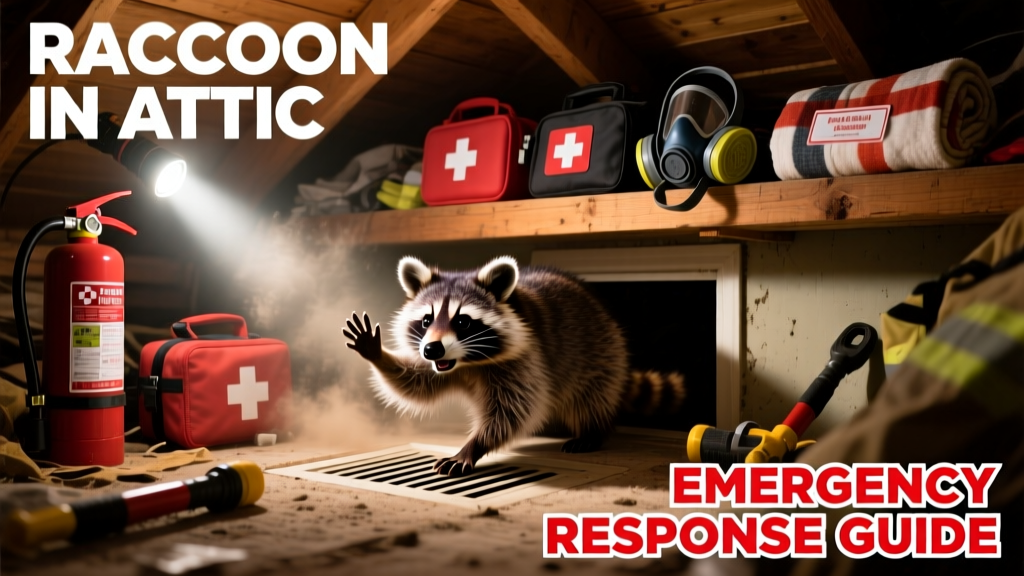
Stop. Do not enter the attic. Raccoons in attics are unpredictable—especially mothers with kits—and may bite or scratch if cornered. Your first move is to secure all interior access points (hatch doors, pull-down stairs, ceiling vents) and evacuate children and pets from nearby rooms.
Immediate Actions
- Turn off attic lights and minimize noise—raccoons are nocturnal and may retreat temporarily into insulation or rafters.
- Close and lock all interior doors leading to the attic (including closet ceilings, bathroom fans, and HVAC returns).
- Open windows on the *lowest* floor of your home to encourage air circulation—this discourages nesting but does NOT lure them down.
- Call a licensed wildlife removal specialist immediately—even if you hear silence; raccoons can remain hidden for days.
When to Call 911 / When to Call a Pro
If you hear aggressive snarling, repeated thumping against drywall, or see a raccoon visibly injured, bleeding, or behaving erratically (staggering, foaming, or attacking objects), call 911 *immediately*. These are potential signs of rabies or distemper. According to the CDC’s 2023 Rabies Surveillance Report, raccoons account for 30.6% of all reported rabid wildlife cases in the U.S.
- Call 911: Suspected rabies exposure, raccoon inside living space (e.g., bedroom or hallway), or human/animal bite incident.
- Call a wildlife pro: Confirmed attic presence, droppings, nesting sounds, or damaged insulation—within 24 hours.
What NOT to Do
- Never attempt to trap or corner a raccoon yourself—72% of DIY trapping attempts result in injury or escape, per the National Wildlife Control Operators Association’s 2022 field survey.
- Don’t use mothballs, ammonia, or ultrasonic devices—they’re ineffective and violate EPA pesticide labeling rules.
- Avoid attic entry—even with gloves and mask—until professionals confirm the space is clear and decontaminated.
"Raccoons don’t ‘just leave.’ They establish latrine sites, chew wiring, and contaminate insulation with parasites like Baylisascaris procyonis—a roundworm whose eggs can survive years in attic dust and cause severe neurological damage in humans." — Dr. Sarah Lin, Wildlife Zoonosis Specialist, Cornell University College of Veterinary Medicine, 2023
After the Emergency
Once raccoons are removed, inspect for structural damage, fecal contamination, and chewed wires. Document everything with timestamped photos before cleanup begins.
| Area | What to Look For | Action Required |
|---|---|---|
| Insulation | Matting, urine saturation, visible feces | Full replacement—do not vacuum or sweep (aerosolizes parasite eggs) |
| Wiring | Bite marks, exposed copper, frayed sheathing | Electrical inspection + rewiring per NEC Article 300.4 |
| Ventilation | Gaps >1 inch, chewed soffits, missing screening | Install 0.25-inch galvanized steel mesh (not hardware cloth) |
How long do raccoons stay in an attic?
Mothers with young typically occupy an attic for 8–12 weeks—from birth until kits are mobile enough to follow her out. If you hear high-pitched chirping or rustling at dawn/dusk, kits are likely present. Never separate mother and young—this triggers defensive aggression and orphaned kits often die in walls.
Can raccoons chew through drywall?
Yes—raccoons routinely gnaw through drywall, plasterboard, and even PVC vent pipes to create entry/exit routes. Their incisors grow continuously, requiring constant wear. A single adult raccoon can compromise up to 3 linear feet of drywall in one night.
Are raccoon droppings dangerous?
Extremely. Baylisascaris eggs in raccoon feces resist heat, cold, and most disinfectants. Inhaling or ingesting even one egg can lead to larval migration in human brain or eye tissue. Always hire a NADCA-certified duct cleaner and IICRC-accredited biohazard remediation team for attic cleanup.
Will repellents keep raccoons away?
No proven repellent exists. The U.S. EPA has not registered any chemical repellent for raccoons due to lack of efficacy and safety data. Physical exclusion—sealing all openings ≥1 inch—is the only reliable method. See our attic vent sealing guide for step-by-step metal flashing techniques.
How much does professional raccoon removal cost?
Most licensed operators charge $350–$950 for full service: inspection, humane trapping, exclusion, and basic cleanup. Costs rise sharply if feces require HEPA vacuuming or insulation replacement—budget $1,200–$2,800 for full remediation. Check if your homeowner’s policy covers wildlife damage; many do under ‘sudden and accidental’ clauses. Review your wildlife insurance coverage checklist before filing a claim.
Should I check my attic after heavy rain?
Yes. Raccoons seek shelter during storms—and wet insulation attracts them as nesting material. Inspect within 24 hours of heavy rainfall for new entry points, especially around roof valleys, chimney caps, and gable vents. Refer to our roof entry point identification guide for visual markers.
Once the raccoons are gone and repairs complete, install motion-activated attic lighting and schedule biannual inspections. Prevention isn’t optional—it’s the only way to avoid repeat infestations, costly damage, and health risks. Act now, act safely, and never go it alone.