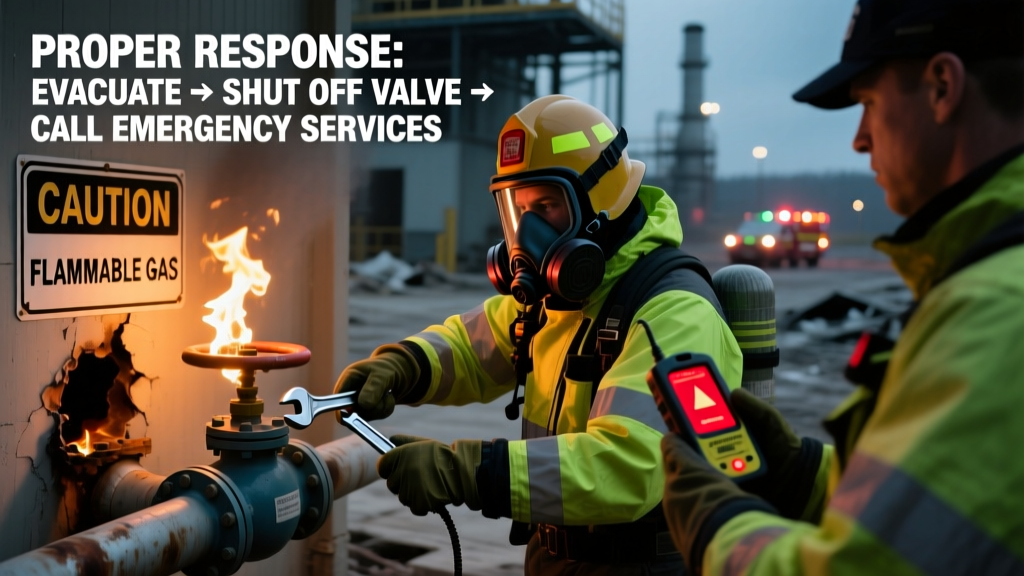
If you smell rotten eggs, hear hissing near a propane tank or appliance, or feel dizziness or nausea, act now — propane is odorless by design but treated with ethyl mercaptan for detection. Evacuate immediately. Do not flip switches, use phones, or light matches — even static sparks can ignite gas.
Immediate Actions
- Leave the area at once — get everyone (and pets) outdoors, upwind if possible.
- Shut off the propane supply at the main valve on the tank (turn clockwise) — only if you can do so safely and without delay.
- Do not re-enter the building or vehicle until cleared by professionals.
- Call for help from a safe distance — use a cell phone outside or a neighbor’s landline.
When to Call 911 / When to Call a Pro
Call 911 immediately if:
- You smell gas and cannot locate or shut off the source;
- You hear persistent hissing or see bubbling liquid around the tank;
- Someone shows signs of propane poisoning (headache, nausea, confusion, blue lips).
Call a licensed propane technician (not your supplier’s general line) for:
- Minor odor complaints with no symptoms or visible signs;
- Leak verification after evacuation and ventilation;
- Post-leak system inspection and pressure testing.
According to the National Fire Protection Association’s Fire Loss Statistics 2023, propane-related fires caused an average of 70 civilian deaths annually between 2019–2022 — most occurring before evacuation or during unsafe attempts to locate leaks.
What NOT to Do
- Never use lighters, matches, candles, or cigarettes;
- Never operate light switches, doorbells, garage door openers, or appliances;
- Never start vehicles or engines near the suspected leak;
- Never try to repair valves, regulators, or hoses yourself.
"A propane concentration as low as 2.1% in air can ignite — and it’s heavier than air, so it pools in basements, crawlspaces, and vehicle trunks. That’s why 'smell and leave' is non-negotiable." — NFPA 58, Liquefied Petroleum (LP) Gases Code, 2023 edition
After the Emergency
Once cleared to return by authorities or a certified technician:
- Open all doors and windows for ventilation — run fans only if they’re battery-powered or located outdoors;
- Document damage with photos and notes for insurance (e.g., propane insurance claims);
- Have your entire system inspected — including regulator, hoses, connectors, and appliance burners;
- Replace any rubber or thermoplastic hoses older than 5 years; per the Propane Education & Research Council (2022), 68% of residential leaks occur at deteriorated flex lines.
How do I know if it’s really propane?
Propane is intentionally odorized with ethyl mercaptan — a sulfur compound that smells like rotten eggs or skunk spray. If you detect this scent near tanks, grills, generators, or heaters, treat it as a leak. Note: Some people lose sensitivity to the odor with repeated exposure — keep a battery-operated propane detector (UL 2034-rated) installed near floor level in propane-using areas.
Can I test for a leak myself?
Only after evacuation and professional clearance. Use a soap-and-water solution (1 tbsp dish soap + 1 cup water) brushed onto connections — bubbles indicate escaping gas. Never use flame or electronic testers indoors. For ongoing monitoring, consider installing a propane gas detector with audible alarm and low-battery indicator.
What if the leak is in my RV or camper?
RVs pose higher risk due to confined spaces and potential for gas accumulation under cabinets or in storage bays. Shut off the main tank valve, open all vents and windows, evacuate, and call 911 from outside. Do not use onboard electrical systems — many RVs have unsealed switches and outlets that can spark. The Recreation Vehicle Industry Association reports that 41% of RV propane incidents occur during travel or setup (2023 RV Safety Survey).
Is it safe to use my grill after smelling gas?
No — not until a qualified technician inspects the hose, regulator, burner orifices, and control valves. A common failure point is the regulator diaphragm, which can crack or freeze. Replace regulators every 5 years regardless of appearance. See our propane grill maintenance checklist for seasonal best practices.
Will my homeowner’s insurance cover propane leak damage?
Most standard policies cover fire and explosion damage from propane leaks, but may exclude damage from undetected slow leaks or lack of maintenance. Document everything — including service records showing annual inspections — and file promptly. Per the Insurance Information Institute (2023), 22% of denied propane-related claims cite ‘failure to maintain equipment’ as the reason.
How often should propane systems be inspected?
Annually by a certified technician — especially before winter heating season. Tanks should be recertified every 12 years (DOT cylinders) or 25 years (ASME tanks), per U.S. Department of Transportation regulations. Keep records of all inspections, repairs, and pressure tests in a waterproof binder or digital folder.
| Time Since Detection | Action Required | Responsible Party |
|---|---|---|
| 0–60 seconds | Evacuate, shut off tank if safe, move upwind | You |
| 1–5 minutes | Call 911 or propane emergency line from safe location | You |
| 30–90 minutes | First responder arrival and hazard assessment | Fire department / Hazmat team |
| 2–24 hours | System inspection, leak repair, pressure test | Certified propane technician |
| 1–7 days | Insurance claim filing, documentation review, cleanup | You + insurer |
Propane is safe when handled correctly — but its risks demand speed, precision, and zero improvisation. Your instinct to get out fast is your best defense. Re-entry, repair, and reassessment belong to trained professionals only. Stay vigilant, stay prepared, and never ignore the smell.