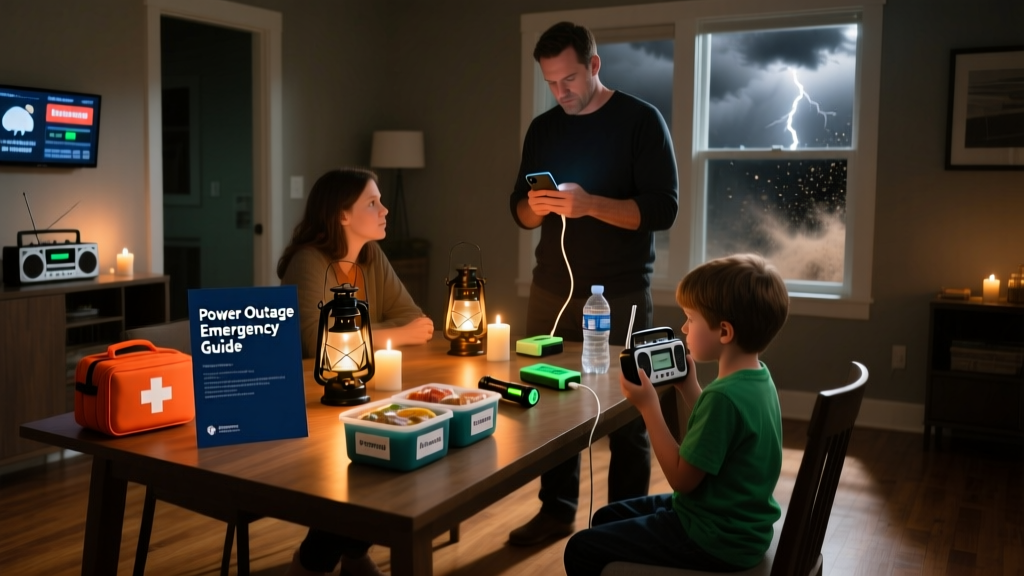
Unplug sensitive electronics *immediately*—before flickering stops or surges hit. Then check if neighbors are also dark: if yes, it’s likely a grid-wide outage; if no, the issue is inside your panel.
Immediate Actions
- Grab your emergency kit—flashlight (no candles), battery-powered radio, phone charger, and first-aid supplies.
- Check your circuit breaker panel. If one or more breakers are tripped (handle in middle position), reset only *after* unplugging all loads on that circuit.
- Preserve fridge/freezer cold: Keep doors closed. A full freezer stays safe for 48 hours; refrigerator food stays safe ≤4 hours (U.S. FDA, 2022).
- Turn off major appliances (AC, oven, water heater) to prevent surge damage when power returns.
When to Call 911 / When to Call a Pro
If you smell burning insulation, see sparks, or hear buzzing from outlets or your panel—evacuate and call 911 immediately. Do not touch panels or switches.
- Call 911 if: Downed power lines (even if not sparking), smoke from outlets, or medical devices (e.g., oxygen concentrator) losing backup power.
- Call your utility company (not 911) if outage affects multiple homes and no hazards exist. Report location and visible damage (e.g., “pole snapped at Oak & 5th”).
- Call a licensed electrician if breakers trip repeatedly, GFCI outlets won’t reset, or you hear crackling behind walls—signs of internal wiring faults.
What NOT to Do
- Never use gas stoves, grills, or generators indoors—even in garages or basements. Carbon monoxide kills silently: CDC reports ~430 U.S. CO deaths annually (CDC, 2023).
- Don’t overload extension cords or power strips. One overloaded cord caused 3,300 home fires yearly (NFPA, 2022).
- Avoid using candles near curtains, bedding, or children/pets. Battery-powered LED lights are safer and last longer.
- Don’t assume your generator is safe to connect—backfeeding via dryer outlet can electrocute utility workers. Use a transfer switch installed by a licensed pro.
After the Emergency
Once power returns, inspect carefully before resuming normal use. Document damage with timestamps and photos for insurance claims—especially water damage from sump pump failure or spoiled food.
| Item | Safe if Power Out >4 hrs? | Notes |
|---|---|---|
| Raw meat, poultry, seafood | No | Discard if >40°F for ≥2 hrs (FDA) |
| Hard cheeses, butter, opened juice | Yes | Keep refrigerated ≤7 days post-outage |
| Frozen food with ice crystals | Yes | Refreeze if solid, no odor or slime |
Is it safe to run my generator indoors?
No. Generators produce carbon monoxide (CO)—odorless, colorless, and fatal in minutes. Place outdoors, ≥20 feet from windows, doors, and vents. Install CO alarms on every level of your home (learn where to place them).
Why did my breakers trip but my neighbors still have power?
Your outage is likely isolated to your home—caused by overloaded circuits, faulty wiring, or a failing main breaker. Check for signs like warm outlets or buzzing sounds. Schedule a panel inspection within 48 hours if tripping repeats.
Can I claim spoiled food on insurance?
Most standard homeowners policies cover up to $500 in food loss due to power outages—but only if the cause was a covered peril (e.g., lightning strike or wind damage). Flood-related outages usually aren’t covered. File a claim within 72 hours with receipts and photos.
How long should I wait before calling an electrician?
If power hasn’t returned after 2 hours *and* your utility confirms no reported outages in your zone—or if breakers trip again after resetting—call an electrician immediately. Delaying risks fire or shock hazard.
My sump pump failed during the outage. Is my basement flooded?
Check basement corners and floor drains *before* turning lights on—water and electricity don’t mix. If standing water is present, do not enter. Shut off main power at the meter if safe to do so, then call a water damage pro. See flood response checklist.
Will my smart home devices reboot automatically?
Most will—but security systems, thermostats, and garage door openers may need manual re-pairing or firmware updates. Test door locks and alarm sensors within 1 hour of power restoration.
“A single ungrounded outlet can raise shock risk by 300% during an outage recovery. Always verify grounding with a plug-in tester before plugging anything back in.” — National Electrical Contractors Association (NECA), 2023 Field Safety Bulletin
Stay alert, stay grounded—and never assume silence means safety. If uncertainty lingers about your panel, wiring, or generator setup, find a vetted local electrician before the next storm hits. Your home’s electrical system isn’t just convenience—it’s your first line of defense.