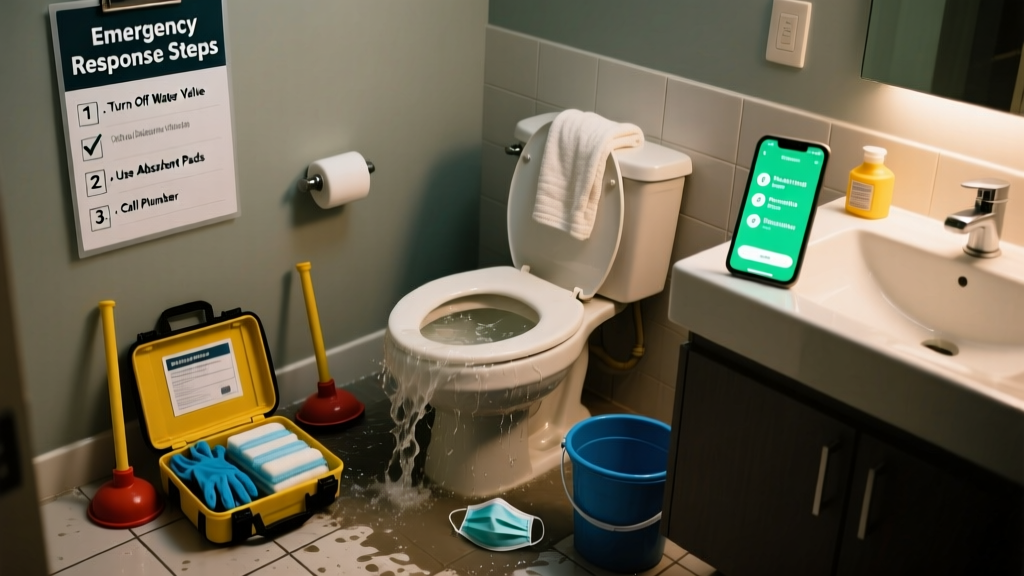
Stop the flood now: locate your toilet’s shut-off valve (usually behind or beside the base) and turn it clockwise until tight. If you can’t find it—or it’s seized—lift the tank lid and press down firmly on the flapper to halt water flow into the bowl.
Immediate Actions
- Shut off water supply at the wall valve (clockwise = closed). If inaccessible, lift tank lid and hold flapper closed with your hand.
- Stop flushing—even once more could push raw sewage onto your floor.
- Protect people and pets: clear the bathroom immediately. Standing water may contain E. coli and hepatitis A (CDC, 2022).
- Contain spread: place towels or rags around the base—but do not attempt to soak up standing sewage with bare hands.
When to Call 911 / When to Call a Pro
Call 911 immediately if:
- Raw sewage is backing up into multiple drains (sink, shower, or floor drain);
- Water is rising toward electrical outlets or breaker panels;
- Someone has slipped, fallen, or been exposed to contaminated water and shows signs of illness (vomiting, fever, rash).
Call a licensed plumber within 30 minutes if:
- Water has stopped rising but remains pooled in the bowl or on the floor;
- You hear gurgling from other fixtures—indicating a main line blockage;
- The overflow happened without recent use (e.g., toilet ran overnight), suggesting a failed fill valve or cracked tank.
What NOT to Do
- Don’t use chemical drain cleaners—they won’t fix a full-blocked sewer line and can corrode pipes or react dangerously with standing waste.
- Don’t run the washing machine or dishwasher—this adds volume to an already overloaded system.
- Don’t flush again—even once—to ‘test’ it. The risk of re-overflow is near-certain.
- Don’t ignore the smell. A persistent sewer gas odor signals venting failure or a broken seal—both health hazards per EPA Indoor Air Quality guidelines (2023).
After the Emergency
Once water flow stops and professionals arrive or assess the situation, begin documenting for insurance:
| Area | What to Note | Photo Required? |
|---|---|---|
| Flooring | Warped, discolored, or spongy sections | Yes |
| Baseboards & Walls | Bubbling paint, dark stains, or musty odor | Yes |
| Toilet Base | Cracks, wobbling, or visible mold growth | Yes |
| Adjacent Rooms | Water seepage under door thresholds | Yes |
Cleanup requires PPE: N95 mask, waterproof gloves, and rubber boots. Discard porous materials (carpet padding, drywall, insulation) soaked for >48 hours—mold spores proliferate rapidly (FEMA, Mold Remediation Guidelines 2021).
"A toilet overflow that sits for over two hours creates Category 3 (‘black water’) contamination—requiring professional extraction and antimicrobial treatment, not DIY mopping." — IICRC S500 Water Damage Restoration Standard, 2022 Edition
Can I plunge it myself after the water recedes?
Only if the bowl is less than half full and you’re certain the clog is in the trap—not the main line. Use a flange plunger (not a cup plunger) with steady, forceful strokes. Stop if water rises again. If plunging fails after 2–3 attempts, call a plumber—repeated pressure risks cracking the porcelain.
Why did my toilet overflow without me flushing?
This usually means a blockage downstream (in the branch line or main sewer) or a failing fill valve letting water continuously run into the bowl. According to the U.S. EPA, 14% of household water usage stems from undetected leaks—including faulty toilet valves (Toilet Leak Repair Guide, 2023).
Is it safe to use bleach on the floor after cleanup?
No. Bleach doesn’t neutralize pathogens in organic waste and produces toxic chloramine gas when mixed with urine or ammonia. Use an EPA-registered disinfectant labeled for sewage contact (e.g., Shockwave RTU) instead.
How much does emergency plumbing cost for an overflow?
Most plumbers charge $125–$250 for after-hours service calls. If they clear a simple clog, expect $175–$350 total. But if the issue is a collapsed sewer line or root intrusion, costs climb to $2,500–$6,000. Homeowners insurance typically covers sudden, accidental water damage—but not neglect or gradual leaks.
Will my insurance cover this?
Most standard policies cover sudden overflow damage—but exclude backups caused by municipal sewer issues unless you’ve added a specific endorsement (e.g., ‘sewer backup coverage’). File your claim within 72 hours and keep all receipts for mitigation services. For help filing, see our Home Insurance Claims Checklist.
How do I prevent future overflows?
Install a toilet shutoff valve with a lever handle (easier to operate in panic), replace flappers every 3–5 years, and avoid flushing anything beyond toilet paper and human waste. Consider adding a smart water leak detector like the Moen Flo—alerts you via app before overflow begins.
Acting within the first 90 seconds can reduce repair costs by up to 60%. Don’t wait for the next flush—get your shut-off valve location memorized today.