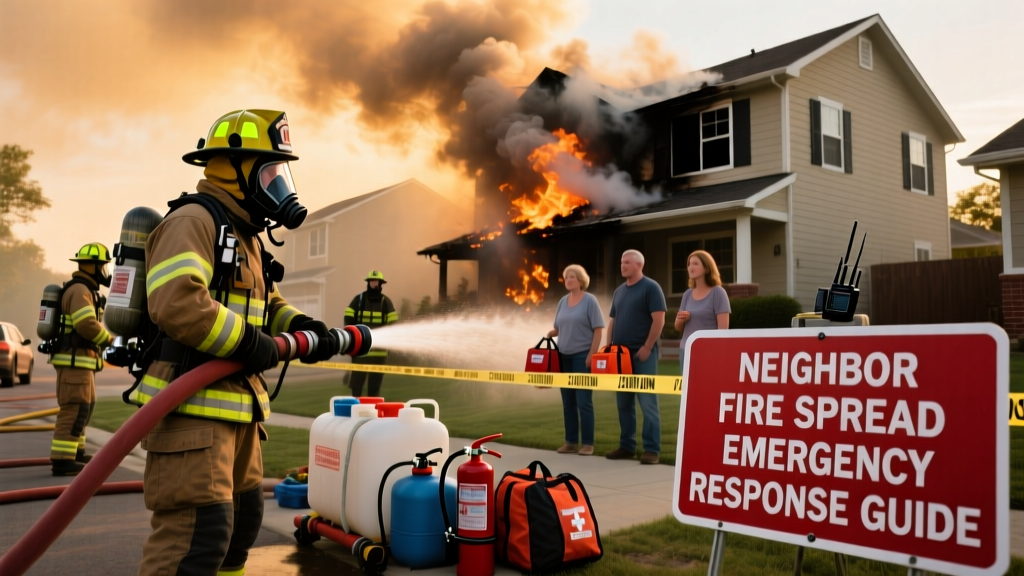
If flames or heavy smoke are visible from a neighboring property—and especially if embers are landing on your roof or deck—act now. Do not wait for sirens or official warnings. Your first move: evacuate everyone, including pets, and call 911 while en route or immediately upon reaching safety.
Immediate Actions
- Evacuate immediately if embers are hitting your roof, gutters are smoldering, or windows feel hot to the touch—even if flames aren’t yet visible.
- Close all windows, doors, and attic vents—but do not lock them (first responders may need rapid entry).
- Turn off gas at the main shutoff valve if safe to do so (only if you can reach it in under 10 seconds without crossing smoke or heat).
- Move flammable items (patio furniture, firewood piles, propane tanks) at least 30 feet from your home—or better, remove them entirely.
- Wet down roofs, decks, and wooden fences with garden hoses (if water pressure remains stable and no evacuation order is active).
When to Call 911 / When to Call a Pro
Call 911 immediately if:
- You see flames on your property, even small ones;
- Smoke is entering your home through vents or cracks;
- Embers are igniting dry grass or mulch within 10 feet of your foundation;
- You hear crackling sounds coming from your attic or walls.
Call a licensed fire restoration contractor after emergency responders clear the scene and declare your area safe. Do not re-enter until cleared—even if your home appears untouched. According to the Insurance Institute for Business & Home Safety's 2023 report, 68% of fire-related structural failures occur within 72 hours post-event due to hidden charring and compromised framing.
"A home exposed to radiant heat from a neighboring fire—even without direct flame contact—can suffer thermal degradation in insulation, wiring, and drywall adhesion. That damage often isn’t visible but becomes hazardous within days." — NFPA Fire Protection Handbook, 2022 edition
What NOT to Do
- Do not open windows or doors to 'check the air'—this draws in smoke and superheated gases.
- Do not use elevators during evacuation—even if power appears stable.
- Do not attempt to fight roof or gutter fires with handheld extinguishers; these require specialized Class A foam application and pose extreme fall risk.
- Do not delay evacuation to gather valuables. Life-safety always comes first.
After the Emergency
Once authorities confirm it’s safe to return:
- Document everything: Take timestamped photos and videos of exterior and interior surfaces, including soot patterns, warped siding, and discolored electrical outlets.
- Check your HVAC system—do not turn it on. Soot and ash can circulate toxic particles throughout ductwork.
- Contact your insurance carrier within 24 hours. Most policies require prompt reporting for fire-exposure claims—even without flame contact.
- Hire an IICRC-certified fire restoration technician for thermal imaging scans. Hidden damage behind walls and under floors is common after radiant exposure.
Can my home catch fire even if flames never reached it?
Yes. Radiant heat from a nearby structure fire can exceed 1,000°F at distances up to 100 feet. This heat alone can ignite vinyl siding, dry wood decking, or attic insulation. The U.S. Fire Administration reports that 22% of “non-ignited” homes near wildfires show measurable thermal degradation in structural framing members.
Should I clean soot off walls myself?
No. Soot is acidic and hygroscopic—it absorbs moisture and corrodes surfaces over time. DIY wiping can permanently etch drywall or smear contaminants deeper into porous materials. Instead, contact a certified fire soot cleanup specialist who uses pH-neutral dry sponges and HEPA vacuum protocols.
Is my electrical system safe after ember exposure?
Not automatically. Embers can melt wire insulation or lodge inside breaker panels. The National Electrical Code (NEC 2023, Article 110.12) requires licensed electricians to inspect all circuits serving areas exposed to radiant heat—even if breakers haven’t tripped. Never reset a tripped breaker without inspection.
How long should I wait before reoccupying?
Minimum 48–72 hours after professional clearance. Air quality testing must confirm particulate levels (PM2.5) and volatile organic compounds (VOCs) are below EPA-recommended thresholds. For guidance, see our post-fire air quality testing checklist.
Do I need to replace my HVAC filter—even if it looks fine?
Yes—replace it immediately with a MERV 13 or higher filter, and schedule duct cleaning. Soot particles as small as 0.1 microns embed deep in fiberglass filters and recirculate with each fan cycle. According to ASHRAE Standard 189.1-2023, HVAC systems exposed to fire proximity require full duct decontamination before reuse.
What documentation helps my insurance claim most?
Timestamped video walkthroughs (interior and exterior), utility meter readings pre- and post-event, receipts for emergency supplies (masks, bottled water, generators), and written statements from first responders confirming exposure. Keep all records in cloud storage and physical copies off-site. See our fire claim documentation checklist for a printable version.
| Distance from Neighbor’s Fire | Low Wind (<10 mph) | Moderate Wind (10–25 mph) | High Wind (>25 mph) |
|---|---|---|---|
| 0–30 ft | Extreme risk: Immediate ignition likely | Extreme risk: Ember showers + radiant ignition | Catastrophic: Flame contact probable within minutes |
| 31–100 ft | Moderate risk: Roof/gutter ember accumulation | High risk: Ignition of mulch, decks, vents | Extreme risk: Spot fires up to 200 ft downwind |
| 101–300 ft | Low risk: Monitor for embers only | Moderate risk: Watch for airborne embers | High risk: Structural radiant heating begins |
Stay alert—not just during the fire, but for days afterward. Thermal stress, hidden embers, and compromised systems pose real threats long after the last flame is out. Your safety depends on speed, precision, and verified expertise—not assumptions.