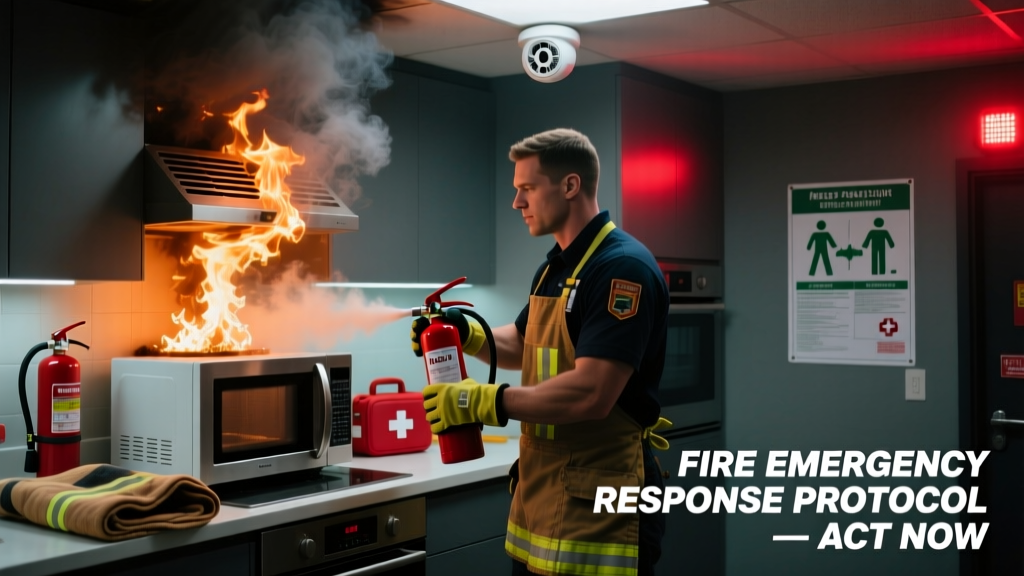
Close the microwave door and unplug it immediately — do not open it. Microwaves lack oxygen, so sealing the unit often suffocates the fire in under 30 seconds. If flames are visible outside the cavity or smoke is thick and black, evacuate and call 911 without delay.
Immediate Actions
- Do not open the door. Opening introduces oxygen and can trigger flashover.
- Unplug the unit at the wall outlet — never yank the cord; grasp the plug firmly.
- Turn off power at the circuit breaker if unplugging feels unsafe (e.g., sparking outlet).
- Keep a Class C fire extinguisher nearby — rated for electrical fires — and aim at the base of external flames only.
- Use baking soda or salt (not flour or baking powder) to smother small external grease fires on countertops near the unit.
When to Call 911 / When to Call a Pro
If any of these apply, dial 911 immediately:
- Fire spreads beyond the microwave cabinet (e.g., into cabinetry or wall)
- Smoke detector alarms continuously after power is cut
- You smell burning plastic or insulation (not just food)
- The microwave’s exterior is warped, discolored, or emits sparks when plugged in later
Call a licensed appliance technician or electrician if:
- The unit powered on but produced smoke with no visible flame
- It trips the breaker repeatedly after resetting
- You hear arcing sounds (popping, zapping) during operation
What NOT to Do
- Never use water — microwaves run on 120V+ circuits; water conducts electricity and risks electrocution.
- Don’t use flour, cornstarch, or baking powder — fine particles can ignite explosively near heat sources.
- Avoid opening the door until 5 minutes after all smoke and heat have ceased — internal temps exceed 400°F even after power loss.
- Don’t reuse the microwave — even if it appears undamaged, internal arcing damage may be invisible.
After the Emergency
Once the area is cool and safe (minimum 1 hour post-incident), document everything before cleaning:
| Item | What to Record |
|---|---|
| Photos | Front, sides, back, interior cavity, outlet, and surrounding cabinets — include timestamps |
| Witness notes | Name, contact, and brief statement from anyone who saw/smelled the event |
| Insurance info | Policy number, claim contact, and note whether your policy covers appliance-related fire damage |
Clean only with damp microfiber cloths — no ammonia-based cleaners (they react with burnt plastic residue). Discard the microwave entirely; recycle it properly through an e-waste program like Call2Recycle (2023 data shows only 18% of damaged appliances are recycled responsibly).
"Microwave fires cause over 7,000 home structure fires annually — 62% involve cooking-related errors like metal objects or overheated oils, per the U.S. Fire Administration’s 2022 National Fire Incident Reporting System."
Can I test the microwave after it smoked but didn’t flame?
No. Internal magnetron or waveguide damage may not be visible but poses serious shock and reignition risks. Unplug and replace it — most full-size units cost $120–$350 new, far less than fire restoration.
Why did my microwave catch fire while heating plain water?
Superheating — water heated past boiling point without bubbling — can erupt violently when disturbed, splashing onto hot components. Always place a non-metallic stir stick (e.g., wooden chopstick) in the cup before heating more than 2 minutes.
Is it safe to keep using the outlet after a microwave fire?
Not without inspection. Arcing inside the outlet or wiring may have occurred. A licensed electrician must test voltage stability, grounding, and receptacle integrity before reuse — use a $12 outlet tester first, but don’t rely on it alone.
What metal items commonly cause microwave fires?
Foil takeout trays, twist-ties on bread bags, gold-rimmed mugs, and stainless steel travel containers — even tiny amounts reflect microwaves, creating plasma arcs. The FDA reports that 23% of microwave fires stem from accidental metal introduction (FDA Consumer Updates, 2021).
How long should I wait before re-entering the kitchen?
Wait until smoke clears *and* the air smells neutral — not burnt, acrid, or chemical. Carbon monoxide detectors may not trigger, but incomplete combustion produces CO. Open windows and run exhaust fans for 20+ minutes before returning.
Does homeowners insurance cover microwave fire damage?
Yes — most standard policies cover fire damage to structure and contents, but exclusions apply for negligence (e.g., leaving it unattended for >10 minutes). File your claim within 72 hours; insurers require photos and a fire department report if responders were called.
Replace the microwave, inspect the circuit, and review your kitchen fire safety checklist — because the next incident won’t wait for preparation.