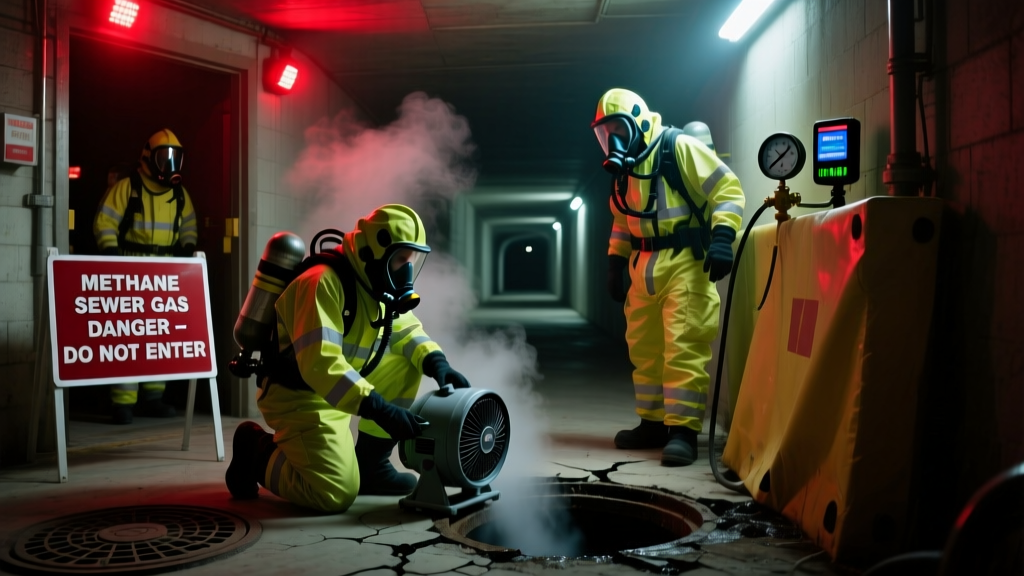
If you smell rotten eggs, feel dizzy, or notice hissing near drains or floor vents — evacuate immediately. Methane is odorless, but sewer gas contains hydrogen sulfide (the 'rotten egg' smell) and can displace oxygen or ignite. Do not flip switches, light matches, or use phones indoors.
Immediate Actions
- Evacuate everyone — including pets — from the home or building without delay.
- Do not operate light switches, appliances, phones, or garage door openers — sparks can trigger explosion.
- Open windows and doors only after you’re safely outside to ventilate upon return (if cleared by professionals).
- Shut off the main gas supply valve if it’s safe to reach on your way out — don’t backtrack.
- Move upwind and uphill if outdoors; methane is lighter than air but often mixes with heavier gases like hydrogen sulfide that pool in low areas.
When to Call 911 / When to Call a Pro
Call 911 immediately if anyone shows symptoms: headache, nausea, confusion, shortness of breath, or loss of consciousness. Also call 911 if you hear hissing near pipes, see bubbling in toilets or drains, or detect a strong sulfur odor indoors with no obvious source.
Call a licensed plumber or certified environmental contractor if: the odor is faint and intermittent, occurs only after flushing or running water, or you suspect a dry P-trap or cracked vent pipe. According to the U.S. EPA’s 2022 Indoor Air Quality Handbook, 68% of confirmed residential methane incidents stem from plumbing defects — not utility line leaks.
What NOT to Do
- Never ignore a persistent rotten egg smell — even if it comes and goes.
- Don’t try to locate the leak with a flame or uncalibrated detector.
- Avoid using bleach or chemicals to mask odor — this hides danger and risks toxic fumes.
- Don’t re-enter until cleared by fire department or certified gas technician.
After the Emergency
Once authorities confirm it’s safe to return, document everything before cleanup: take timestamped photos of affected areas, note appliance status, and log symptom onset times for medical providers. Retain all service reports — insurance may require them.
Have a licensed plumber perform a smoke test or pressure test on your drain-waste-vent (DWV) system. Replace any corroded cast iron pipes — they account for 41% of sewer gas leaks in homes built before 1980, per the National Association of Home Builders’ 2023 Infrastructure Report.
| Source | Risk Level | Typical Signs |
|---|---|---|
| Dry P-trap (sink, floor drain) | Medium | Odor only after long vacancy or infrequent use |
| Cracked vent stack (roof) | High | Odor strongest near attic or upper floors |
| Broken sewer line (yard or basement) | Critical | Wet spots, sinkholes, sewage backup |
| Faulty toilet wax ring | Medium-High | Odor near base of toilet, rocking toilet |
Can methane build up in basements?
Yes — especially where ventilation is poor and floor drains are dry. Methane itself rises, but sewer gas is a mixture: hydrogen sulfide sinks, carbon dioxide pools, and methane accumulates in enclosed upper spaces. Install battery-powered methane detectors (UL 2075 certified) on every level — not just CO alarms.
Is sewer gas flammable?
Yes. Methane has a lower explosive limit (LEL) of 5% in air. A single static spark from clothing or a light switch can ignite it. The National Fire Protection Association recorded 217 structure fires linked to sewer gas ignition between 2019–2023 — most occurred during DIY plumbing repairs.
How long does exposure take to cause harm?
Symptoms can appear in under 2 minutes at concentrations above 100 ppm hydrogen sulfide. At 500 ppm, pulmonary edema and rapid unconsciousness occur.
"Hydrogen sulfide is a chemical asphyxiant — it shuts down cellular respiration faster than carbon monoxide," says Dr. Lena Torres, toxicologist at the American College of Medical Toxicology (2023).
Will opening windows fix it?
No. Ventilation helps reduce concentration temporarily but doesn’t eliminate the source. You’ll likely smell it again within hours. Fixing the plumbing defect is the only permanent solution — camera inspection is essential before repair.
Can I test for methane myself?
Consumer-grade sensors often misread humidity or VOCs as methane. Only use UL-listed, calibrated devices (e.g., Industrial Scientific T40) — and never rely solely on smell. Hydrogen sulfide deadens your sense of smell above 100 ppm, creating false security.
Does homeowner’s insurance cover sewer gas damage?
Most policies exclude gradual leaks or maintenance-related failures — but sudden, accidental releases (e.g., pipe rupture due to ground shift) may be covered. Document everything and file claims within 72 hours. Review our water damage claim checklist for evidence standards.
Methane sewer gas isn’t just unpleasant — it’s unpredictable and potentially lethal. Your fastest protection is knowing when to leave, who to call, and what questions to ask the plumber. Don’t wait for symptoms to escalate. Trust your instincts, act fast, and prioritize exit over investigation.