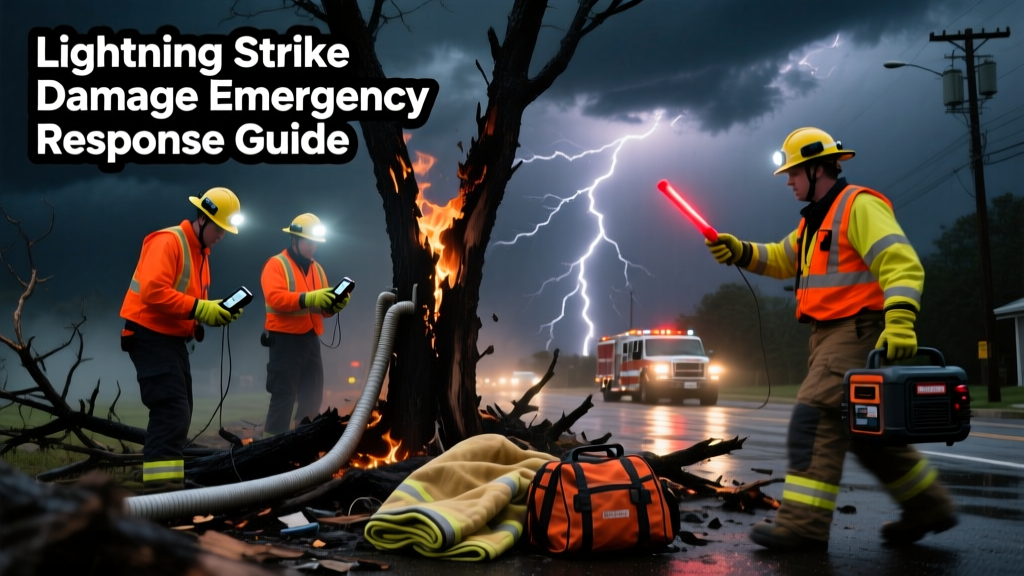
If lightning strikes your home or nearby, assume electrical systems are compromised—even if lights stay on. Your first action: evacuate everyone immediately if you smell smoke, hear buzzing from outlets, or see scorch marks on walls or appliances.
Immediate Actions
- Evacuate all occupants—especially children and pets—to a safe outdoor location away from trees, poles, and metal fences.
- Do NOT use corded phones, faucets, showers, or plugged-in electronics; lightning can travel through wiring and plumbing.
- Check for fire or smoke in the attic, walls, or near the electrical panel—even small smoldering spots can ignite hours later.
- Turn off main power at the breaker box only if you can do so safely (dry feet, non-metal tool, no standing water) and without passing near damaged areas.
When to Call 911 / When to Call a Pro
Call 911 immediately if:
- Anyone shows signs of cardiac arrest, confusion, burns, or loss of consciousness—even if they seem fine initially (delayed neurological symptoms are common).
- You see active flames, sparks, or hear arcing sounds from outlets or the panel.
Call a licensed electrician and certified lightning protection specialist after emergency responders clear the scene. According to the National Fire Protection Association’s 2023 Electrical Safety Report, 68% of post-strike fires ignite within 4 hours—so professional inspection is non-negotiable.
What NOT to Do
- Don’t touch circuit breakers, outlets, or light switches with wet hands—or while standing on damp flooring.
- Don’t assume surge protectors saved your devices; direct strikes bypass most consumer-grade units.
- Don’t re-enter the home until cleared by fire department personnel or a certified inspector—even if it looks intact.
- Don’t use gas stoves or generators indoors; carbon monoxide risk spikes during power outages.
After the Emergency
Once cleared to re-enter, begin documentation and mitigation—but never before confirming structural and electrical safety.
| Area | What to Inspect | Red Flag Sign |
|---|---|---|
| Electrical Panel | Discoloration, melted bus bars, tripped breakers that won’t reset | Burnt plastic odor or charring behind cover plate |
| Roof & Attic | Shingle blowouts, splintered rafters, soot trails along framing | Charred wood near vent pipes or chimney |
| Plumbing | Copper pipe discoloration, pinhole leaks, discolored water | Green oxidation or pitting on supply lines |
| Electronics | Non-responsive TVs, modems, HVAC controls, smart thermostats | Burnt capacitors visible on circuit boards |
Photograph every anomaly—including timestamps—and save receipts for all temporary repairs. The U.S. Insurance Information Institute notes lightning claims average $15,000+ in 2023—prompt documentation supports faster settlement.
"A lightning strike delivers up to one billion volts in under 30 microseconds—enough to vaporize copper wiring. Visual inspection alone misses 80% of latent damage." — Dr. Elena Ruiz, Lightning Safety Research Group, University of Florida, 2022
Can I test outlets myself with a multimeter?
No. Even if outlets appear functional, internal conductor damage may cause delayed failure or arc faults. Testing requires live-voltage diagnostics by a licensed electrician using CAT IV-rated equipment. See our electrical safety checklist for pre-inspection prep.
My smart home system rebooted but feels sluggish—could it be damaged?
Yes. Microsurges often degrade firmware and sensor calibration without triggering full failure. Reset devices, then monitor for erratic behavior (e.g., lights turning on/off randomly). Refer to our smart home recovery guide for device-specific diagnostics.
Is my well pump safe to use after a nearby strike?
Not without verification. Submersible pumps contain sensitive control boxes vulnerable to ground potential rise. Have a well contractor test insulation resistance and check for voltage leakage before restarting. For deeper guidance, read our well pump safety protocol.
Do I need to replace all my surge protectors—even if they didn’t trip?
Yes. Most MOV-based protectors degrade after absorbing just one significant surge. UL 1449-certified units list “end-of-life” indicators—but many fail silently. Replace every unit, including those built into power strips and UPS systems.
Will my homeowner’s insurance cover lightning damage?
Standard policies typically cover lightning-caused fire, power surge, and structural damage—but exclusions apply for unpermitted upgrades or pre-existing wiring defects. File your claim within 72 hours and include fire department reports and electrician affidavits. Review coverage details in our homeowners insurance claims primer.
How long should I wait before sleeping in the house again?
Until both a fire marshal and a licensed electrician sign off on safety. Hidden damage in walls or attics can smolder for days. If clearance isn’t granted within 24 hours, arrange temporary lodging—many insurers reimburse hotel costs under ‘additional living expenses’.
Lightning doesn’t negotiate. Every second counts—but so does precision. Act fast, trust verified professionals, and never skip the inspection. Your home’s wiring, roof, and safety systems deserve more than a visual once-over.