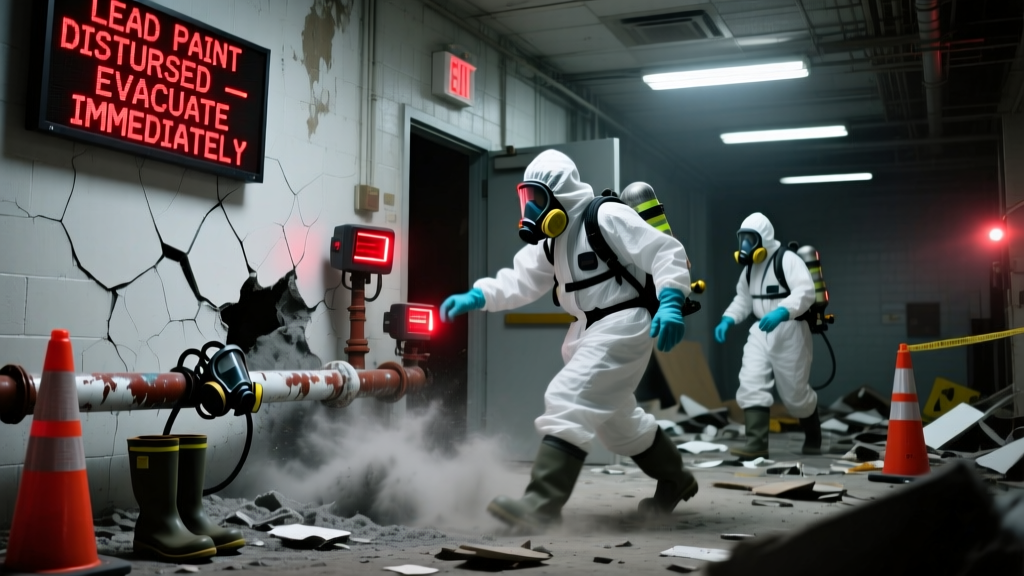
If you’ve just sanded, scraped, or demolished painted surfaces in a pre-1978 home—or seen dust, chips, or fumes from old paint—stop all activity immediately. Close off the area, evacuate children and pregnant people, and shut HVAC systems to prevent airborne spread.
Immediate Actions
- Evacuate everyone—especially children under 6 and pregnant individuals—from the affected room and adjacent spaces.
- Shut down forced-air heating/cooling systems to prevent dust circulation (U.S. EPA, Lead-Safe Renovation Guide 2023).
- Seal off the area with plastic sheeting and painter’s tape; close doors and cover vents.
- Wash exposed skin with soap and cold water—do NOT use hot water, which opens pores and increases absorption.
- Place contaminated clothing in a sealed plastic bag; launder separately using heavy-duty detergent.
When to Call 911 / When to Call a Pro
Call 911 only if someone shows acute symptoms: vomiting, seizures, severe abdominal pain, or sudden confusion—these may indicate acute lead poisoning requiring emergency medical intervention.
Otherwise, contact a certified lead inspector within 24 hours. According to the CDC, blood lead levels ≥3.5 µg/dL in children require clinical follow-up—and many cases go undetected without testing.
- Call a certified lead abatement contractor for cleanup if dust/chips covered >2 sq ft of floor or >1 linear foot of window sill (EPA RRP Rule).
- Call your local health department for free or low-cost blood lead testing referrals—available in 42 states as of 2024 (CDC Childhood Lead Poisoning Prevention Program).
What NOT to Do
- Do NOT sweep or vacuum with a standard vacuum—it aerosolizes lead dust.
- Do NOT use compressed air, dry sanding tools, or torches near suspect paint.
- Do NOT let children or pets re-enter until clearance testing confirms <10 µg/ft² surface dust (HUD Guidelines, 2022).
- Do NOT eat, drink, or smoke in the contaminated zone—even brief exposure raises absorption risk.
"One teaspoon of lead-contaminated dust—about the amount that fits on a small postage stamp—can raise a child’s blood lead level above 10 µg/dL." — National Center for Healthy Housing, Lead Hazard Recognition Manual, 2021
After the Emergency
Once cleared by professionals, document everything: photos of the disturbance site, dates/times of exposure, names of inspectors, and lab reports. Keep records for at least 5 years—required under federal RRP regulations for rental properties.
| Surface Type | Max Allowable Lead Dust (µg/ft²) |
|---|---|
| Floors | 10 |
| Interior Windowsills | 100 |
| Window Troughs | 250 |
Cleanup must be done with HEPA-filter vacuums, wet-wipe methods, and disposable PPE—not household cleaners. Re-test after cleaning; 30% of post-abatement sites fail initial clearance (National Lead Laboratory Accreditation Program, 2023).
Can I test the paint myself?
No reliable DIY kits exist for accurate quantification. The EPA does not approve any consumer swab tests for regulatory compliance. Only accredited labs using XRF analyzers or paint chip analysis meet safety standards (lead paint testing methods).
How soon can kids return to the room?
Not until certified clearance testing confirms dust levels are below federal limits—and only after thorough HEPA vacuuming, wet wiping, and visual inspection. Most certified firms require 24–72 hours post-cleanup before re-entry.
Does lead exposure cause immediate symptoms?
Rarely. Most childhood lead poisoning is asymptomatic until levels exceed 45 µg/dL. Subtle signs—irritability, fatigue, learning delays—often appear months later. That’s why blood testing within 48 hours of known exposure is critical (American College of Medical Toxicology, 2022).
Is it safe to repaint over lead paint?
Only if the surface is intact and undisturbed. Repainting without proper containment and prep risks creating hazardous dust during sanding or scraping. Encapsulation requires certified materials and application—never a DIY fix for deteriorating surfaces.
What if I’m renting and this happened during landlord repairs?
Landlords must comply with EPA’s Renovation, Repair, and Painting (RRP) Rule. Document everything and notify your local housing authority—many states mandate relocation assistance if units exceed clearance limits. You may qualify for legal aid via tenant rights resources.
Can lead dust travel through walls or ductwork?
Yes. A 2020 study in Environmental Health Perspectives found lead dust migrated up to 30 feet from renovation zones via HVAC systems and shared wall cavities—even in apartments with closed doors. That’s why shutting off HVAC and sealing gaps is non-negotiable.
Lead exposure is preventable—but only when action starts the second disturbance occurs. Don’t wait for symptoms. Don’t guess at safety. Get certified testing, protect vulnerable family members first, and treat every pre-1978 surface as potentially hazardous until proven otherwise.