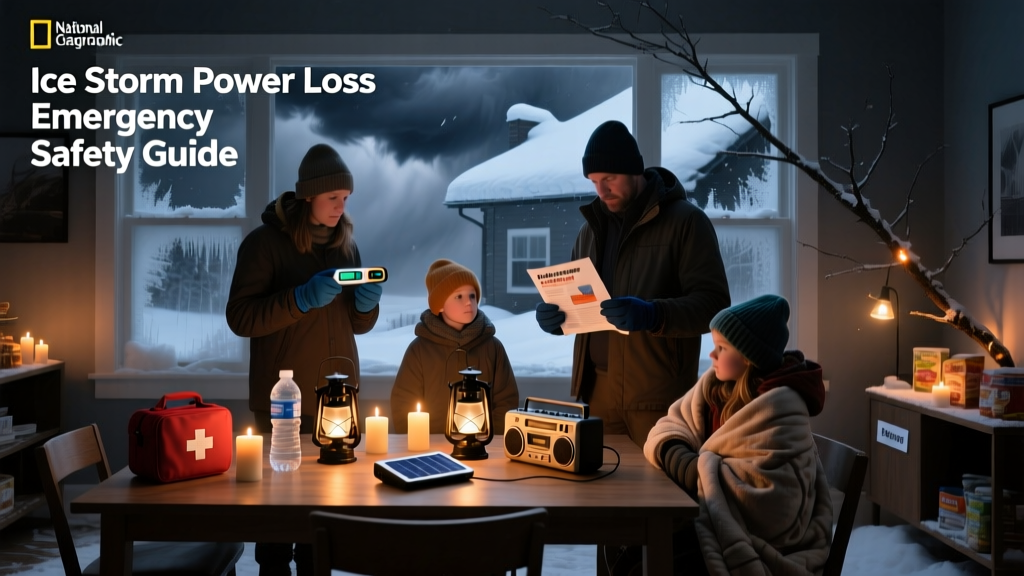
Drop everything and check on vulnerable people first — infants, elderly, or those with medical devices. If your home is below 40°F (4°C) and power won’t return within 2 hours, begin emergency warming protocols immediately.
Immediate Actions
- Check your circuit breakers — if tripped, reset only once; repeated trips mean an overload or fault.
- Use flashlights — never candles — and keep battery-powered NOAA weather radios tuned to local alerts.
- Open cabinet doors under sinks to let warm air circulate near pipes; drip faucets at risk of freezing (1 drip/second per pipe).
- Layer clothing and use sleeping bags — avoid direct skin contact with chemical heat packs (risk of 2nd-degree burns).
- Run generators outdoors only — minimum 20 feet from windows, doors, and vents. Carbon monoxide kills silently in 5–10 minutes.
When to Call 911 / When to Call a Pro
Call 911 immediately if:
- You smell gas (rotten egg odor), hear hissing, or see bubbling soil near gas lines;
- Downed power lines are sparking, touching trees, vehicles, or puddles;
- Someone shows signs of hypothermia (slurred speech, confusion, weak pulse) or carbon monoxide poisoning (headache, dizziness, nausea).
Call a licensed electrician or utility company (not 911) for:
- Tripped breakers that won’t stay reset;
- Flickering lights after power returns;
- Outlets that feel warm or emit a burning smell.
What NOT to Do
- Never use ovens, grills, or camp stoves indoors — they produce lethal carbon monoxide.
- Don’t overload extension cords — the U.S. Consumer Product Safety Commission reports 3,300+ home fires annually from cord misuse (2023 data).
- Don’t walk under ice-laden trees or power lines — branches can snap without warning.
- Never plug a generator into a wall outlet (“backfeeding”) — it endangers utility crews and can electrocute neighbors.
After the Emergency
Once power returns and temperatures rise above freezing, inspect for damage before resuming normal use.
| Area | What to Check | Action if Issue Found |
|---|---|---|
| Pipes | Discoloration, bulging, or damp drywall near walls/floors | Shut off main water valve; call a plumber within 24 hours |
| Electrical | Burn marks on outlets, buzzing sounds, warm faceplates | Turn off breaker; schedule licensed electrician inspection |
| Roof/Gutters | Visible sagging, missing shingles, or ice dams >2 inches thick | Document with timestamped photos; file insurance claim within 72 hours |
How long is it safe to run a generator?
Maximum continuous runtime is 8–12 hours for most portable models — then shut down for 30 minutes to cool. Overheating causes 22% of generator failures during winter storms (Consumer Reports, 2022). Always refuel only when cooled and outdoors.
Can I use my phone charger on a power bank during an outage?
Yes — but prioritize charging medical devices first. A 20,000 mAh power bank typically powers a smartphone 4–6 times. Keep one charged to ≥80% year-round; test every 90 days.
What’s the safest way to thaw frozen pipes?
Apply gentle heat using a hair dryer, heating pad, or towels soaked in hot (not boiling) water. Never use open flame or propane torches. Start thawing from the faucet end and work toward the coldest section. According to the Insurance Institute for Business & Home Safety’s 2023 report, 68% of burst pipe incidents occur during thawing — not freezing.
"If you suspect a frozen pipe behind a wall, don’t wait for it to burst — shut off the water supply and call a plumber. It’s cheaper than replacing drywall, flooring, and contents." — Mike R., Master Plumber, licensed in 12 states since 1998
When should I evacuate instead of sheltering in place?
Evacuate immediately if indoor temps fall below 32°F (0°C) for >4 hours, especially with infants, seniors, or chronic respiratory conditions. Contact local emergency management — many counties activate warming centers within 90 minutes of ice storm declarations. Find yours at warming centers.
How do I document damage for insurance?
Take timestamped photos/videos of all affected areas — include wide shots and close-ups of damage. Note dates, times, and ambient temps. Save receipts for generator fuel, hotel stays, and purchased supplies. File claims within 72 hours; delays reduce payout by up to 30% (State Farm Claims Data, Q4 2023). For help filing, see our insurance claim checklist.
Is it safe to eat food from the fridge or freezer?
Refrigerated food stays safe for 4 hours without power if the door remains closed. A full freezer holds temperature for 48 hours (24 hours if half-full). Discard meat, dairy, and cooked leftovers if above 40°F for >2 hours. When in doubt, throw it out — CDC estimates 48 million foodborne illnesses yearly, many linked to post-storm spoilage.
Stay alert, stay warm, and check on neighbors — especially those living alone. Ice accumulates faster than most expect; power may not return for 48–72 hours. Review your plan now — not when the wires start cracking. For real-time outage maps and utility contacts, visit power outage resources.