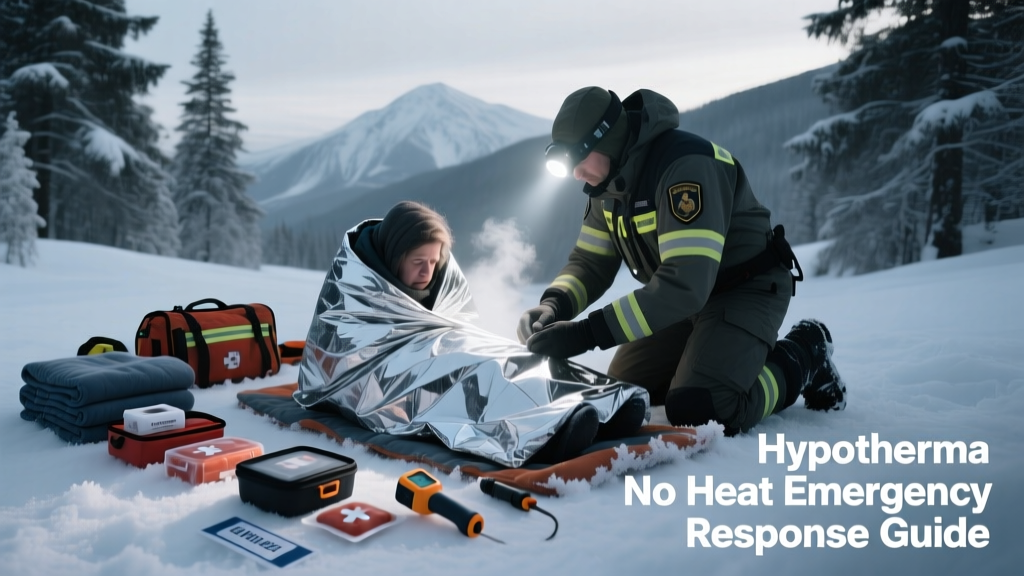
Drop below 95°F (35°C) core body temperature, and hypothermia becomes life-threatening—fast. If your home has no heat and someone is shivering uncontrollably, confused, or slurring speech, start warming *now*. Do not wait for help to arrive.
Immediate Actions
- Move to the warmest available space—even if it’s a closet or bathroom with closed doors. Avoid drafts and wind exposure.
- Remove wet clothing immediately. Replace with dry layers: wool or synthetic fabrics only—no cotton (it traps moisture).
- Apply warm (not hot) external heat to the chest, neck, head, and groin using warm water bottles, heating pads set on low, or body-to-body contact under blankets.
- Give warm, sweet, nonalcoholic drinks—like diluted apple juice or oral rehydration solution—if the person is fully alert and able to swallow.
When to Call 911 / When to Call a Pro
Hypothermia can deteriorate rapidly. Call 911 immediately if any of these occur:
- Core temperature suspected below 90°F (32.2°C)
- Unresponsiveness, weak pulse, or shallow breathing
- Confusion, memory loss, or slurred speech
- Inability to walk or stand steadily
For non-life-threatening but persistent cold exposure (e.g., no heat for >24 hours, elderly or infant in home), contact a licensed HVAC technician immediately. According to the CDC’s 2022 Cold-Related Illness Surveillance Report, 67% of fatal hypothermia cases involved delayed professional intervention after home heating failure.
What NOT to Do
- Do NOT rub or massage limbs—this can trigger cardiac arrest in severe cases.
- Do NOT give alcohol—it dilates blood vessels and accelerates heat loss.
- Do NOT use direct high-heat sources like space heaters, camp stoves, or open flames indoors—carbon monoxide risk spikes 300% during power outages (U.S. CPSC, 2023).
- Do NOT assume shivering means mild hypothermia—late-stage cases often stop shivering entirely.
After the Emergency
Once medical care is secured or symptoms resolve, assess damage and prepare for recurrence:
| Task | Timeframe | Who Should Do It |
|---|---|---|
| Test smoke & CO detectors | Within 2 hours | Homeowner or caregiver |
| Document ambient temps and symptoms | Same day | Caregiver or family member |
| Inspect furnace, vents, and insulation | Within 48 hours | Licensed HVAC technician |
| Review emergency heating plan | Within 72 hours | All household members |
Save all medical records and utility outage reports—you’ll need them for insurance claims or disaster assistance programs.
Can you rewarm someone at home without medical help?
Yes—for mild hypothermia (shivering, alert, core temp >90°F). Use passive rewarming: dry clothes, insulated shelter, warm drinks. But never delay EMS for moderate-to-severe signs. The Wilderness Medical Society warns that active rewarming without monitoring can cause "afterdrop," where cold blood from extremities floods the core and drops temperature further.
How long does recovery take after mild hypothermia?
Most adults recover full function within 12–24 hours if rewarming is prompt and complete. Children and older adults may need 48+ hours—and require follow-up with a primary care provider to rule out cardiac strain or pneumonia. According to the American College of Emergency Physicians’ 2021 Clinical Policy Bulletin, 1 in 5 older adults hospitalized for hypothermia develops secondary respiratory infection within 72 hours.
Is electric blanket safe for rewarming?
Only if set to low and used over dry clothing—not directly on skin. Never use with infants, immobile patients, or anyone with neuropathy. Overheating risks burns and dehydration. Better alternatives include chemical heat packs (tested and FDA-cleared) or shared body warmth under multiple dry blankets.
What indoor temp is safe for infants and seniors?
The U.S. Department of Health and Human Services recommends maintaining indoor temperatures at or above 68°F (20°C) for households with infants, adults over 65, or those with chronic heart/lung conditions. Below 65°F increases hospitalization risk by 22% in this group (NIH Aging Institute, 2023).
Does wind chill matter indoors?
No—but drafts do. A 5 mph draft across bare skin at 65°F feels like 58°F. Seal windows, close interior doors, and use rugs or towels to block gaps under doors. Drafts increase convective heat loss up to 300% compared to still air (ASHRAE Fundamentals Handbook, 2022).
Should I keep emergency supplies in my bedroom?
Yes. Store a hypothermia kit there: 2 thermal blankets, hand warmers, dry socks, energy bars, and a thermometer. The National Weather Service found that 74% of home hypothermia incidents began between midnight and 5 a.m.—when body temperature naturally dips lowest.
"In cold emergencies, minutes—not hours—determine outcomes. If you’re waiting for help, you’re already behind." — Dr. Lena Cho, Director of Disaster Medicine, Emory University School of Medicine, 2023
Heat failure doesn’t announce itself. It creeps in while you sleep, while the baby naps, while your parent reads quietly. Act early. Trust your gut. And know that preparing now isn’t cautious—it’s lifesaving.