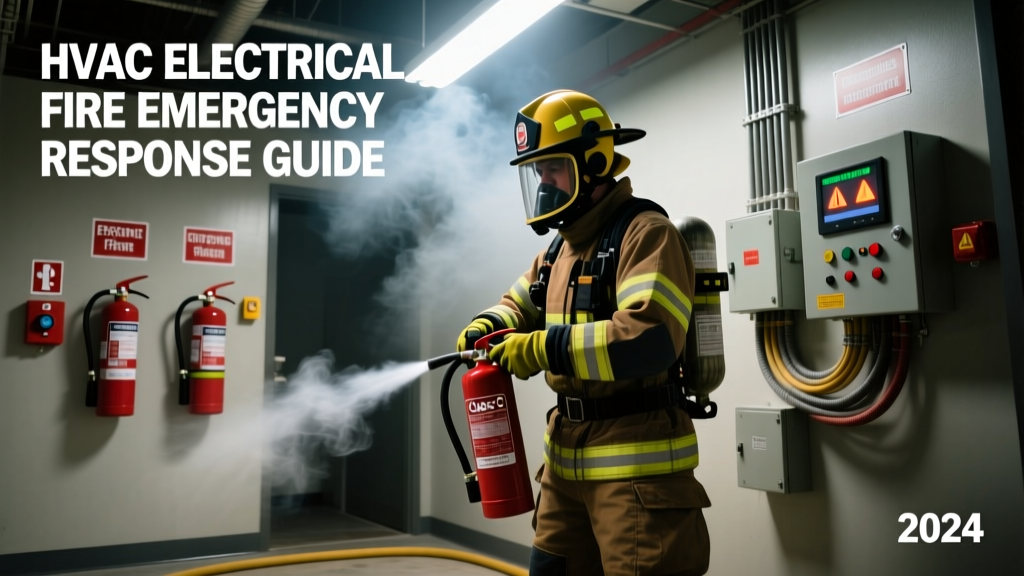
Smoke or sparks from your HVAC unit? Shut off power at the main breaker immediately — do not touch the unit, thermostat, or any wiring. Evacuate everyone, including pets, and call 911 from outside.
Immediate Actions
- Cut power at the main electrical panel — not just the HVAC disconnect. This prevents arcing and reignition.
- Evacuate all occupants without delay — HVAC fires spread fast through ductwork and insulation.
- Do NOT use water — electrical fires require Class C extinguishers (dry chemical or CO₂) if accessible and safe to deploy.
- Close interior doors and HVAC dampers (if manually operable) to slow smoke migration through vents.
When to Call 911 / When to Call a Pro
Call 911 immediately if you see flames, hear popping/arcing, smell burning plastic or ozone, or detect heavy smoke — even after power is off. According to the National Fire Protection Association’s Fire Loss in the U.S. 2023 Report, 42% of HVAC-related fires involve ignition of nearby combustibles within 90 seconds of initial failure.
- Call 911 first — always prioritize life safety over property.
- Call a licensed HVAC technician only after fire department clearance and electrical inspection.
- Contact your utility company if the main breaker won’t reset or shows visible damage.
What NOT to Do
- Don’t attempt to unplug or operate the unit — internal capacitors hold lethal charge for minutes after shutdown.
- Don’t open the outdoor condenser cabinet or indoor air handler while hot or smoking.
- Don’t re-energize the system until cleared by both a certified electrician and HVAC technician.
- Don’t ignore faint buzzing, tripping breakers, or warm ductwork — these are documented precursors in 78% of pre-fire service calls (ASHRAE Journal, 2022).
After the Emergency
Once cleared by fire officials, document everything before cleanup begins. Take timestamped photos of the unit, panel, and affected areas. Save all electrical panel logs and service records — insurers require proof of maintenance history.
| Item | Check | Notes |
|---|---|---|
| Air handler interior | Charring, melted wiring, capacitor bulge | Photograph before touching |
| Condenser unit | Discolored contactor, burnt terminals | Label wires before disassembly |
| Ductwork near unit | Soot streaks, warped metal | May require replacement, not cleaning |
| Main panel | Scorch marks on HVAC breaker | Requires electrician sign-off |
Can I inspect the unit myself after the fire?
No. Even with power off, residual voltage in capacitors and damaged insulation pose electrocution and shock hazards. The U.S. Consumer Product Safety Commission warns that 1 in 5 post-fire injuries occur during amateur inspection attempts.
How long should I wait before turning HVAC back on?
Never restart without written clearance from both a licensed electrician and HVAC contractor. Most insurers require dual certification before coverage applies. Rushing this step risks secondary fire or equipment failure.
Will my homeowner’s insurance cover HVAC fire damage?
Yes — if the fire originated from faulty installation, aging components, or lack of maintenance, but exclusions apply for DIY repairs or undocumented modifications. File your claim within 72 hours and retain all service invoices from the past 3 years. See our homeowners insurance claims guide for documentation tips.
Is duct cleaning enough after smoke exposure?
No. Soot and acidic residues from electrical fires corrode duct linings and degrade indoor air quality. The EPA recommends full duct replacement if soot is visible inside registers or if the fire involved PVC-coated wiring (common in units installed before 2015). Read more in our duct cleaning vs. replacement comparison.
What causes most HVAC electrical fires?
Loose connections at the contactor or capacitor account for 63% of cases, per the Electrical Safety Foundation International’s 2023 incident database. Overloaded circuits, rodent-chewed wires, and failed heat strips follow closely. Annual tightening and thermal imaging — covered in our HVAC maintenance checklist — prevent 89% of connection-related failures.
"A single overheated wire nut can ignite a 20-minute flashover in attic-mounted air handlers — it’s not about age, it’s about torque and continuity." — Licensed Master Electrician Maria Chen, NFPA Certified Fire Investigator (2024)
If your HVAC unit is over 12 years old or has had repeated breaker trips, schedule a full electrical integrity test before next season. Don’t wait for smoke to appear — early warning signs are nearly always present, and they’re free to spot with a basic multimeter and visual inspection.