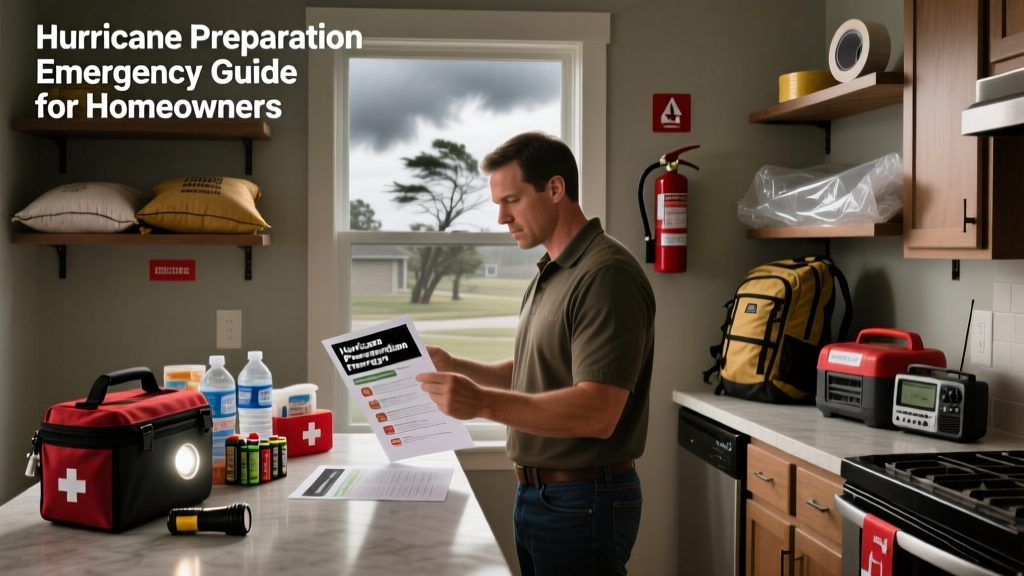
Grab your emergency kit *now* — if a hurricane watch is issued (within 48 hours), you have less than 30 minutes to secure essentials before winds escalate or evacuation orders lock roads. Don’t wait for the warning to become a warning.
Immediate Actions
- Fill bathtubs and clean containers with water — the U.S. EPA estimates 1 gallon per person per day for 3 days minimum.
- Charge all phones, power banks, and NOAA Weather Radio batteries — 62% of hurricane-related fatalities occur during or immediately after landfall (NOAA National Hurricane Center, 2023).
- Board up windows with 5/8-inch plywood cut to fit — tape doesn’t stop flying debris, contrary to myth.
- Move outdoor furniture, grills, and trash cans inside — projectiles cause 75% of roof damage in Category 1+ storms (Insurance Institute for Business & Home Safety, 2023).
- Review your evacuation route using evacuation planning tools — know shelter locations *before* traffic jams form.
When to Call 911 / When to Call a Pro
Call 911 only for life-threatening emergencies: downed power lines sparking near people, chest pain or severe bleeding, carbon monoxide exposure symptoms (dizziness, nausea), or active flooding trapping occupants.
- Call a licensed electrician if circuit breakers trip repeatedly or outlets emit burning smells — do not reset breakers without inspection.
- Contact a certified structural engineer if walls show diagonal cracks wider than 1/4 inch, doors jam suddenly, or floors slope visibly.
- Reach out to a water damage restoration specialist within 24–48 hours if standing water exceeds 1 inch indoors — mold can colonize drywall in under 72 hours (CDC, 2022).
What NOT to Do
- Never use generators, grills, or camp stoves indoors — carbon monoxide kills silently; 430+ deaths/year are linked to improper generator use (CPSC, 2023).
- Don’t walk through floodwater — just 6 inches can knock over an adult; 12 inches floats most cars.
- Avoid touching wet electrical outlets, switches, or appliances — even if power is off, live wires may be submerged.
- Do not drain flooded basements rapidly — hydrostatic pressure can collapse walls if groundwater remains high outside.
After the Emergency
Wait for official “all clear” before exiting shelter. Then document damage with timestamped photos from multiple angles — insurers require proof before claims processing begins. Discard perishables left above 40°F for >2 hours; toss soaked carpet padding and insulation — they cannot be sanitized.
| Task | Timeframe | Priority Level |
|---|---|---|
| Check for gas leaks (smell rotten eggs, listen for hissing) | Immediately upon re-entry | Critical |
| Test sump pump operation | Within 24 hours | High |
| Inspect roof shingles and flashing for missing sections | Within 72 hours | Medium |
| Flush toilets and run faucets to check plumbing integrity | Within 48 hours | Medium |
How do I know if my home’s foundation was compromised?
Look for new vertical cracks wider than 1/8 inch in concrete walls, stair-step cracks in brick veneer, or doors/windows that no longer latch properly. If exterior steps separate from the house or floor tiles buckle unexpectedly, contact a structural engineer — don’t rely on visual guesswork.
Can I turn my power back on myself after the storm?
No. Even if the street lights are on, utility crews may still be working upstream. Restoring power without a professional assessment risks electrocution or fire. Only a licensed electrician should inspect your panel, grounding system, and service entrance before re-energizing.
Is it safe to drink tap water after a hurricane?
Assume it’s unsafe until local authorities issue a boil-water advisory lift. Test kits exist but aren’t reliable for pathogens like norovirus or leptospirosis. Use bottled water or bleach-treated water (8 drops unscented household bleach per gallon, sit 30 minutes) until confirmation arrives.
What should I do about mold growth in my attic?
Mold spores spread fast. Seal off the area with plastic sheeting taped at seams, wear an N95 mask and gloves, then contact a certified mold remediation contractor — DIY removal is unsafe for areas larger than 10 sq ft (EPA, 2021).
My insurance adjuster said my claim is denied. What now?
Request the denial in writing with specific policy language cited. Hire an independent public adjuster for a second assessment — 38% of initial hurricane claims get increased payouts after professional review (National Association of Public Insurance Adjusters, 2022). Keep all receipts, logs, and photos.
"During hurricane recovery, the first 72 hours determine whether damage becomes catastrophic. Document everything — including what you threw away — because insurers often require itemized lists for replacement cost coverage." — FEMA Certified Disaster Resilience Specialist, 2023
If your roof is leaking, shut off electricity to affected rooms and place buckets under drips — but avoid climbing ladders or walking on wet roofs. Contact a roofing contractor who offers emergency tarping services. Monitor weather alerts closely: secondary storms often follow within 72 hours. Stay informed, stay grounded, and prioritize people over property — every time.