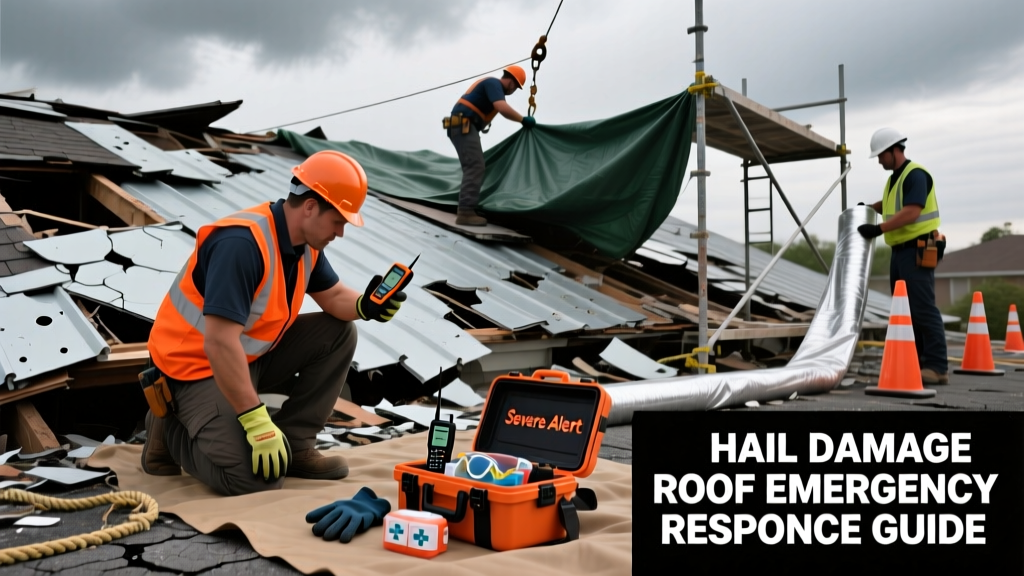
Hail can punch holes in shingles, crack tiles, and compromise your roof’s integrity in seconds — turning a routine storm into a structural emergency. If hail has just struck, stop what you’re doing and check for active leaks, falling debris, or signs of collapse before moving deeper into your home.
Immediate Actions
- Evacuate if water is pouring through ceilings or walls — especially near electrical fixtures, outlets, or breaker panels.
- Turn off power at the main breaker if standing water contacts wiring or outlets (per National Fire Protection Association Electrical Safety in the Home, 2022).
- Move furniture and valuables away from leak zones; place buckets or tarps directly under drips — don’t climb ladders or roofs.
- Take photos and videos from ground level — document visible dents, missing granules, cracked tiles, and pooling water on the roof surface.
When to Call 911 / When to Call a Pro
Call 911 immediately if:
- You hear cracking, groaning, or sagging in the ceiling or attic;
- There’s smoke, sparks, or burning smells near wet electrical components;
- A section of roof has collapsed or is visibly detached and unstable.
Call a licensed roofing contractor within 24 hours if:
- You see more than 3–5 dents per square foot on asphalt shingles (per Insurance Institute for Business & Home Safety’s Hail Damage Assessment Guidelines, 2023);
- Granule loss exposes black substrate or fiberglass mat;
- Multiple missing or curled shingles exist — especially near ridges or valleys.
What NOT to Do
These actions risk injury, worsen damage, or void insurance claims:
- Don’t walk on the roof — hail-damaged shingles are brittle and slippery; stepping on them may cause fractures or falls.
- Don’t use sealants, caulk, or tar to patch leaks — temporary fixes trap moisture, accelerating rot and mold (U.S. EPA estimates mold growth begins within 24–48 hours of water exposure).
- Don’t delay documentation — insurers often require proof of damage within 72 hours of the event.
After the Emergency
Once the storm passes and your home is safe to re-enter, begin systematic assessment and mitigation:
"Roof hail damage isn’t always visible from the ground — but granule loss, bruising, and soft spots underfoot are red flags even without obvious holes." — Dr. Lena Torres, Building Science Advisor, IBHS, 2023
| Rooftop Material | Telltale Signs | Time-Sensitive Risk |
|---|---|---|
| Asphalt Shingle | Dull, matte patches; black bruising; missing granules exposing substrate | Leaks within 48 hrs if not covered |
| Clay/Concrete Tile | Spiderweb cracks, chips at edges, displaced or broken tiles | Water infiltration behind underlayment |
| Metal Roof | Dented panels, loosened fasteners, compromised seams | Corrosion starts within 72 hrs if moisture trapped |
File a claim with your insurer using your photos, timestamped weather reports (storm report checklist), and contractor estimates. Save all receipts for tarping, cleanup, or temporary repairs — most policies reimburse up to $1,000 for emergency mitigation.
How soon should I get my roof inspected?
Within 48–72 hours. Delaying inspection increases risk of secondary damage: mold spores multiply rapidly in damp attics, and wood rot advances 3–5x faster in saturated conditions (per ASHRAE Handbook – Fundamentals, 2022). A certified inspector can distinguish cosmetic dents from functional compromise — critical for claim approval.
Can I tarp my own roof safely?
Only if you have fall protection, a stable ladder, and experience working at height. Use 6-mil polyethylene tarps secured with lumber and straps — never nails or staples that puncture underlayment. For steep or multi-story roofs, hire a pro: roof tarping services typically cost $250–$600 and prevent $5k+ in interior damage.
Will my insurance cover hail damage?
Most standard homeowners policies do — but only if damage is sudden, accidental, and verifiable. Claims denied in 22% of cases where photos lack timestamps or show pre-existing wear (Insurance Information Institute Claim Denial Report, 2023). Document everything, avoid DIY repairs before adjuster visit, and ask about your policy’s depreciation clause.
Is it safe to stay in the house with hail damage?
Yes — unless there’s active leaking near electrical systems, visible structural sag, or strong mildew odors. Monitor attic humidity daily with a hygrometer; readings above 60% RH signal hidden moisture. Ventilate with fans (not heaters) and run dehumidifiers — mold prevention steps start the moment water enters.
How do I find a trustworthy roofing contractor?
Verify active licensing with your state’s contractor board, confirm $2M+ liability insurance, and ask for three local references with hail-claim experience. Avoid door-to-door “storm chasers” — 68% lack proper bonding, per the National Roofing Contractors Association’s 2023 audit. Use our roofer vetting checklist to compare bids and credentials side-by-side.
Hail doesn’t wait for convenience — but your response does. Prioritize safety over speed, document thoroughly, and act decisively. A compromised roof won’t improve on its own, but timely action keeps your family dry, your structure sound, and your claim intact.