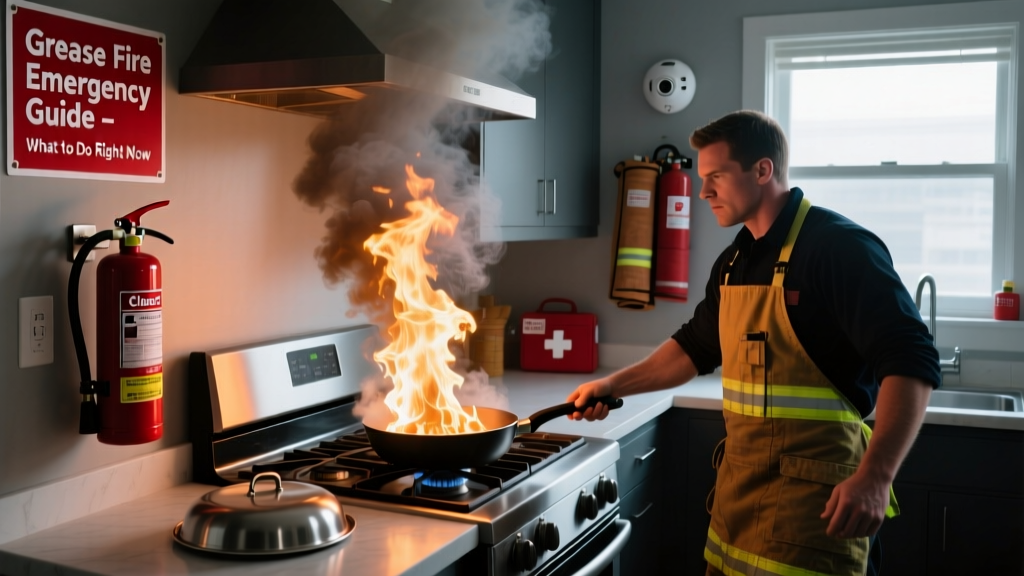
Smell smoke, see flames leaping from your pan, and hear that sharp, acrid crackle? That’s a grease fire—and it can double in size every 3 seconds. Do not move the pan. Your first action is to shut off the heat source immediately—then cover the pan with a metal lid or baking sheet.
Immediate Actions
- Turn off the stove burner—do not unplug it if it’s electric (risk of shock), just switch off at the control.
- Cover the pan completely with a metal lid, cookie sheet, or flame-resistant lid—no glass, no plastic, no towels.
- If flames persist beyond 5 seconds after covering, use a Class B dry chemical fire extinguisher—aim at the base of the flames.
- If you have a fire blanket rated for cooking oils (ASTM F1989-22), deploy it over the pan while keeping your hands protected.
- Evacuate everyone—including pets—from the kitchen and close the door behind you if flames are spreading.
When to Call 911 / When to Call a Pro
Call 911 immediately if:
- Flames exceed 12 inches in height or spread beyond the cooktop;
- Smoke alarms sound continuously or smoke fills more than one room;
- You’re unsure whether the fire is fully out—even if flames appear gone, grease can re-ignite up to 10 minutes later.
Call a licensed fire restoration contractor (not just a cleaning service) if:
- Smoke residue coats walls, cabinets, or HVAC vents;
- Electrical outlets near the stove smell burnt or show discoloration;
- Fire department responded—even a small incident triggers insurance documentation requirements.
What NOT to Do
These actions escalate grease fires instantly:
- Never pour water—it causes explosive vaporization, spraying burning oil up to 10 feet.
- Never use flour, sugar, or baking powder—they’re combustible and can trigger flash fires.
- Never try to carry a flaming pan—you’ll spread fire and risk severe burns.
- Never open the oven door if fire is inside—oxygen rush will reignite flames violently.
"In 2022, cooking fires accounted for 49% of all U.S. home structure fires—and grease ignition was the leading cause in 62% of those incidents." — NFPA Fire Analysis and Research, 2023
After the Emergency
Once firefighters confirm the scene is safe and power is off:
- Photograph damage before cleanup begins—including ceiling soot, warped cabinet fronts, and outlet scorch marks.
- Label and bag used fire extinguisher residue (sodium bicarbonate or monoammonium phosphate) for hazardous waste disposal—do not vacuum it.
- Replace all cookware involved—even stainless steel pans absorb oil into micro-pores and can reignite on reheating.
- Contact your insurance carrier within 24 hours; most require a fire department report number to process claims.
| Oil Type | Smoke Point (°F) | Flash Point (°F) | Risk Level |
|---|---|---|---|
| Canola oil | 400°F | 600°F | Moderate |
| Vegetable oil | 400–450°F | 610°F | Moderate |
| Extra virgin olive oil | 325–375°F | 570°F | High (commonly overheated) |
| Lard | 370°F | 600°F | High (frequent in deep-frying) |
How long should I wait before using the stove again?
Wait until a certified appliance technician clears it—especially if the control panel melted, burners won’t ignite, or you smell gas. Gas stoves require a leak test before reuse. Electric coils need continuity testing. Stove repair specialists typically respond within 2 hours for post-fire diagnostics.
Can I clean grease fire residue myself?
Surface-level soot on countertops? Yes—with trisodium phosphate (TSP) substitute and microfiber cloths. But walls, ductwork, or cabinetry with thermal discoloration require professional soot removal. DIY cleaning traps oily residue deeper, causing recurring odors and corrosion. Fire damage cleanup services use HEPA vacuums and ozone treatments proven effective against lipid-based smoke films (per IICRC S500 2022 standards).
Why did my smoke alarm not go off right away?
Most ionization alarms detect fast-flaming fires—but grease fires start smoldering and produce thick, low-heat smoke that delays activation by 90+ seconds. Photoelectric alarms respond 3–5× faster to this type of smoke. Replace all units with dual-sensor models if yours are older than 10 years.
Is it safe to reuse the same oil after a near-miss?
No. Oil degrades after reaching 350°F repeatedly—free fatty acids rise, smoke point drops, and oxidation creates volatile compounds. Reheating degraded oil increases acrolein production (a respiratory irritant) and raises ignition risk by up to 40%. Discard after any visible foaming, darkening, or odor change. Cooking oil safety guidelines detail shelf life and reuse limits by oil type.
What kind of fire extinguisher do I really need?
A UL-rated Class B:C extinguisher with at least 2-A:10-B:C rating—tested for flammable liquids and electrical equipment. Keep one mounted within 3 feet of the stove (not in a cabinet). Avoid “kitchen” extinguishers labeled only for grease—they’re often undersized or lack proper certification. Check pressure gauge monthly and replace every 6 years, per NFPA 10.
How do I prevent grease fires next time?
Use a thermometer—not guesswork—to monitor oil temp. Set burner to medium-low for frying; never leave unattended. Keep lids and fire blankets accessible—not in drawers. Install a range hood that exhausts outdoors (not recirculating), cleaned quarterly. And always dry food thoroughly before adding to hot oil—water content is the #1 ignition catalyst. According to the U.S. Consumer Product Safety Commission’s 2023 data, 78% of grease fires occurred when cooks stepped away for under 90 seconds.