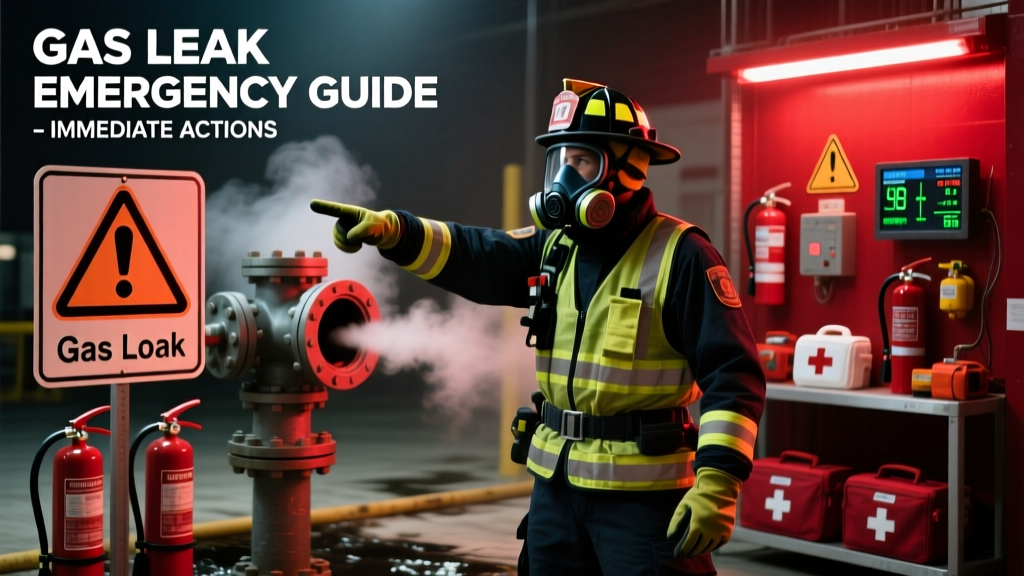
If you smell rotten eggs, hear a hissing sound near gas lines, or feel dizzy or nauseous indoors, assume there’s a natural gas leak — and act now. Do not flip switches, use phones, or light matches. Evacuate immediately.
Immediate Actions
These steps must happen in order — delay increases risk of explosion or asphyxiation.
- Leave the building or area immediately — do not stop to gather belongings.
- Do not operate light switches, appliances, doorbells, or garage door openers — even battery-powered devices can spark.
- Once safely outside, shut off the main gas supply valve (usually a quarter-turn lever on the meter) only if it’s within 3 feet of your exit path and you can reach it without re-entering.
- Move at least 300 feet away — upwind if possible — before using a cell phone or calling for help.
When to Call 911 vs. When to Call a Pro
Timing and context determine who to contact first. Misjudging this delays response and endangers lives.
- Call 911 immediately if you smell gas inside and cannot locate or safely shut off the source, if anyone is experiencing headache, dizziness, nausea, or difficulty breathing, or if you hear loud hissing or see bubbling earth near a gas line.
- Call your utility company or licensed gas fitter only after evacuation and confirmation that no immediate danger exists — e.g., a minor odor near a stove after lighting it, with no symptoms or audible leak.
According to the U.S. Consumer Product Safety Commission’s 2022 report, over 60% of gas-related fatalities occurred when people delayed evacuation to ‘investigate’ or ‘shut off the gas’ themselves.
“Natural gas is odorless — the rotten egg smell comes from added mercaptan. That odor means the concentration is already high enough to be flammable. If you smell it, you’re already in the danger zone.” — National Fire Protection Association, Gas Leak Response Guidelines, 2023
What NOT to Do
These actions have triggered explosions in documented cases. Avoid them completely until professionals declare the area safe.
- Do not use matches, lighters, candles, or incense.
- Do not start vehicles, lawnmowers, or generators near the suspected leak.
- Do not plug/unplug electrical devices or charge phones inside the structure.
- Do not return indoors — even briefly — to retrieve pets, keys, or documents.
After the Emergency
Once cleared by authorities, begin documentation and mitigation — but only after certified professionals confirm gas levels are safe (below 10% of the Lower Explosive Limit).
| Item | Why It Matters | Where to Record |
|---|---|---|
| Photos/video of suspected leak source | Supports insurance claims and repair verification | Cloud backup + printed copy |
| Date/time of leak detection & evacuation | Establishes timeline for liability and coverage | Written log + text/email timestamp |
| Utility company case number & inspector name | Required for dispute resolution and follow-up | Notepad kept separate from device storage |
File a claim with your homeowner’s or renter’s insurance within 48 hours. Review your policy’s coverage for gas-related damage — many exclude corrosion or long-term exposure effects unless explicitly added. For ongoing air quality concerns, consider testing with an indoor air quality test kit.
How long does it take for gas to dissipate after a leak?
Natural gas disperses quickly outdoors, but indoors — especially in basements or tightly sealed rooms — concentrations can remain hazardous for 30–90 minutes after ventilation begins. Never re-enter until a professional confirms readings are below 0.5% methane with a calibrated combustible gas detector.
Can I fix a small gas leak myself?
No. Even a pinhole leak in a flexible connector or corroded pipe joint requires licensed certification to repair. The U.S. Department of Transportation mandates that all natural gas line repairs meet ANSI Z223.1 standards — violations void insurance and carry criminal liability. Contact a licensed plumber or your utility’s emergency response team.
What if I smell gas but no one else does?
Trust your nose — mercaptan sensitivity varies widely. Roughly 12% of adults have reduced olfactory detection due to age, allergies, or prior exposure (American Academy of Otolaryngology, 2021). Use a portable gas detector like the UEi Test Instruments CD100A to verify — but evacuate first if odor persists.
Is carbon monoxide the same as natural gas?
No. Natural gas (methane) is flammable and odorized; carbon monoxide (CO) is an invisible, odorless, non-flammable byproduct of incomplete combustion. Both cause similar symptoms (headache, confusion), but CO detectors won’t alert to gas leaks — and gas detectors won’t catch CO. Install both types: see our guide on CO detector placement.
Will my smoke detector warn me of a gas leak?
No. Standard smoke alarms detect particles from fire — not gases. You need a dedicated natural gas detector (e.g., Kidde Nighthawk) installed near potential sources: water heaters, stoves, furnaces, and gas dryers. These units trigger at 10% LEL — well before ignition risk.
What should renters do during a gas leak?
Evacuate immediately, then call 911 and your landlord or property manager. Document everything — including timestamps and photos — and request written confirmation that the unit passed post-repair inspection. Under most state laws, landlords must provide habitable premises; unresolved gas hazards may justify rent withholding or lease termination. See our renters’ rights checklist for next steps.
Gas leaks escalate fast — but your response controls the outcome. Prioritize life over property, trust your senses over assumptions, and never hesitate to call 911. Once safe, schedule a full system inspection — because undetected micro-leaks account for nearly 27% of residential gas incidents reported to the Pipeline and Hazardous Materials Safety Administration in 2023.