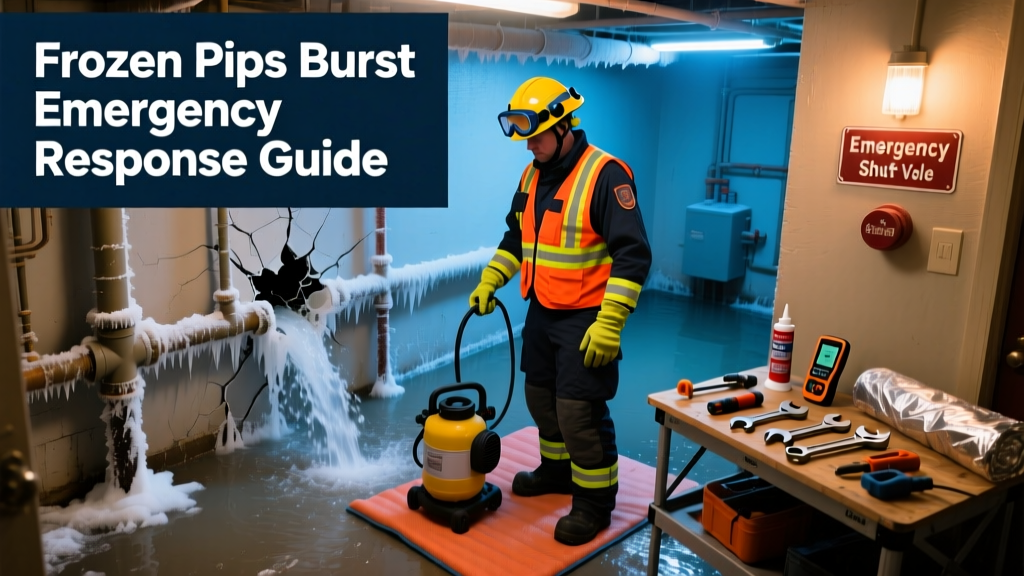
Act now—every minute counts. If you hear a loud bang, see water gushing, or notice bulging, frost-covered pipes, shut off your main water supply immediately at the valve (usually in the basement, crawl space, or near your water meter).
Immediate Actions
- Shut off the main water valve. Turn it clockwise until fully closed—this stops further flooding.
- Turn off electricity to any flooded area if standing water is near outlets, breakers, or appliances. Do not step in water while doing so.
- Open all cold-water faucets in the house—including sinks, tubs, and outdoor spigots—to relieve pressure and drain residual water.
- Contain water flow with towels, buckets, and plastic sheeting. Place fans and dehumidifiers in affected rooms—but only after confirming electrical safety.
When to Call 911 / When to Call a Pro
If water is contacting live electrical wiring, sparking, or entering your electrical panel, evacuate and call 911 immediately. Also dial 911 if flooding threatens structural integrity (e.g., sagging ceilings, buckling floors) or traps someone.
For all other bursts, contact a licensed plumber within 2 hours. According to the Insurance Institute for Business & Home Safety's 2023 report, 72% of frozen-pipe water damage claims exceed $5,000 when repair begins more than 4 hours post-burst.
- Call a plumber if: pipe is cracked but not actively spraying, water is localized, and power remains safe.
- Call your insurance company before cleanup begins—they often require photo documentation pre-mitigation.
What NOT to Do
- Never use open flames (propane torches, matches, or stovetops) to thaw pipes—fire risk is extreme.
- Don’t run hot water through frozen lines—steam buildup can rupture weakened sections.
- Avoid using extension cords in standing water—even if power is off, residual current may remain.
- Don’t delay shutting off water because “it might stop on its own.” It won’t.
“Thawing a pipe with a hair dryer is acceptable—but only if the pipe is accessible, dry, and you maintain constant supervision. Never leave heat sources unattended near insulation or wood framing.” — National Association of Home Builders, Plumbing Safety Bulletin, 2022
After the Emergency
Once water flow stops and electricity is confirmed safe, begin damage assessment. Photograph every wet surface, damaged drywall, flooring, and insulation before touching anything. Note timestamps and room conditions.
| Item | Required Evidence | Deadline |
|---|---|---|
| Wall damage | 6+ photos showing extent + moisture meter reading | Within 24 hrs |
| Flooring loss | Video pan + close-up of subfloor warping | Within 24 hrs |
| Electrical outlets | Photo of outlet cover removed (only if dry and powered off) | Within 12 hrs |
| HVAC ducts | Photo of visible condensation or mold spores inside vents | Within 48 hrs |
Cleanup must begin within 24–48 hours to prevent mold growth. The U.S. EPA estimates that mold colonies can establish in as little as 48 hours on damp drywall or carpet padding. Hire IICRC-certified water restoration specialists—not general contractors—for Category 1 or 2 water events. For guidance on drying timelines, see our water damage drying timeline.
How do I locate the exact burst point?
Start where you heard the noise or saw the leak. Check uninsulated sections: exterior walls, attics, garages, and crawl spaces. Look for bulges, frost, or discoloration on copper or PEX. If unsure, turn water back on *briefly* (with all faucets open) and watch for new drips—then shut off again immediately. For hidden leaks behind walls, consult a plumber with an infrared camera; see our infrared leak detection guide.
Can I repair the pipe myself?
Temporary fixes like epoxy putty or pipe clamps are acceptable *only* for small pinhole leaks in accessible copper or PVC—and only until a pro arrives. Never attempt permanent soldering on a wet or pressurized line. DIY repairs void most insurance claims if failure occurs within 30 days.
Is my home insurance likely to cover this?
Most standard HO-3 policies cover sudden, accidental water damage from burst pipes—but exclude damage from long-term neglect (e.g., failing to winterize). Coverage applies only if you took reasonable precautions (e.g., maintained heat above 55°F, insulated pipes). Review your policy’s “freezing exclusion” clause—many insurers deny claims if interior temps dropped below 55°F for >48 hours. Learn more in our home insurance frozen pipes coverage explainer.
How long does full restoration take?
Minor ceiling or wall damage: 3–5 days. Full basement flood with soaked insulation and subfloor: 10–21 days. Structural wood framing requires moisture readings below 15% for 72 consecutive hours before rebuilding. Rushing drywall replacement leads to mold recurrence—wait for certified moisture reports.
What temperature should I keep my house at in winter?
Maintain indoor heat at no lower than 55°F—even when away. The U.S. Department of Energy confirms that temperatures below 55°F significantly increase pipe freeze risk in uninsulated exterior walls and rim joists. In homes with slab foundations or poorly insulated basements, aim for 60°F during sub-zero wind chills.
How do I prevent this next winter?
Insulate all pipes in unheated spaces using foam sleeves (R-2 minimum) or heat tape with auto-shutoff. Seal foundation cracks and rim joist gaps with expanding spray foam. Drain and shut off outdoor spigots. Consider installing a smart water shutoff valve like Phyn or Moen Flo—they detect abnormal flow and auto-shut within 6 seconds. See our winterize home pipes checklist for a room-by-room plan.
Every frozen pipe incident is preventable—but once it happens, speed, precision, and verified safety protocols determine whether you face a $2,000 repair or a $40,000 rebuild. Stay calm, act fast, and never guess about electricity or structural risk.