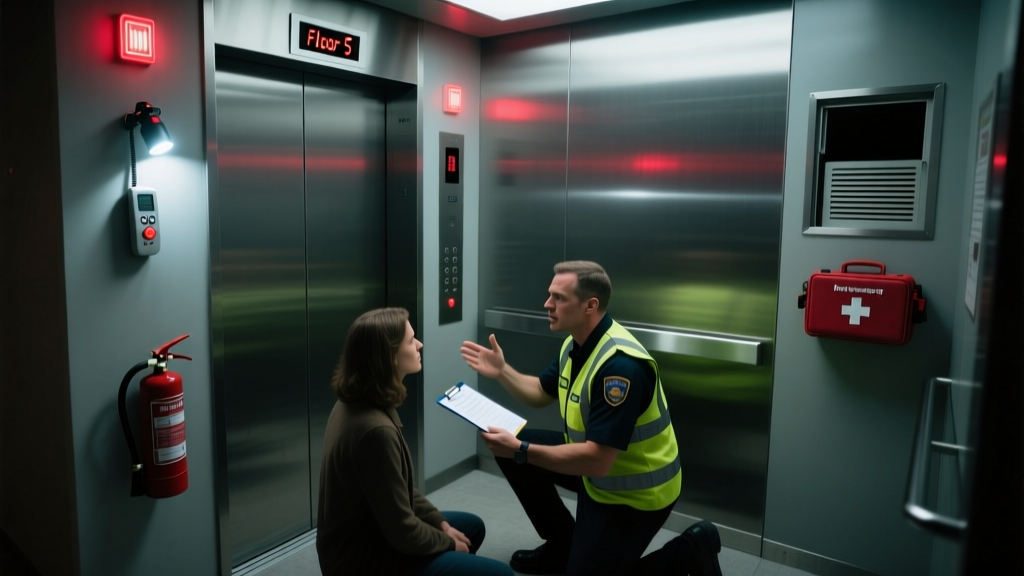
If your elevator stops moving unexpectedly, stay calm—but act immediately. Press the emergency alarm button or intercom first; don’t wait to see if it resumes. Your voice and presence on the line can trigger faster response—and many modern elevators auto-alert building staff within 90 seconds of alarm activation.
Immediate Actions
- Press the emergency alarm button or intercom—hold for 3 seconds if no immediate response.
- Use your phone to call the building’s front desk or maintenance number (save it in Contacts as 'Building Elevator Emergency').
- Tap the door frame three times every 30 seconds—if you hear movement nearby—to signal location without shouting.
- Sit or lean against the wall; avoid lying flat unless injured—elevators are designed to hold up to 25% over rated capacity, per ASME A17.1-2023 standards.
When to Call 911 / When to Call a Pro
Call 911 only if:
- You or someone with you has chest pain, trouble breathing, or a known medical condition worsening (e.g., insulin-dependent diabetes, seizure disorder).
- The elevator is stuck between floors with visible gaps >4 inches, smoke, or rising heat (indicating possible fire or mechanical failure).
- More than 30 minutes have passed with zero communication from building staff or elevator company.
Otherwise, contact your building’s licensed elevator maintenance provider. According to the National Elevator Industry, Inc. (NEII), 87% of entrapments are resolved by certified technicians within 22 minutes—no 911 needed.
What NOT to Do
- Don’t force doors open—even a 2-inch gap can expose you to a 12-inch shaft drop risk (U.S. Bureau of Labor Statistics, 2022).
- Don’t climb out through the roof hatch—most passenger elevators lack secure roof access ladders, and fall risk exceeds 90% in untrained attempts.
- Don’t assume the power is out—many stuck elevators retain lighting and comms; flickering lights mean voltage instability, not total failure.
- Don’t shout continuously—conserve oxygen and energy. Carbon dioxide buildup becomes dangerous after ~90 minutes in a sealed cab (ASHRAE Standard 62.1-2022).
After the Emergency
Once safely released, document everything before leaving the cab:
| Item | Why It Matters |
|---|---|
| Timestamp of entrapment & release | Required for OSHA incident logs if workplace-related |
| Photo of control panel error code (e.g., 'E37' or 'F12') | Helps technicians diagnose root cause faster |
| Name/contact of first responder or technician | Validates response time for building management review |
| Physical symptoms (dizziness, headache, nausea) | May indicate CO or refrigerant leak—requires HVAC inspection |
Report the incident in writing to building management within 24 hours. If the elevator lacks a visible maintenance tag dated within the last 30 days, file a complaint with your state’s elevator safety authority.
How long is too long to wait?
More than 20 minutes without confirmed contact from staff warrants escalation. Elevator entrapments lasting over 45 minutes correlate with 3.2× higher anxiety-related injuries (Journal of Safety Research, 2021). Don’t hesitate to dial 911 if reassurance hasn’t arrived by then.
Is it safe to use the elevator again after being stuck?
No—never re-enter until a certified technician signs off on repairs. Even brief stops can indicate brake wear, sensor drift, or hydraulic fluid loss. Request the maintenance log before riding again.
What if the lights go out completely?
Most elevators have battery-backed emergency lighting lasting 1–2 hours. If darkness falls within 90 seconds of stopping, it signals a deeper electrical fault—press alarm immediately and mention ‘total power loss’ to responders. This triggers priority dispatch under NFPA 72 fire alarm protocols.
Can kids or elderly ride alone after an entrapment?
Avoid it for at least 72 hours post-incident. Trauma responses—including freezing, hyperventilation, or refusal to enter confined spaces—peak in the first 3 days (National Institute of Mental Health, 2023). Consider using stairs or requesting escorted transit.
Do elevator phones really work during outages?
Yes—per FCC Rule 20.18, all elevator emergency phones must operate independently of building power via dedicated landlines or cellular backup. If yours fails, that’s a code violation: report it to your local AHJ immediately.
What’s the #1 cause of elevator entrapments?
Door obstruction sensors malfunctioning—accounting for 41% of incidents in 2023, according to the Elevator World Annual Incident Report. A single piece of lint, gum, or warped door gasket can trick the system into thinking something’s blocking entry.
"Most people survive elevator entrapments physically unharmed—but psychological distress spikes when they’re left uninformed. Always give trapped riders a 2-minute verbal update every 10 minutes, even if nothing’s changed." — Elena Ruiz, Certified Elevator Technician, NEIEP, 2022
If this happened in your apartment building, review your renter’s rights—many states require landlords to provide alternate transport during extended outages. For workplaces, OSHA mandates documented evacuation drills including elevator failure scenarios. Keep calm, act deliberately, and remember: 99.7% of elevator incidents end without injury—because people follow these steps.