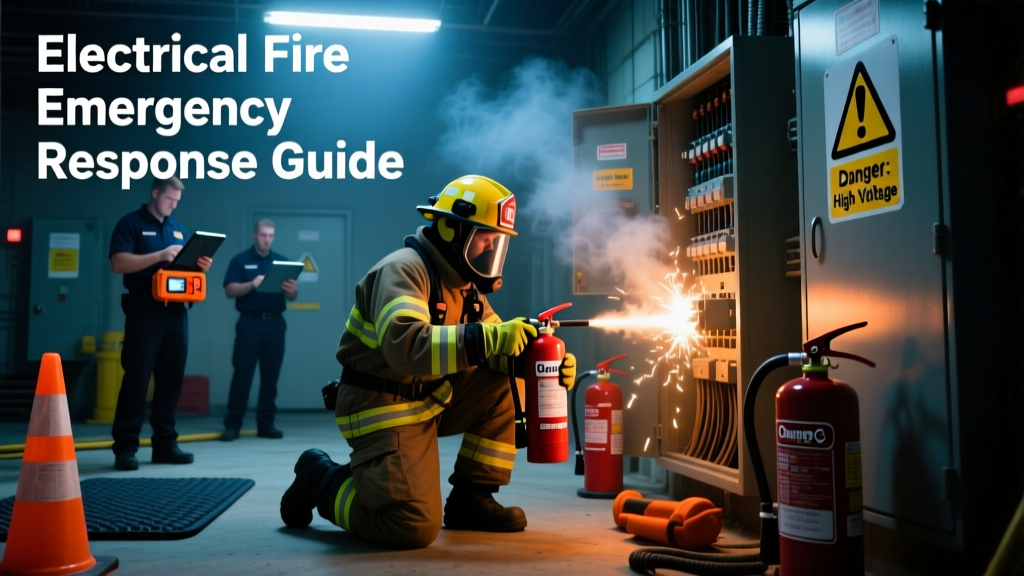
Stop. Unplug or shut off power at the breaker panel — if it’s safe to do so — before anything else. Never approach a sparking outlet, smoking appliance, or flaming wire.
Immediate Actions
- Cut the power: Go straight to your main electrical panel and flip the main breaker. If the fire is near the panel or you hear buzzing/arcing, skip this and evacuate immediately.
- Use a Class C fire extinguisher only: Never use water or multipurpose (ABC) extinguishers unless labeled for electrical fires — many ABC units are *not* rated for live voltage.
- Evacuate if flames exceed 20 inches or smoke fills the room: According to the National Fire Protection Association’s 2023 Fire Loss Report, 43% of electrical fire fatalities occurred in homes without working smoke alarms — don’t wait to see flames.
- Close doors behind you: This slows oxygen flow and limits fire spread while you exit.
When to Call 911 vs. When to Call a Licensed Electrician
If any of these apply, dial 911 immediately:
- Flames are visible beyond the source (e.g., spreading up walls or into ceiling)
- You smell burning insulation (sharp, acrid odor — not just hot plastic)
Call a licensed electrician only after the fire department clears the scene and power is confirmed off:
- For damaged outlets, switches, or panels needing replacement
- To inspect hidden wiring in walls or attics
- If GFCI or AFCI breakers fail diagnostic tests post-incident
What NOT to Do
These actions dramatically increase injury or death risk:
- Never use water — even on a small outlet fire. Water conducts electricity and can electrocute you or cause explosion.
- Don’t attempt to remove a plug or cord from a wall if it’s sparking or smoldering — arcing can jump up to 12 inches.
- Avoid using extension cords as permanent fixes — they’re involved in 3,300+ home fires annually (U.S. Consumer Product Safety Commission, 2022).
- Don’t re-energize circuits until inspected — even if breakers reset cleanly, internal damage may exist.
After the Emergency
Once firefighters confirm the scene is safe and power is off:
- Document all damage with timestamped photos — include close-ups of outlets, panels, and scorched drywall.
- Contact your insurance company within 24 hours; most require proof of electrical inspection before approving claims.
- Hire a certified electrician to perform a full system evaluation — including thermal imaging of circuits and load testing.
- Replace all smoke and carbon monoxide detectors — heat exposure degrades sensors even if they appear intact.
Can I reset the breaker after a small spark?
No. A single spark or pop from an outlet indicates dangerous arcing. According to the Electrical Safety Foundation International’s 2023 Arc Flash Study, 78% of arc-related injuries occur during routine resets or inspections — always assume the circuit is compromised.
Is it safe to use a fire extinguisher on an outlet fire?
Only if it’s labeled Class C (or “C-rated”) and you’re at least 6 feet away. Most household extinguishers are ABC-type — but check the label: some ABC units lack proper dielectric testing for live-voltage use.
"A Class C rating means the extinguishing agent won’t conduct electricity — but distance and training matter more than the label alone." — NFPA 10 Handbook, 2022 edition
How long should I wait before re-entering the room?
Wait until firefighters declare the area safe AND an electrician confirms no residual current. Hidden wiring damage can reignite hours later — especially in insulated walls where heat builds silently.
Do I need to replace all wiring in the wall?
Not necessarily — but any cable within 3 feet of charring must be replaced. Thermal damage weakens insulation, increasing future failure risk. A qualified electrician will test continuity and insulation resistance per NEC Article 300.5.
What if the fire started in my breaker panel?
This is high-risk. Panel fires often involve busbar damage invisible to the naked eye. The U.S. Fire Administration recommends full panel replacement — not just breaker swaps — after any internal arcing event (USFA Bulletin #FA-312, 2021).
Can I clean soot myself?
No. Electrical soot is acidic and corrosive to metal components. DIY cleaning risks damaging undamaged circuits and voiding warranties. Hire an IICRC-certified restoration firm trained in fire damage cleanup and post-fire electrical assessment.
Electrical fires escalate faster than most realize — and their root causes are rarely obvious. Always prioritize evacuation over intervention. For ongoing safety, install AFCI breakers in bedrooms and living areas (how to upgrade) and test GFCIs monthly. If you’ve had one electrical fire, your home’s wiring likely needs full evaluation — don’t wait for the next warning sign.