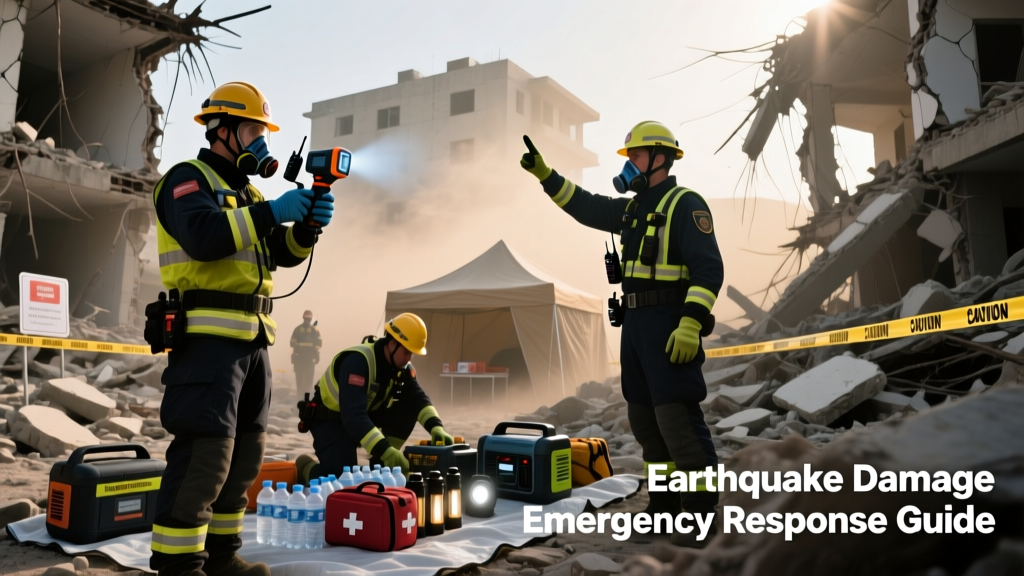
Drop, cover, and hold on — then, once shaking stops, check yourself and others for injuries. If you’re safe and mobile, move to a clear area away from damaged walls, windows, or hanging objects. Do not wait for instructions — your first 60 seconds determine safety.
Immediate Actions
- Check for injuries: Administer first aid only if trained; don’t move seriously injured people unless they’re in immediate danger (e.g., fire, falling debris).
- Evacuate if the building is compromised: Look for cracked foundations, sagging floors, leaning walls, or doors that won’t open/close — these signal possible collapse risk (USGS, 2022).
- Shut off utilities if you smell gas, hear hissing, or see broken lines: Turn off the main gas valve with a wrench — do not use lighters, matches, or switches.
- Use text messages instead of calls: Cellular networks overload quickly; texts often get through when voice calls fail (FEMA, 2023).
When to Call 911 / When to Call a Pro
Call 911 immediately for: life-threatening injuries, active gas leaks (smell like rotten eggs), downed power lines sparking, or structural failure with visible movement or cracking.
Call a licensed structural engineer or certified earthquake retrofit contractor for: cracked load-bearing walls, shifted foundations, uneven floors, or doors/windows that no longer align — even if the building appears stable. According to the California Geological Survey’s 2023 Seismic Safety Report, 68% of moderate-to-severe damage goes unnoticed by untrained occupants until secondary failure occurs.
- Do NOT call 911 for non-urgent issues like minor drywall cracks, loose tiles, or water heater displacement — use our licensed pro finder.
- Do NOT delay inspection — many post-earthquake failures happen 12–72 hours later due to stress redistribution (ATC-20, 2021).
What NOT to Do
- Don’t re-enter a damaged building — even briefly — to retrieve pets, phones, or documents.
- Don’t use candles, lighters, or gas stoves until gas lines are inspected and cleared.
- Don’t flush toilets or run faucets if you suspect sewer line damage (look for foul odors or pooling water near drains).
- Don’t assume brick chimneys or unreinforced masonry walls are safe — over 40% of chimney collapses occur within 48 hours post-quake (National Earthquake Hazards Reduction Program, 2022).
"A building may look intact but have hidden shear wall failures or anchor bolt pullouts. If you feel vibration during aftershocks or hear grinding noises, evacuate immediately — it’s not paranoia, it’s physics." — Dr. Lena Cho, Structural Seismologist, UC Berkeley, 2023
After the Emergency
Once authorities confirm the area is safe for re-entry, begin documentation and stabilization — but only if structural integrity has been verified by a professional.
| Item | How to Record | Why It Matters |
|---|---|---|
| Cracks in foundation or walls | Measure width (mm) and length (ft); photograph with ruler in frame | Insurance requires evidence of pre-existing vs. quake-caused damage |
| Gas or water line breaks | Note location, size, and odor; mark with spray paint (non-flammable) | Prevents accidental reactivation; speeds utility repair response |
| Electrical panel damage | Photograph breakers, scorch marks, or melted wires — do not touch | Fire hazard; triggers mandatory inspection before power restoration |
Clean up broken glass with thick gloves and a dustpan — never bare hands. Discard food exposed to floodwater, gas leaks, or dust from damaged insulation (EPA recommends discarding anything not in sealed containers).
Is my home safe to sleep in tonight?
If a structural engineer hasn’t cleared it, assume it’s unsafe. Even small lateral shifts can compromise roof-to-wall connections. Use our free visual safety checklist as a preliminary screen — but never substitute for professional evaluation.
My insurance says “earthquake coverage is optional.” What now?
It is — and fewer than 15% of California homeowners carry it (California Department of Insurance, 2023). File a claim within 72 hours, even if damage seems minor. Document everything before cleanup begins. Review your policy’s deductible — it’s typically 10–15% of dwelling value, not a flat fee.
Can I fix cracked drywall myself?
Yes — but only after a professional confirms no underlying framing or shear wall damage. Drywall cracks along ceilings or corners may indicate serious structural movement. Prioritize drywall repair steps only when clearance is confirmed.
What if my water heater fell over?
Turn off the gas and water supply valves immediately. Water heaters cause ~25% of post-quake fires due to gas line rupture (NFPA, 2022). Replacement requires seismic bracing per IRC Section R320 — DIY installation is not permitted in most jurisdictions.
Are aftershocks dangerous?
Yes — especially in the first 48 hours. The largest aftershock is typically 1.2 magnitude units smaller than the main shock (USGS, 2023), but can still topple weakened structures. Sleep in a doorway only if it’s load-bearing and uncluttered — modern homes rarely have structurally sound doorways. Better: sleep in an interior hallway away from windows and exterior walls.
How long until utilities are restored?
Gas: 24–72 hours if lines are intact; up to 10 days if widespread damage. Electricity: 1–5 days for localized outages; weeks for transmission tower damage. Water: Usually 24–48 hours unless pipes ruptured underground — boil advisories may last 72+ hours. Track real-time updates via our outage map.
Recovery starts with safety — not speed. Every decision you make in the first hour affects your family’s health, legal rights, and financial recovery. Keep this guide accessible offline: save the PDF, print a copy, or store it in your emergency kit. You’ve got this — and help is closer than you think.