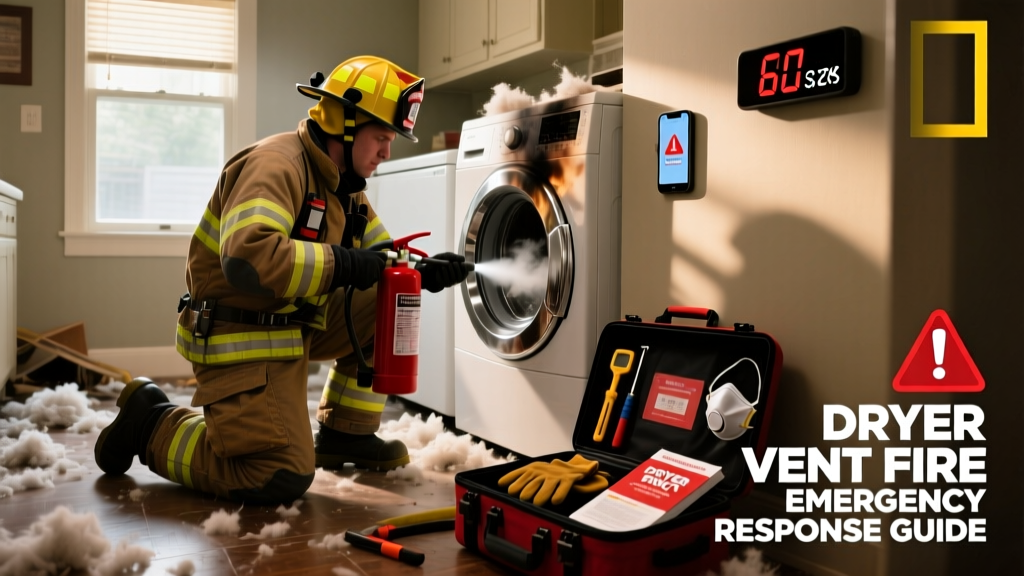
If smoke or flames are coming from your dryer or vent duct—evacuate immediately. Do not attempt to extinguish the fire yourself unless it’s small, contained, and you have a Class ABC fire extinguisher nearby and trained use.
Immediate Actions
- Shut off the dryer at the control panel and unplug it if safe to do so (don’t reach through smoke or flame).
- Close the laundry room door to contain smoke and limit oxygen feeding the fire.
- Alert all household members and evacuate everyone—including pets—to a pre-identified outdoor meeting spot.
- Once outside and safe, call 911—even if flames appear out. Hidden fire can smolder inside walls or ductwork.
When to Call 911 / When to Call a Pro
Call 911 immediately if:
- You see visible flames, heavy smoke, or hear popping/crackling from walls or ceiling near the vent path.
- The dryer or vent duct feels hot to the touch beyond normal operation.
- There’s a burning plastic or electrical odor that persists after the dryer is off.
Call a licensed HVAC technician or certified dryer vent cleaning specialist after fire department clearance for:
- Inspecting and cleaning the entire vent system (minimum 25 feet of rigid metal duct recommended by NFPA 54, 2023).
- Replacing damaged flexible plastic or foil ducts with UL-listed rigid aluminum or galvanized steel.
- Verifying proper termination—vents must exhaust outdoors, not into attics, crawlspaces, or garages (a leading cause of re-ignition).
What NOT to Do
Avoid these high-risk actions during or immediately after a dryer vent fire:
- Never use water—dryer fires involve electrical components and lint (a highly combustible fuel); water spreads risk and conducts electricity.
- Don’t reopen doors or windows near the fire area—this feeds oxygen and can trigger flashover.
- Don’t re-enter the home until cleared by fire officials—even if smoke clears. Carbon monoxide and structural damage may be hidden.
- Don’t reuse the dryer without professional inspection. Lint ignition often indicates years of buildup; ducts may be compromised or improperly installed.
After the Emergency
Once cleared to re-enter, begin documentation and mitigation:
- Photograph all visible damage—including duct interior (if accessible), wall discoloration, and dryer unit—for insurance claims.
- Contact your insurer within 24 hours—NFPA reports dryer vent fires cause an estimated $35 million in property damage annually (NFPA Fire Analysis & Research, 2022).
- Hire a certified inspector to check for hidden charring behind drywall or in ceiling joists—especially if the vent ran through framing.
- Replace any flexible plastic or accordion-style ducts with rigid metal—these reduce airflow resistance and lint trapping by up to 70% (U.S. Consumer Product Safety Commission, 2021).
How often should dryer vents be cleaned?
At minimum once per year—but every 6 months if you dry more than 5 loads weekly, have a long or bent duct run (>25 ft or >2 elbows), or notice longer drying times, excessive heat, or burnt odor. According to the U.S. Fire Administration, 80% of dryer fires involve improper venting or maintenance.
Can a dryer fire start even if the machine is off?
Yes. Smoldering lint in the duct or behind the dryer can reignite hours later due to residual heat or air movement. That’s why fire departments recommend staying out until they declare the structure fully cold—and why thermal imaging is used during post-fire inspections.
What type of fire extinguisher works on dryer vent fires?
A Class ABC extinguisher is appropriate for initial suppression of small, accessible fires involving lint, electrical components, and surrounding materials. But never prioritize extinguishing over evacuation. As Fire Chief Maria Gonzalez of the National Fire Protection Association states:
"If you’re debating whether to grab the extinguisher or get out—get out. Lint fires escalate faster than most realize, and duct fires are rarely visible until it’s too late." (NFPA Home Fire Safety Report, 2023)
Is it safe to clean the vent myself?
You can safely vacuum the exterior vent hood and lint trap regularly—but internal duct cleaning requires specialized brushes, rods, and inspection cameras. DIY attempts often leave compacted lint deeper in the system. A study by the Chimney Safety Institute of America found 62% of self-cleaned vents still had hazardous blockages detectable only with borescope inspection.
Does homeowners insurance cover dryer vent fire damage?
Most standard policies cover fire damage—but insurers may deny claims if negligence is proven (e.g., documented prior warnings, repeated lint buildup, or use of non-code-compliant ducting). Keep records of professional cleanings and duct upgrades—like installing a rigid metal dryer duct or vent camera inspection report.
What’s the safest dryer vent material?
Rigid metal ducts (aluminum or galvanized steel) are the only materials approved by the International Residential Code (IRC R303.3.2, 2021) for concealed runs. They resist crushing, minimize static buildup, and don’t degrade like plastic or foil. Avoid semi-rigid aluminum—it kinks easily and traps lint. For retrofitting, see our guide on proper dryer vent installation.
| Duct Type | Fire Risk Increase vs. Rigid Metal | Typical Lifespan |
|---|---|---|
| Flexible plastic | 4.8× higher | 3–5 years |
| Foil accordion | 3.2× higher | 5–7 years |
| Rigid aluminum | Baseline (1×) | 20+ years |
| Galvanized steel | 0.9× (slightly lower) | 30+ years |
After any dryer vent incident, treat it as a warning—not an anomaly. Most fires are preventable with routine maintenance and code-compliant materials. If your last cleaning was over a year ago—or if your duct snakes through walls or attic spaces—schedule a professional inspection now. Your next load of laundry shouldn’t carry hidden danger.