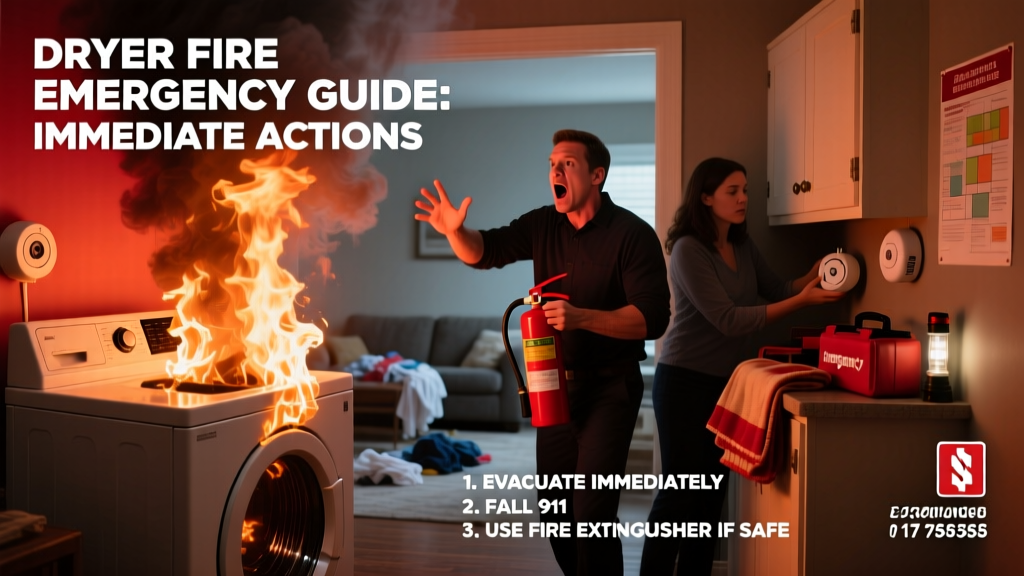
Stop using the dryer immediately — unplug it or shut off its circuit breaker *before* approaching. If flames are visible, smoke is thick, or heat is intense, evacuate everyone and call 911 *first*. Do not delay.
Immediate Actions
- Shut off power at the circuit breaker (not just the dryer switch) — dryers draw 240 volts and can reignite if powered.
- Evacuate all people and pets — especially children, elderly, or mobility-limited individuals — without stopping to gather belongings.
- If the fire is confined to the dryer drum *and* is smaller than a basketball, use a Class ABC fire extinguisher (never water) while standing at arm’s length.
- Close the laundry room door behind you as you exit — this slows oxygen feed and limits fire spread.
When to Call 911 / When to Call a Pro
Call 911 immediately if:
- Flames extend beyond the dryer cabinet (e.g., into walls, ceiling, or vent duct)
- Smoke is filling multiple rooms or has a sharp, acrid odor (sign of PVC or insulation burning)
- You hear popping, cracking, or rumbling sounds — indicating structural involvement
Call a licensed appliance technician or fire restoration specialist *after* fire department clearance for:
- Duct inspection and cleaning (lint buildup causes 29% of home dryer fires, per U.S. Fire Administration 2022 data)
- Circuit evaluation — overheating may have damaged wiring behind the wall
- Gas line verification (if using a gas dryer — even small leaks become hazardous post-fire)
What NOT to Do
- Never use water — dryers involve live electricity and often contain flammable lint; water spreads electrical hazards and steam explosions.
- Don’t open the dryer door — introducing oxygen fuels combustion. Wait for professionals unless actively extinguishing a tiny, contained flame with an extinguisher.
- Don’t re-use the dryer — even after a minor incident. Internal damage (melted thermostats, cracked heating elements) isn’t visible but raises future fire risk.
- Don’t ignore the vent — 34% of dryer fires start in the exhaust duct (NFPA 2023 report). A single incident means full duct replacement is likely needed.
After the Emergency
Once cleared by firefighters, document everything before cleanup begins. Take timestamped photos of the dryer, vent path, outlet, and any charring or discoloration on walls or flooring.
| Area | What to Inspect | Red Flag Sign |
|---|---|---|
| Vent duct | Check for kinks, plastic transitions, or disconnected joints | Black soot inside flexible aluminum duct or melted plastic collar |
| Electrical outlet | Look for scorch marks, warped faceplate, or burnt smell | Melted plastic around receptacle or discolored brass terminals |
| Wall cavity | Tap drywall near dryer — hollow vs. damp/muffled sound | Soft spots, bubbling paint, or persistent musty odor after 48 hours |
Dispose of all lint traps, dryer sheets, and fabric softener residue — these can retain volatile compounds. Replace the dryer lint screen with a stainless steel mesh screen and schedule a professional vent inspection within 72 hours.
Can I clean the dryer myself after smoke exposure?
No. Smoke contains corrosive acids and fine particulates that embed in electronics and insulation. Even surface wiping leaves conductive residue that can cause short circuits later. According to the Institute of Inspection, Cleaning and Restoration Certification (IICRC S520, 2022), thermal degradation of internal components requires certified evaluation — not DIY cleaning.
How long until it’s safe to use the laundry room again?
Only after fire department sign-off *and* a licensed electrician confirms circuit integrity. If ductwork was compromised, wait until rigid metal ducting is fully installed and tested — typically 1–3 days. Never bypass interlocks or override safety sensors.
Will my insurance cover dryer fire damage?
Most standard homeowners policies cover sudden, accidental fire damage — but exclusions apply if negligence is proven (e.g., documented failure to clean the lint trap for >6 months). The Insurance Information Institute notes that 82% of denied claims cite lack of maintenance records (Homeowners Claims Study, 2023). Keep dated photos and service receipts.
Why did my dryer catch fire even though I clean the lint trap?
Lint traps capture only ~40% of lint — the rest travels into the duct, blower wheel, and motor housing. A clogged 25-foot vent reduces airflow by 70%, causing overheating (UL 2158A testing, 2021). That’s why annual professional duct cleaning is non-negotiable.
Is it safer to switch to a heat pump dryer?
Yes — heat pump dryers operate at lower temperatures (120–140°F vs. 170–200°F in vented models), reducing ignition risk. They also eliminate external venting, removing duct-related fire pathways entirely. ENERGY STAR reports they cut dryer fire risk by up to 60% compared to conventional electric units (2023 Appliance Safety Review).
Should I replace the entire dryer or just parts?
Replace the entire unit. UL-certified dryers are designed as integrated systems — swapping a thermostat or heating element voids safety certification and creates mismatched thermal tolerances. As one NFPA fire investigator stated:
“We’ve seen 12 cases in 2023 where ‘repaired’ dryers reignited within 72 hours — always due to undocumented component substitutions.” — NFPA Fire Cause Analysis Bulletin #2023-08
If your dryer sparked, smoked, or shut down mid-cycle before the fire, that’s a warning sign — don’t wait for the next incident. Review our monthly dryer maintenance checklist and bookmark this guide. Your fastest response starts long before flames appear.