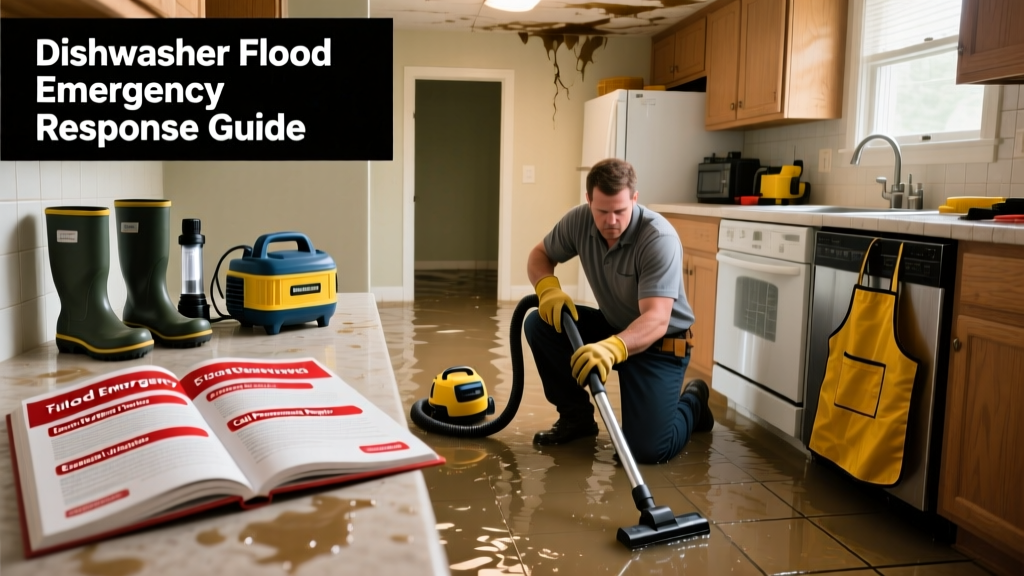
Water is already spraying, pooling, or leaking from your dishwasher — act now. Your first move is to cut power at the circuit breaker and shut off the water supply valve under the sink or behind the unit. Do not touch electrical panels with wet hands or standing in water.
Immediate Actions
- Shut off the water supply: Locate the hot-water shutoff valve (usually a small brass knob beneath the sink or behind the dishwasher) and turn it clockwise until tight.
- Cut power immediately: Go to your home’s main electrical panel and flip the breaker labeled "Dishwasher" or "Kitchen Appliances." If unsure, turn off the entire kitchen circuit.
- Stop the leak source: If the door is open and water is gushing, gently close it — but only if no electrical components are exposed or sparking.
- Remove standing water safely: Use towels, a wet-dry vacuum (only if power is confirmed OFF), or a bucket — never a standard vacuum or mop near live circuits.
- Elevate valuables: Move rugs, electronics, and furniture legs onto blocks or bricks to minimize absorption before cleanup begins.
When to Call 911 / When to Call a Pro
If water is electrified (tingling sensation, buzzing sound, sparks), evacuate immediately and call 911. Also dial 911 if flooding has reached your electrical panel, basement fuse box, or gas meter.
- Call a licensed plumber if the inlet hose burst, the drain pump failed, or you see cracked internal tubing.
- Contact a water damage restoration specialist within 24 hours if more than 10 sq ft of flooring is saturated — mold can begin growing in as little as 48 hours (Institute of Inspection, Cleaning and Restoration Certification, 2022).
- Notify your homeowner’s insurance before cleaning; many policies require documentation prior to mitigation.
What NOT to Do
- Do not operate the dishwasher again until inspected — even if it appears dry.
- Do not use bleach on flooded hardwood or laminate — it accelerates warping and fails to kill mold roots.
- Do not ignore damp cabinetry below the unit; hidden moisture causes rot and delamination within days.
- Do not delay drying subflooring — prolonged saturation compromises structural integrity and invites microbial growth.
After the Emergency
Once water flow and power are secured, assess damage methodically. Photograph every affected area — including undersides of cabinets and floor joists — before wiping anything down. Document serial numbers and model info from the dishwasher for insurance claims.
| Time Since Flood | Risk Level | Action Required |
|---|---|---|
| 0–2 hours | Low | Towels + fan circulation; inspect for hidden leaks |
| 2–24 hours | Moderate | Wet-dry vacuum + dehumidifier; check toe-kick space |
| 24–48 hours | High | Professional moisture mapping; remove baseboard if >15% RH reading |
| 48+ hours | Critical | Demolition of soaked drywall/subfloor; mold testing required |
"Over 60% of dishwasher-related water losses originate from failed door gaskets or cracked inlet hoses — both detectable during routine monthly checks." — Home Safety Council Annual Report, 2023
Is my dishwasher still safe to use after a flood?
No. Even minor flooding may have compromised wiring insulation or control board seals. According to UL standards, any appliance exposed to water must undergo certified electrical testing before reuse. Skip this step and risk shock or fire.
Can I repair the leak myself?
Only for simple fixes: tightening a loose inlet hose nut or replacing a cracked rubber door gasket. Do not attempt internal pump or solenoid valve repairs without manufacturer schematics and multimeter verification. Miswiring risks short-circuiting your entire kitchen circuit.
How do I know if mold has started growing?
Look for fuzzy black, green, or pink spots along cabinet backs, under toe-kicks, or behind kickplates. A musty odor — even without visible growth — indicates active spores. Test with a $15 DIY kit like Mold Armor Rapid Test, then consult an IICRC-certified inspector if positive.
Will my insurance cover this?
Most standard policies cover sudden, accidental water discharge — but exclude wear-and-tear failures (e.g., a 10-year-old deteriorated hose). File your claim within 72 hours and retain all repair invoices. For help navigating coverage, see our home insurance claims checklist.
What parts commonly fail and cause flooding?
The top three culprits are: (1) cracked or kinked inlet hoses (especially braided stainless steel with worn end fittings), (2) failed float switch assemblies that allow overfilling, and (3) clogged or disconnected drain hoses that back up into the tub. Inspect each during annual maintenance — full guidance in our dishwasher maintenance checklist.
How long does full recovery take?
Surface drying takes 2–3 days with fans and dehumidifiers. Subfloor and wall cavity drying requires 5–10 days — verified by moisture meters reading ≤15% MC. Structural repairs (replacing rotted plywood or OSB) add 3–7 business days. Delayed intervention extends timelines by weeks due to mold remediation protocols.
Every minute counts when water escapes containment. You’ve taken the right first step by seeking clear, actionable direction — now follow through with precision. If uncertainty remains, pause and contact a licensed plumber before restarting the cycle.