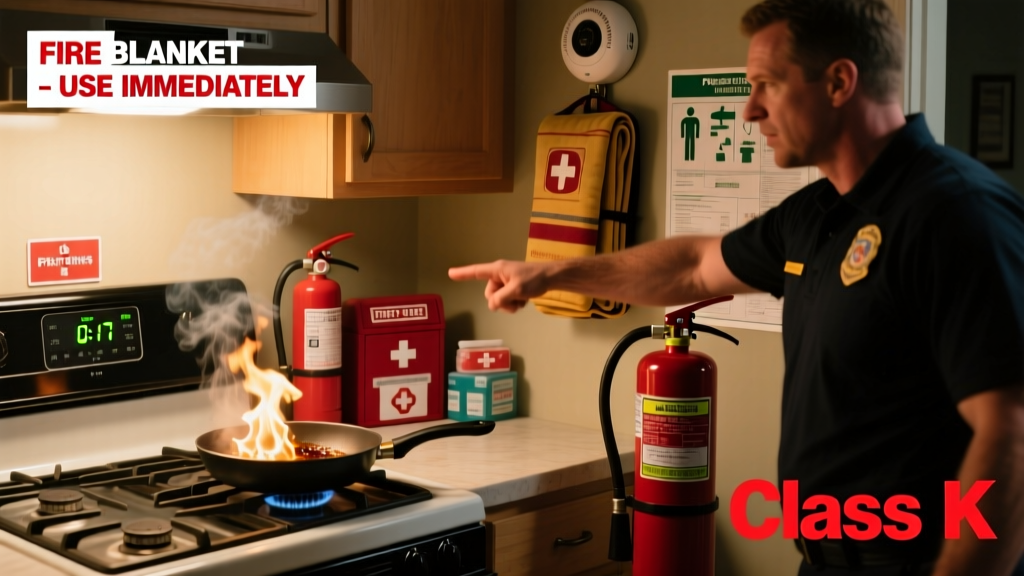
Every second counts: If you see flames, smoke, or hear popping from your stove or oven, act now — don’t hesitate, don’t investigate. Your first move is to protect yourself and others.
Immediate Actions
- Turn off the heat source immediately — even if flames are small. For electric stoves, flip the circuit breaker for that burner if safe to reach.
- Cover the pan with a metal lid or baking sheet — slide it on sideways to avoid lifting flames toward you. Never use glass lids (they can shatter).
- Use a Class B or ABC fire extinguisher — aim at the base of the flames, sweeping side to side. Keep it within arm’s reach while cooking (NFPA recommends one within 30 feet of the stove).
- Evacuate immediately if flames exceed the pan, spread to cabinets, or produce thick black smoke — close the kitchen door behind you and get everyone outside.
When to Call 911 / When to Call a Pro
Call 911 immediately if:
- Fire spreads beyond the cooking vessel (e.g., onto countertops, cabinets, or walls)
- You smell gas before or during the fire (possible gas line leak)
- Smoke alarms sound continuously or occupants cough, wheeze, or feel disoriented
- The fire reignites after being smothered or extinguished
Call a licensed fire damage restoration professional (not 911) for:
- Smoke odor removal and soot cleanup in walls, ducts, or insulation
- Electrical inspection after water or extinguisher residue contacts outlets or wiring
- Structural assessment if ceiling tiles warped, drywall blistered, or cabinet backs charred
What NOT to Do
- Never pour water on grease fires — it causes explosive splatter and flashover (U.S. Fire Administration, 2022).
- Don’t open the oven door during an oven fire — oxygen feeds flames; keep it closed and turn off the heat.
- Avoid using flour, sugar, or baking soda (unless labeled Class B) — most household powders are combustible and can ignite.
- Don’t try to move a flaming pan — you risk spilling burning oil or igniting curtains, clothing, or cabinets.
After the Emergency
Once the fire is fully out and the area is declared safe by responders or a qualified inspector:
| Item | Why It Matters |
|---|---|
| Photos/video of damage (before cleanup) | Required for insurance claims — include timestamps and wide + close-up shots |
| Fire department report number | Essential for filing claims and verifying cause (NFPA 921 standards require official reports for liability) |
| List of damaged appliances & serial numbers | Helps insurers determine replacement value and detect pre-existing defects |
| Receipts for temporary lodging or meals | Often reimbursable under loss-assessment clauses in homeowner policies |
Do not re-enter the kitchen until cleared by fire officials. Even small fires can leave toxic residue — the U.S. EPA estimates indoor air toxin levels spike 5–10× above safe limits for 48+ hours post-fire.
Can I use my stove again after a small grease fire?
Only after a licensed appliance technician inspects burners, knobs, wiring, and gas lines. Grease fires can melt internal components or corrode connections — 27% of stove-related re-ignitions occur within 72 hours of unverified reuse (UL Fire Safety Research, 2023).
Is baking soda ever safe for grease fires?
Only if it’s food-grade sodium bicarbonate used in bulk (at least 1 cup poured slowly) — but this is unreliable and slow. A Class B fire extinguisher or lid is faster and safer. As firefighter Captain Lena Ruiz (FDNY, retired) advises:
"If you’re measuring baking soda while flames climb the wall, you’ve already lost the window. Smother or evacuate — no exceptions."
How do I clean soot off cabinets without spreading it?
Wear an N95 mask and gloves. Use a dry chemical sponge (like a Magic Eraser dry) — never water or all-purpose cleaners first. Soot is oily and water-based cleaners smear it into wood grain. See our guide on soot-cleanup techniques for step-by-step surface-specific methods.
Why did my smoke alarm chirp once, then go silent during the fire?
That’s a critical warning sign: Many alarms chirp once when exposed to high heat (>140°F), then fail. Replace all alarms after any fire event — even if they seem functional. According to the National Fire Protection Association’s 2024 code update, alarms exposed to smoke must be replaced within 24 hours.
Do I need an electrician if the breaker tripped?
Yes — always. Tripping can indicate shorted wiring, melted insulation, or compromised outlets. A licensed electrician should test GFCI outlets, junction boxes, and the range circuit before resetting. See electrical safety after fire for required inspection points.
What if the fire started in my microwave?
Unplug it immediately and leave the door closed. Microwaves contain capacitors that hold lethal voltage even when off. Do not open, inspect, or attempt repair. Dispose of it properly — contact your local hazardous waste facility. Read more about appliance fire safety for prevention tips.
Recovery starts with safety — not speed. Take time to inspect, document, and consult professionals before resuming normal use. Your kitchen should feel secure, not like a gamble.