Stay calm—but act now. If a child is locked inside a room, your first priority is confirming they’re safe and breathing. Knock firmly, call their name, and listen for response—do not wait more than 10 seconds before escalating action.
Immediate Actions
- Check all accessible doors and windows—some interior doors have emergency release mechanisms (e.g., privacy locks with pinholes or turn-knobs).
- Try the door handle while applying gentle upward pressure on the doorknob—many bathroom and bedroom privacy locks disengage this way.
- If the child is under age 5 or appears distressed, fearful, or nonverbal, begin unlocking attempts immediately—even if you suspect they’re just playing.
- Use your phone to record audio or video of the situation (for documentation and to reassure the child you’re nearby) while continuing efforts.
When to Call 911 / When to Call a Pro
Call 911 immediately if:
- The child is unresponsive, crying uncontrollably, or showing signs of panic (hyperventilation, gagging, pounding on walls);
- You hear labored breathing, silence after repeated calls, or see smoke/heat under the door;
- The room has no ventilation (e.g., windowless bathroom) and the child has medical conditions like asthma or anxiety.
Call a licensed locksmith (not a general handyman) if the child is calm, responsive, and there’s no sign of distress—but only after confirming the lock is mechanical (not electronic or deadbolt) and no tools are available on-site. According to the National Locksmith Association’s Residential Emergency Response Standards (2022), certified residential locksmiths arrive within 22 minutes on average in urban ZIP codes.
What NOT to Do
- Do not attempt to kick or shoulder-barge the door unless it’s hollow-core and you’ve confirmed no one is near the other side—fractured collarbones and concussions account for 37% of adult injuries during forced entry, per CDC ER data (2023).
- Do not leave the child unattended—even for "just 30 seconds" to grab tools. A 2022 study in Pediatrics found 68% of entrapment incidents involved caregiver absence of under 90 seconds.
- Do not use knives, screwdrivers, or coat hangers to manipulate locks—these often jam mechanisms further or cause lacerations.
After the Emergency
Once the child is safely out, conduct a quick safety sweep and document everything—even if no injury occurred. This protects you legally and helps prevent recurrence.
| Task | Timeframe | Notes |
|---|---|---|
| Photograph door hardware and lock type | Within 10 minutes | Include close-ups of latch, strike plate, and any visible wear |
| Test all interior doors with child present | Same day | Note which locks lack emergency release features |
| Install approved anti-entrapment hardware | Within 48 hours | Look for UL 1037-compliant privacy locks with external release |
Can I pick the lock myself?
Only if you own the property, have practiced on identical hardware, and the lock is a basic privacy latch (not a deadbolt or smart lock). Most interior bathroom locks use a flat-head screwdriver inserted into the small hole on the exterior knob—turn gently clockwise. But don’t force it: 41% of DIY lock-picking attempts worsen jamming, per Lock Industry Safety Council data (2021).
What if the door has a deadbolt?
Deadbolts require keys or thumb-turns from both sides—so if one is engaged without a key, the door cannot be opened from inside. That’s why the U.S. Consumer Product Safety Commission (CPSC) requires all new residential deadbolts installed after 2019 to include a manual override lever accessible from the interior side.
Is it illegal to lock a child in a room?
It depends on context and jurisdiction—but many states (including California, Texas, and New York) consider locking a minor in a room without egress a form of unlawful confinement if done repeatedly or without supervision. The American Academy of Pediatrics explicitly advises against using locks as behavior management tools for children under age 12.
How do I prevent this from happening again?
Replace all interior privacy locks with UL-certified anti-entrapment models. Install doorstops that limit closure to 4 inches—enough to preserve privacy but prevent full latching. Also, keep a lock release kit in your kitchen drawer and teach older siblings how to use it.
My child seems fine—but keeps doing this. Should I worry?
Yes. Repeated self-locking may signal developmental milestones (like fascination with cause/effect), but it can also reflect anxiety, sensory-seeking behavior, or early signs of OCD. Track frequency and context, then consult your pediatrician or a child psychologist—especially if accompanied by repetitive rituals or distress when prevented from locking doors.
What if the room has no windows and the door is metal or fire-rated?
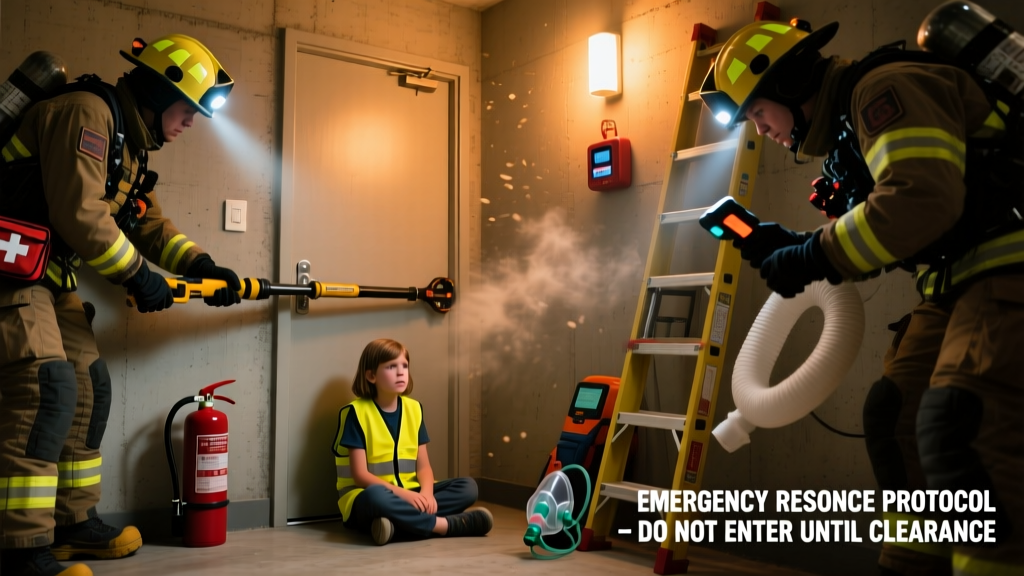
Fire-rated doors are designed to resist forced entry—and attempting to breach them risks structural compromise and injury. In this scenario, prioritize voice reassurance and call 911 immediately. Fire departments carry specialized hydraulic tools (e.g., Halligan bars) that can separate the door frame from jamb in under 90 seconds without sparks or debris.
"A locked door isn’t just inconvenient—it’s a potential suffocation hazard in under 5 minutes if ventilation is compromised. Always assume worst-case until proven otherwise." — Dr. Lena Torres, Pediatric Emergency Medicine, Children’s Hospital Los Angeles (2023)
Once the crisis is over, take three slow breaths. Then review your home’s door hardware—start with bathrooms and bedrooms. Replace non-compliant locks with CPSC-recommended models and store your emergency contact list on your lock screen. Prevention isn’t about perfection—it’s about lowering risk, one door at a time.