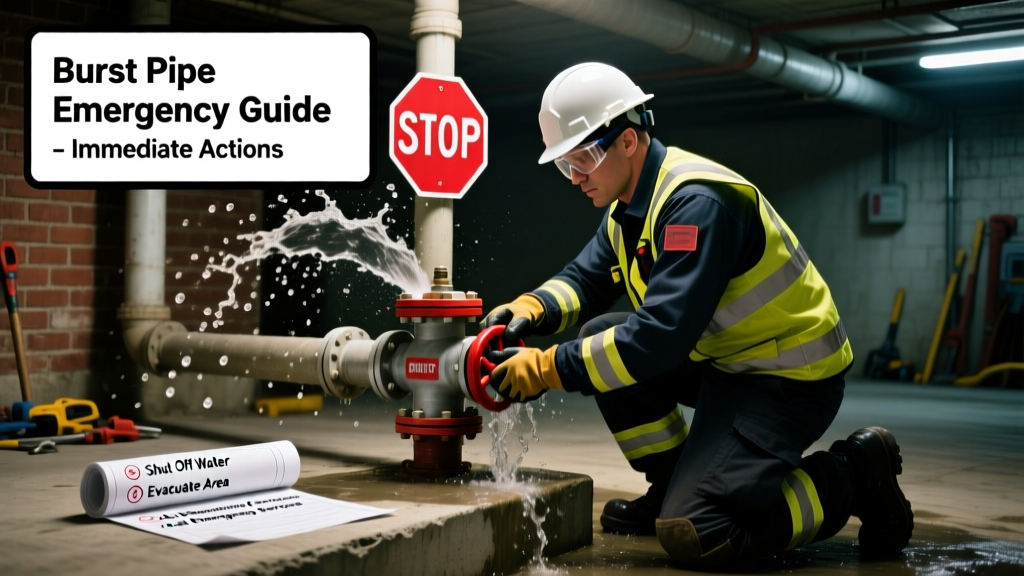
A burst pipe can flood your home in under 90 seconds — releasing up to 250 gallons per hour. Your first move is non-negotiable: shut off the main water supply immediately. Locate your main shutoff valve (usually near the water meter, basement, or garage) and turn it clockwise until tight.
Immediate Actions
- Shut off the main water valve — don’t waste time hunting for the broken section.
- Turn off electricity to affected areas if standing water is near outlets, breakers, or appliances — use a dry wooden stick or wear rubber-soled shoes if you must approach.
- Open cold water faucets on all floors to relieve pressure and drain remaining water from pipes.
- Contain water with towels, buckets, and plastic sheeting — especially near HVAC units, electrical panels, and hardwood floors.
- Photograph everything before cleanup begins — include timestamps and wide-angle shots of damage and the burst location.
When to Call 911 / When to Call a Pro
Call 911 immediately if:
- Water is contacting live electrical wiring, breaker boxes, or outdoor transformers;
- Flooding is rising toward gas meters, furnaces, or water heaters;
- The burst occurred in a multi-unit building where structural integrity may be compromised (e.g., ceiling sagging >1 inch).
Call a licensed plumber within 30 minutes if:
- The leak is isolated and water is off;
- No electrical hazards exist;
- You’re confident the pipe isn’t feeding a fire sprinkler system (call your building manager first if unsure).
According to the Insurance Institute for Business & Home Safety's 2023 report, 68% of water damage claims involve delays longer than 2 hours before professional mitigation — increasing mold risk by 400%.
"If water has pooled over carpet padding or soaked drywall beyond 2 inches high, treat it as a Category 2 (significant contamination) event — not a DIY cleanup. That’s the threshold where microbial growth accelerates." — IICRC S500 Water Damage Restoration Standard, 2022 Edition
What NOT to Do
- Don’t use electrical tools or vacuums near wet areas — even if power is off, residual current can remain.
- Don’t run ceiling fans or space heaters to dry things out — heat spreads mold spores and warps flooring.
- Don’t ignore insulation behind walls — wet fiberglass or cellulose holds moisture for weeks and breeds mold silently.
- Don’t delay shutting off water because you “just need to grab something” — most homeowners lose 3–7 minutes doing this, adding ~1,000 extra gallons.
After the Emergency
Once water is off and safety is confirmed:
- Contact your insurer — many require documentation within 24 hours to process claims.
- Hire an IICRC-certified water restoration company — not just a plumber — for moisture mapping and drying verification.
- Test for mold in adjacent rooms using an mold test kit if drywall feels soft or smells musty.
- Replace insulation and subflooring if saturation lasted >48 hours — water damage remediation standards require removal, not drying, past that point.
| Elapsed Time Since Burst | Risk Level | Action Required |
|---|---|---|
| 0–2 hours | Low contamination | Shut off water; begin containment; call plumber |
| 2–72 hours | Moderate (Category 2) | Professional extraction + dehumidification within 24 hrs |
| 72+ hours | High (Category 3) | Full demolition of affected materials; air quality testing required |
Can I repair a burst copper pipe myself?
No — temporary epoxy or tape may hold for hours but fails under pressure and violates plumbing code. Even small pinhole leaks indicate corrosion throughout the line. Replace the full pipe section or repipe the zone — see our guide on copper pipe replacement.
What if the burst happened inside a wall?
Turn off water and electricity immediately. Cut a 6″ inspection hole below the suspected area — do not drill upward. If water flows freely, stop and call a pro. Hidden leaks cause 32% of undetected mold cases (EPA Indoor Air Quality Report, 2021).
Will my homeowner’s insurance cover this?
Most policies cover sudden, accidental water damage — but exclude wear-and-tear failures (e.g., pipes older than 25 years). Document age via utility bills or permit records. File your claim before starting repairs — insurers often deny claims submitted after work begins.
How fast does mold grow after a burst pipe?
Mold spores germinate in as little as 24–48 hours on damp drywall, carpet, or wood. The U.S. EPA estimates that 14% of household water usage is from leaks — meaning many homes already host hidden moisture. Use a moisture meter (≥15% reading = immediate action needed).
Should I turn off my water heater?
Yes — if the burst is in a cold-water line feeding the heater, shut off its power/gas and cold inlet valve. If hot water lines are involved, drain the tank only if you’re trained — improper draining can crack the tank lining. Refer to your water heater maintenance checklist for safe shutdown steps.
Do I need to replace all wet drywall?
Yes — if water reached above the bottom 12 inches or soaked behind baseboards. Drywall loses structural integrity at >10% moisture content. Cutting out sections now prevents costly rework later — watch our drywall replacement tutorial for proper framing and sealing techniques.
Every second counts — but rushing without shutting off water or assessing electrical risk multiplies danger. Stay calm, act decisively, and prioritize people over property. Once stabilized, focus on verified drying, not speed. And remember: your local fire department responds to water emergencies involving gas or electricity — don’t hesitate to dial 911 if conditions feel unsafe.