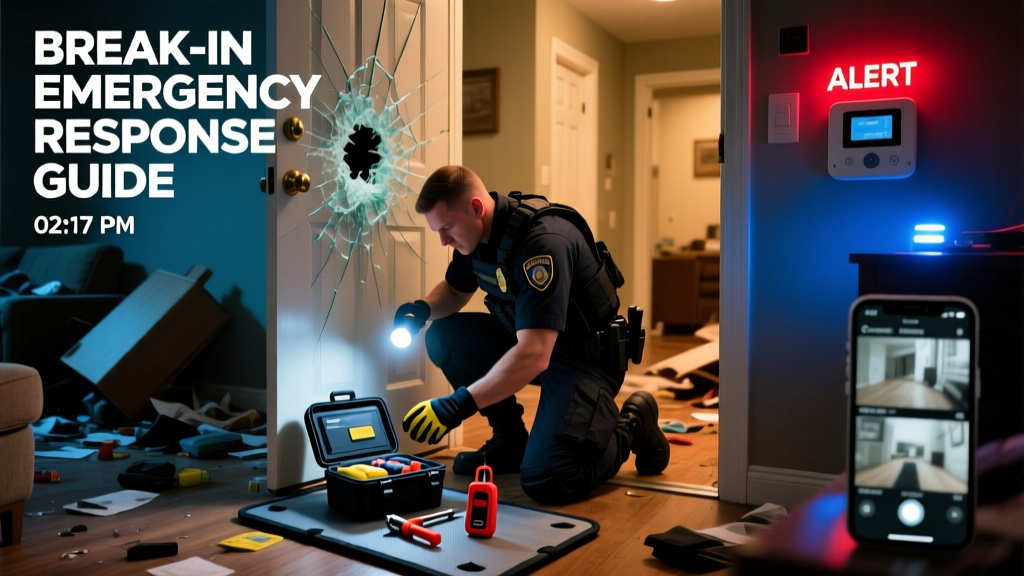
If you hear signs of forced entry — shattering glass, splintering wood, or footsteps in your home — freeze, stay silent, and move to a pre-planned safe room with a lockable door and phone. Do not confront the intruder.
Immediate Actions
- Lock yourself in a secure interior room (e.g., bathroom or bedroom) and silence your phone.
- Call 911 *only* if you’re safely hidden and can whisper your address and situation without being heard.
- Turn off lights and avoid windows — motion sensors or exterior cameras may still record activity.
- If you’re outside when it happens, retreat to a neighbor’s home or public place and call 911 from there.
When to Call 911 / When to Call a Pro
Call 911 immediately if:
- The intruder is still inside or you hear movement;
- You see someone fleeing with property;
- There’s evidence of injury or weapons involved.
Wait to call non-emergency police or a licensed security pro only after officers clear the scene and confirm no threat remains. According to the FBI’s 2023 Crime Data Explorer, over 65% of residential burglaries occur between 10 a.m. and 3 p.m. — meaning many happen while homes are unoccupied, but response timing still hinges on real-time danger assessment.
What NOT to Do
- Do not chase or confront the intruder — even unarmed suspects have injured or killed homeowners during pursuit.
- Do not touch or rearrange anything — fingerprints, disturbed furniture, and open drawers are critical evidence.
- Do not post about the break-in on social media before police finish processing the scene.
"In 82% of home invasion cases where victims engaged physically, injuries worsened significantly. Your priority is survival — not property recovery." — National Crime Prevention Council, Home Invasion Response Protocols, 2022
After the Emergency
Once law enforcement releases the scene, begin documentation *before* cleaning:
- Photograph every point of entry (broken locks, shattered windows, pry marks) from multiple angles.
- Inventory missing items using receipts, photos, or serial numbers — log them in a home inventory checklist.
- Contact your insurer within 24 hours; most policies require prompt reporting to process claims.
- Hire a licensed locksmith to rekey or replace all exterior locks — smart lock installation can add real-time alerts for future attempts.
Can I re-enter my home right after police leave?
Only if officers explicitly say the scene is secure and cleared. If doors or windows were compromised, avoid opening them until a professional assesses structural integrity and lock function.
Should I install security cameras after a break-in?
Yes — but prioritize placement at all ground-floor entry points and garage doors. The U.S. Department of Justice found homes with visible outdoor cameras experience 40% fewer repeat burglaries within six months (2023 National Institute of Justice report).
What if my pet was present during the break-in?
Check your pet for stress signs (panting, trembling, hiding) and consult a vet if they show aggression or withdrawal. Keep them in a quiet, familiar space during police interviews and cleanup — their behavior may also help investigators reconstruct timeline clues.
How do I secure doors that were kicked in?
Temporary reinforcement: wedge a heavy chair under the doorknob and install a portable door brace like the Nightlock Pro. But replace damaged strike plates, deadbolts, and door frames within 48 hours — door reinforcement kits meet FBI-recommended standards for forced-entry resistance.
Do I need a lawyer after a burglary?
Not initially — but consult one if insurance denies your claim without cause, or if personal data (e.g., medical records, financial files) was stolen. Identity theft protection services should be activated within 72 hours per FTC guidelines.
Will my homeowner’s insurance cover stolen cash or jewelry?
Most standard policies cap cash coverage at $200 and jewelry at $1,500 unless you’ve added a scheduled personal property endorsement. Review your policy’s homeowners insurance coverage checklist now — don’t wait for another incident.
| Action | Deadline | Why It Matters |
|---|---|---|
| File police report | Within 24 hours | Required by insurers; delays weaken claim validity |
| Notify insurer | Within 24–72 hours | Triggers fraud monitoring and claim assignment |
| Replace locks | Within 48 hours | Prevents re-entry; some policies void coverage if delayed |
| Submit inventory list | Within 5 business days | Supports faster claim processing and valuation |
Your safety is non-negotiable — every second counts when seconds matter. Trust your instincts, follow these steps precisely, and remember: surviving the event is your only job in the moment. Everything else can wait.