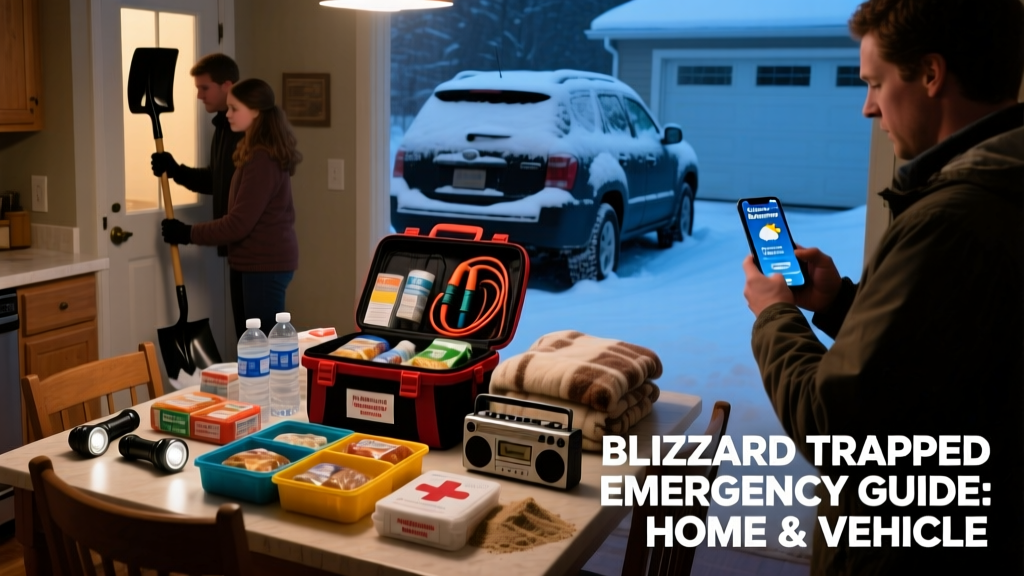
If you’re suddenly trapped by a blizzard—whether at home or in your vehicle—your first move is to stop all nonessential activity and conserve heat. Do not attempt to walk out unless you’re within 100 yards of visible shelter and visibility is near zero; hypothermia can set in within 30 minutes in -20°F wind chills (National Weather Service, 2022).
Immediate Actions
- Shut all exterior doors and windows; seal gaps with towels or clothing to reduce drafts.
- Run water faucets at a slow drip—only if pipes are uninsulated and temps are below 20°F—to prevent freezing (U.S. EPA, 2023).
- In a vehicle: run the engine for 10 minutes every hour—but crack a downwind window 1/4 inch to avoid CO buildup.
- Layer clothing, cover head and neck, and huddle with others to share body heat.
- Use flashlights—not candles—for light; keep phone powered on low-battery mode and text instead of calling to conserve battery.
When to Call 911 / When to Call a Pro
Call 911 immediately if:
- You or someone shows signs of frostbite (white/grayish-yellow skin, numbness, firm or waxy texture) or severe hypothermia (confusion, slurred speech, weak pulse, loss of consciousness).
- Your home’s carbon monoxide detector sounds—and you feel dizziness, nausea, or headache.
- You’re stranded in a vehicle with an injured person, no cell signal, and temperatures below -15°F.
Call a licensed heating contractor or emergency restoration service if:
- Your furnace shuts off and won’t restart after checking breaker and thermostat batteries.
- You suspect roof snow load exceeds 40 lbs/ft²—especially on flat or older roofs (per ASCE 7-22 standards).
- You discover burst pipes but the main shutoff is inaccessible or frozen.
What NOT to Do
These actions increase risk of injury, carbon monoxide poisoning, or structural failure:
- Never use gas stoves, charcoal grills, or generators indoors—even in garages or basements.
- Don’t dig tunnels from snowed-in vehicles; collapse risk is high, and you may block ventilation.
- Avoid opening windows fully to ‘air out’—heat loss accelerates frostbite risk in subzero winds.
- Don’t flush toilets repeatedly if sewer lines are frozen; backup can flood basements.
"In blizzard-related fatalities, 68% involve carbon monoxide poisoning or hypothermia—not snow burial. Prevention starts before the storm hits." — Dr. Lena Torres, CDC Environmental Health Branch, 2023
After the Emergency
Once winds drop and visibility improves (not just snowfall pause), begin assessment only after confirming outdoor conditions are stable for 30+ minutes.
| Area | Risk Indicator | Action |
|---|---|---|
| Roof | Sagging, cracking sounds, or >12" of wet snow accumulation | Evacuate immediately; contact roof emergency service |
| Pipes | No water flow + frost on visible copper/PEX lines | Shut main valve; call burst pipe specialist |
| Electrical | Burning smell, flickering lights, or tripped GFCI that won’t reset | Turn off main breaker; consult licensed electrician |
How long can I stay warm without power?
Well-insulated homes retain heat 4–6 hours after heat loss; add thermal curtains and close interior doors to create a ‘warm zone.’ In vehicles, 1–2 people can stay safe for up to 12 hours using engine cycles and layered clothing—if ventilation is maintained.
Is it safe to melt snow for water?
Yes—but only if melted and boiled for 1 full minute (or treated with chlorine dioxide tablets). Never eat snow directly—it lowers core temperature and may contain pollutants or antifreeze residue.
Can I use my fireplace if the power’s out?
Only if the chimney was professionally cleaned within the last 12 months and you have working smoke/CO detectors. Never burn Christmas trees, plastic, or painted wood. Keep combustibles 36" away—see our fireplace safety checklist.
What if my sump pump fails during heavy snowmelt?
Test it monthly in winter. If it fails and water rises >2 inches in the pit, shut off basement power at the panel and call a sump pump emergency technician—standing water risks electrocution and mold growth within 48 hours.
Should I clear snow off my roof myself?
No. Roof raking from the ground is acceptable only for single-story homes with under 6" of dry snow. For deeper accumulations or steep pitches, hire certified professionals—over 1,200 injuries occur annually from DIY roof snow removal (NIOSH, 2021).
How do I document damage for insurance?
Take timestamped photos/video *before* cleanup begins—include wide shots of affected areas and close-ups of damage. Note time, temp, and weather conditions. Save receipts for all emergency purchases over $25 (e.g., generators, heaters, bottled water). File claims within 72 hours for fastest processing.
Blizzards test preparation—but not preparedness. Review your winter prep checklist now, not when the sky turns white. Keep emergency kits stocked, test CO detectors monthly, and know your local warming center location before the next watch drops.