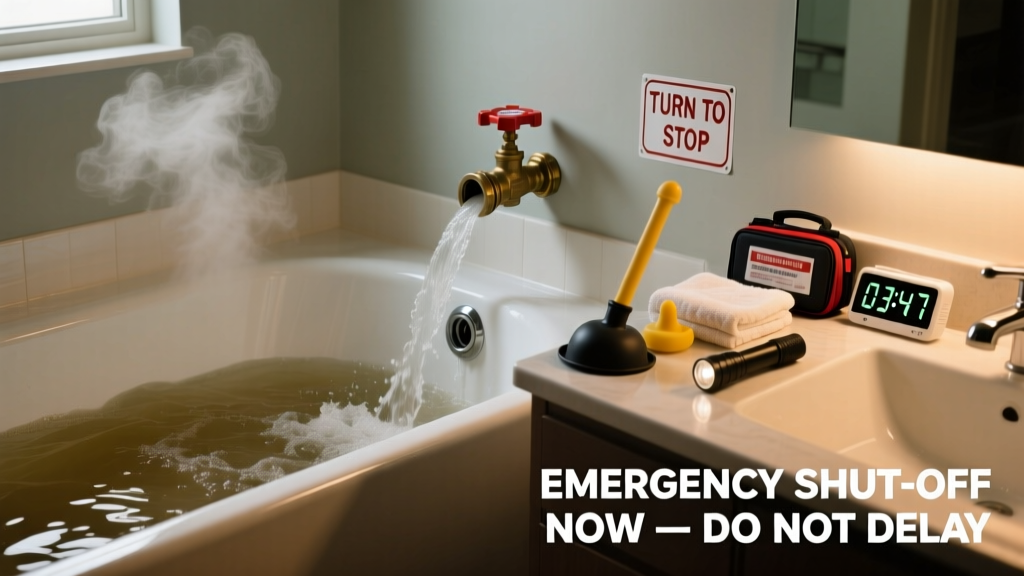
Water is already spilling over the tub rim — act now. Your first move: shut off the water supply at the nearest valve (usually under the sink or behind an access panel) or, if inaccessible, turn off the home’s main water shutoff valve immediately.
Immediate Actions
- Stop the flow: Turn off the faucet — then locate and close the shut-off valve for the tub or bathroom (often under the sink or in the basement near the water meter).
- Protect yourself: Do NOT step into standing water if outlets, GFCI breakers, or appliances are nearby — risk of electrocution is real and immediate.
- Contain & divert: Use towels, rags, or a small bucket to redirect water toward floor drains or away from electrical panels, hardwood, or downstairs ceilings.
- Remove valuables: Grab electronics, documents, rugs, and furniture legs off the wet floor within 30 minutes — mold can begin forming in as little as 48 hours (FEMA, 2022).
When to Call 911 / When to Call a Pro
If water is contacting live electrical outlets, sparking, or flowing into a basement with a sump pump or furnace, call 911 immediately. Do not wait — that’s an electrocution or fire hazard.
Call a licensed plumber if:
- The overflow won’t stop after shutting all valves;
- You hear gurgling or see sewage backing up (sign of a main line clog);
- Water has soaked drywall, subfloor, or insulation — hidden damage requires professional moisture mapping.
According to the Insurance Institute for Business & Home Safety’s 2023 report, 62% of water damage claims involving bathrooms stem from undetected leaks or overflow incidents that went unaddressed for more than 2 hours.
"Standing water over 1 inch deep near baseboard heaters or HVAC units creates an immediate shock hazard — assume it’s live until verified by a licensed electrician." — National Fire Protection Association, Electrical Safety Handbook, 2021
What NOT to Do
- Do NOT use a vacuum cleaner or extension cord near wet floors — even if unplugged, capacitors can retain charge.
- Do NOT run ceiling fans or space heaters to dry the area — this spreads mold spores and risks ignition near damp wiring.
- Do NOT ignore discolored grout or soft drywall — these signal prolonged saturation and possible structural compromise.
After the Emergency
Once water flow is fully stopped and safety is confirmed, begin documentation and mitigation:
| Area | Check For | Action Required |
|---|---|---|
| Floor | Soft spots, buckling, or squeaking | Subfloor inspection by contractor |
| Walls | Discoloration, peeling paint, musty odor | Moisture meter scan + mold testing |
| Ceiling below | Stains, sagging, dripping | Immediate drywall removal if >12 hours wet |
| Drain | Slow drainage or foul odor | Plumber snaking + camera inspection |
Take timestamped photos of all affected areas before cleanup. File a claim with your insurer within 72 hours — most policies require prompt reporting for water damage coverage. Save receipts for all emergency drying equipment rentals or temporary repairs. For next-step guidance, see our water damage cleanup checklist.
Can I fix the drain myself?
Yes — if the clog is shallow. Try a cup plunger first (cover overflow opening with a wet rag for seal), then a hand-crank drain snake. Avoid chemical drain cleaners — they corrode pipes and worsen PVC joint leaks. If water backs up elsewhere (e.g., shower or sink), the clog is likely downstream and needs a pro. See our bathtub drain clog troubleshooting guide for tool-specific tips.
How fast does mold grow after overflow?
Mold spores can colonize damp drywall, carpet padding, or subflooring in under 48 hours at typical indoor humidity (EPA Indoor Air Quality, 2020). Visible growth often appears in 3–5 days. If wet materials aren’t dried to <15% moisture content within 24–48 hours, microbial growth is highly probable.
Is my insurance likely to cover this?
Most standard homeowners policies cover sudden and accidental water discharge — like a bathtub overflow — but exclude long-term leaks or maintenance failures. Coverage caps vary; some insurers limit bathroom-related claims to $5,000 without added endorsement. Review your policy’s ‘water backup’ rider — it’s often optional and critical for sewer-related overflows.
Why did my tub overflow in the first place?
Common causes include hair-and-soap scum buildup (73% of residential tub clogs per Roto-Rooter’s 2023 Plumbing Trends Report), improperly installed overflow plates, or a blocked P-trap. Older homes may have galvanized pipes narrowing with rust — reducing flow capacity by up to 40% over 20 years. A qualified plumber can perform a drain camera inspection to identify root cause and prevent recurrence.
Should I replace the entire tub assembly?
Not usually — unless you find cracked overflow pipes, corroded brass components, or persistent cross-leaks between hot/cold lines. Most overflow issues stem from simple debris or misaligned linkage rods. Replacement parts cost $12–$35; labor averages $125–$180 for a certified technician. Delaying repair increases risk of corrosion-induced failure during next use.
How do I prevent future overflows?
Install a smart water monitor like Moen Flo or Phyn Plus — they detect abnormal flow patterns and auto-shut off water within seconds. Also: clean overflow openings monthly with a pipe cleaner, check pop-up stopper linkages quarterly, and never leave running water unattended. The U.S. EPA estimates that 14% of household water usage is from leaks — many starting as unnoticed overflows.
Stay calm, act fast, and prioritize safety over speed. Once water is contained, your next best step is calling a licensed plumber — not waiting to see if it ‘just dries out.’ Delayed response turns a $200 clog into a $5,000 rebuild. For related help, explore our flooded bathroom repair timeline and water shutoff valve locator guide.