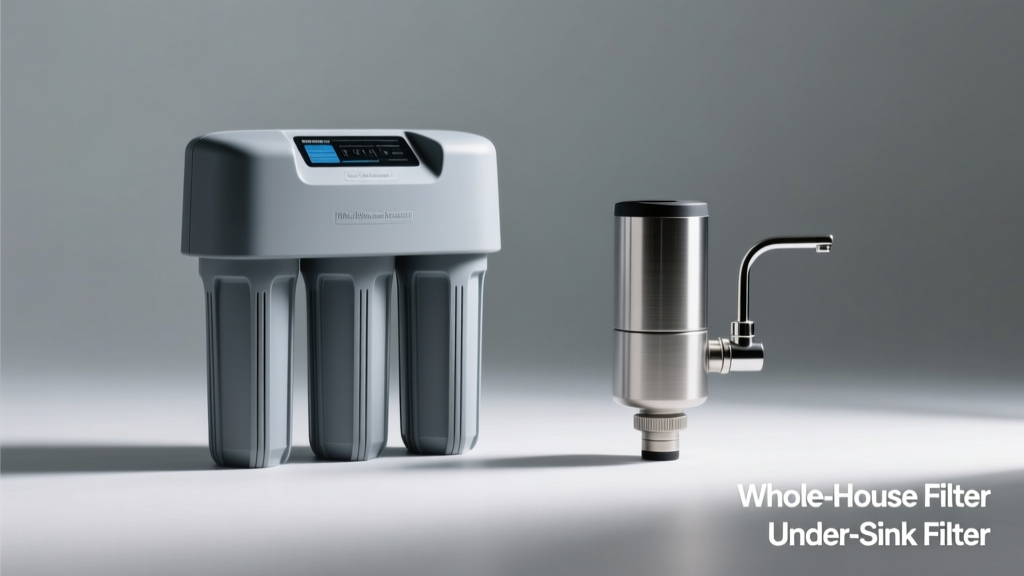
Finding clean, safe water at every tap feels essential — yet choosing between a whole house filter and an under sink filter leaves many homeowners stuck. One treats all water entering your home; the other targets just your kitchen faucet. Neither is universally ‘better’ — it depends on your water quality, budget, plumbing setup, and usage priorities.
Quick Verdict
A whole house filter is best if you want chlorine removal for showers, scale reduction on appliances, and protection for washing machines and dishwashers — but it won’t remove heavy metals or pathogens without expensive add-ons. An under sink filter delivers superior contaminant removal (like lead, PFAS, or cysts) at the point of use, with lower upfront cost and zero impact on water pressure elsewhere — but only serves one faucet. For most households with municipal water and no well-related issues, starting with a high-quality under sink system makes practical sense; homes with hard water, well water, or sensitivity to chlorine benefit more from whole house coverage first.
Side-by-Side Comparison
| Feature | Whole House Filter | Under Sink Filter |
|---|---|---|
| Installation location | Main water line (usually near water meter or pressure tank) | Beneath kitchen sink, inline with cold water supply |
| Coverage | All faucets, showers, appliances, irrigation | Single faucet (typically kitchen cold only) |
| Typical flow rate | 10–45 GPM | 0.5–2.0 GPM |
| Upfront cost (installed) | $800–$3,500+ | $150–$600 |
| Filter replacement frequency | 6–12 months (depends on sediment load) | 6–12 months (carbon block), up to 24 months (some RO systems) |
| Removes chlorine | Yes (standard carbon media) | Yes (standard carbon block) |
| Removes lead | No (unless paired with specialty media like KDF-55 + carbon) | Yes (certified NSF/ANSI 53 systems) |
| Removes PFAS | Rarely — requires granular activated carbon + high contact time (not typical in standard units) | Yes (NSF/ANSI 58 RO or certified GAC systems) |
Deep Dive on Whole House Filters
Whole house filters sit at your home’s main water entry point and condition water before it branches to any fixture. Most use sediment pre-filters plus catalytic carbon or KDF media to reduce chlorine, iron, hydrogen sulfide, and some VOCs. They’re especially valuable for homes with well water (where iron, manganese, or sulfur odors are common) or older municipal systems where chlorine levels run high.
Pros
- Protects plumbing, water heaters, and appliances from scale and chlorine damage — the U.S. EPA estimates that scale buildup can reduce water heater efficiency by up to 22% over time
- Eliminates chlorine smell and skin irritation during showers and baths
- Reduces sediment clogging in washing machine valves and showerheads
- Enables consistent water quality across all points of use — critical for humidifiers, ice makers, and espresso machines
Cons
- Does not remove dissolved contaminants like lead, nitrates, fluoride, or PFAS without costly upgrades (e.g., reverse osmosis booster or specialty media)
- Higher installation complexity — often requires a licensed plumber and dedicated drain line for backwashing units
- Larger footprint: units range from 18” to 36” tall and need 2–3 ft of clearance
- Lower pressure at high-demand moments (e.g., simultaneous shower + dishwasher) unless oversized
Deep Dive on Under Sink Filters
Under sink filters mount discreetly beneath your kitchen sink and treat water just before it reaches the faucet. Systems range from simple carbon cartridges to multi-stage setups including sediment pre-filters, carbon blocks, and even reverse osmosis membranes. Because they operate at point-of-use, they achieve longer contact time and finer filtration than whole house units — making them far more effective against health-related contaminants.
Pros
- NSF/ANSI 53-certified models reliably remove lead, mercury, cysts, and volatile organic compounds
- RO-based under sink units remove up to 99% of total dissolved solids (TDS), including arsenic, nitrate, and PFAS — per NSF/ANSI 58 testing protocols (2022)
- Easy DIY installation for most cartridge-based systems; minimal tools required
- No impact on whole-house water pressure or flow
Cons
- Only treats one faucet — no benefit for bathing, laundry, or drinking at other locations
- RO systems produce wastewater (typically 3–4 gallons wasted per 1 gallon purified)
- Tank-based RO systems require cabinet space; tankless versions cost significantly more
- Not suitable for homes with high sediment or iron — these will clog pre-filters rapidly without upstream protection
When to Choose Whole House vs Under Sink
Select a whole house filter if:
- You have well water with iron, manganese, or hydrogen sulfide (rotten egg smell)
- Your municipal water has >2 ppm chlorine or strong chloramine — causing dry skin, brittle hair, or fading fabrics
- You own a steam shower, whole-house humidifier, or tankless water heater sensitive to scale
- You’re renovating plumbing and can integrate the system during rough-in
Choose an under sink filter if:
- You rent or can’t modify main water lines
- Your primary concern is drinking/cooking water safety — especially lead (common in homes built before 1986) or PFAS (detected in >45% of U.S. municipal supplies per Environmental Working Group’s 2023 map)
- You want NSF-certified contaminant removal without installing a second system later
- Your water tests clean for sediment and hardness, but fails for specific dissolved contaminants
Alternatives to Consider
Before committing to either option, test your water first using a certified lab water testing kit. You might discover your real issue is localized — like lead leaching from old kitchen faucet supply lines — which a simple faucet-mounted filter could solve for under $50. If you need both whole-house protection and drinking-water purity, consider a hybrid: a whole house sediment + carbon system paired with an under sink RO unit. Another middle-ground option is a refrigerator filter replacement — but note these typically only cover one appliance and lack third-party certification for many contaminants.
Can I install both a whole house and under sink filter?
Yes — and it’s often the most robust approach. A whole house unit handles chlorine, sediment, and scale-forming minerals, extending the life of your under sink system’s carbon and RO membrane. Just ensure the under sink unit’s inlet pressure stays within spec (most require 40–85 PSI); whole house filters rarely drop pressure below that unless undersized or clogged.
Do whole house filters soften water?
No — unless specifically designed as a salt-based or salt-free water softener. Standard whole house carbon/sediment filters do not remove calcium or magnesium ions. Some combo units include softening media, but they’re pricier and require regeneration or cartridge replacement. For true softening, you’ll need a dedicated softener — see our guide on salt vs salt-free water softeners.
Will an under sink filter affect my refrigerator’s ice maker?
Only if you plumb the fridge’s water line to the filtered cold output — which isn’t typical. Most under sink systems feed only the dedicated filtered faucet. To filter ice, you’d need either a separate inline fridge filter (replaced every 6 months) or a whole house system. Note: refrigerator filters are rarely NSF 53-certified for lead or cysts — they’re mainly for taste and odor.
How often do I really need to replace filters?
Follow manufacturer specs — but adjust based on usage and water quality. A family of four using a standard under sink carbon block should replace it every 6 months. Whole house sediment filters may need changing quarterly in rural areas with sandy wells. As
“Filter life isn’t just about time — it’s about gallons processed. Check your unit’s rated capacity (e.g., 100,000 gallons) and track household usage. Skipping replacements turns your filter into a bacteria incubator.” — Water Quality Association, 2021 Guidelines
Are there rebates or tax credits for water filters?
Federal tax credits don’t currently apply to residential water filters. However, some municipalities offer rebates — like Portland’s Clean Water Services, which provides up to $100 for certified lead-removal systems (2024 program). Always check with your local utility or health department before purchasing.
What if I have a tankless water heater?
Tankless units are highly sensitive to scale. A whole house filter with scale-inhibiting media (like polyphosphate or TAC) can prevent premature failure — especially in hard water areas (≥7 gpg). Under sink filters won’t protect the heater. According to the Plumbing-Heating-Cooling Contractors Association’s 2023 service data, 31% of premature tankless failures were linked to untreated hard water.
There’s no universal winner — only the right tool for your water, your pipes, and your priorities. Start with a lab-verified water test, then match the solution to the problem: broad protection for infrastructure and comfort, or precise removal for health-critical drinking water. Either way, avoid settling for pitcher filters alone — they’re convenient, but their limited capacity and inconsistent certification mean they shouldn’t be your only line of defense.