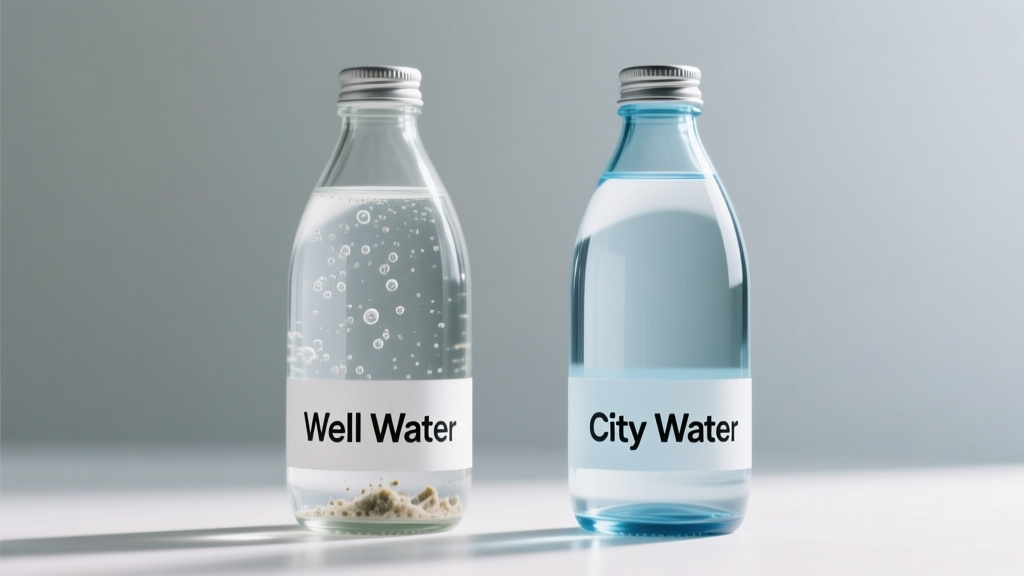
Choosing between well water and city water isn’t just about convenience—it’s about long-term health, budgeting, control over your supply, and even property value. Homebuyers, rural residents, and sustainability-minded families face real trade-offs that go far beyond 'tap vs pump.'
Quick Verdict
Neither is categorically "better"—it depends on your location, priorities, and willingness to manage systems. Well water offers independence and zero monthly bills but demands vigilance and upfront investment. City water provides consistent regulation and broad infrastructure support but comes with recurring fees, chemical additives, and less control over source quality. For most suburban homeowners, city water simplifies life; for remote properties or those seeking autonomy, a properly maintained well often wins.
Side-by-Side Comparison
| Feature | Well Water | City Water |
|---|---|---|
| Source | On-site groundwater (aquifer) | Municipal reservoirs, rivers, or treated surface water |
| Regulation | Unregulated by EPA; homeowner responsibility | Federal Safe Drinking Water Act (EPA) compliance required |
| Average Cost (annual) | $150–$600 (testing, pump maintenance, filters) | $300–$1,200 (utility bill + potential softener) |
| Chlorine/Disinfectants | Rarely added unless treated onsite | Chlorine or chloramine in >90% of U.S. systems (CDC, 2022) |
| Taste & Hardness | Often mineral-rich; hardness varies widely by geology | Generally consistent; softened in some regions |
| Emergency Resilience | Works during grid outages (if gravity-fed or battery-backed) | Shuts off during major infrastructure failure or power loss |
Deep Dive on Well Water
Drilling a private well taps into local aquifers—often yielding crisp, cold water with natural minerals like calcium and magnesium. But that same geology can introduce iron, sulfur, arsenic, or nitrates, especially in agricultural or older industrial areas.
Pros
- No monthly water bill—just electricity for the pump and periodic maintenance
- Full control over treatment: you choose whether to install UV, reverse osmosis, or water softeners
- More resilient during municipal service interruptions or natural disasters
- Can increase property value in rural areas where city hookups aren’t available
Cons
- No federal oversight: testing is entirely your responsibility, and contaminants like radon or coliform bacteria won’t be flagged without it
- Pump failures, sediment clogs, or drought-induced low yield can disrupt supply unexpectedly
- Initial installation costs $5,000–$15,000 depending on depth and geology (National Ground Water Association, 2023)
- May require permits or zoning approval—especially in conservation districts
Deep Dive on City Water
Municipal systems serve over 286 million Americans (U.S. EPA, 2023), delivering water tested hundreds of times per year. While regulated, that doesn’t guarantee purity at your tap—aging pipes, cross-connections, and seasonal runoff can introduce lead, disinfection byproducts, or microplastics.
Pros
- Regular testing and reporting: annual Consumer Confidence Reports (CCRs) detail detected contaminants
- Infrastructure redundancy means fewer sudden outages—unless extreme weather hits
- No need to monitor pH, hardness, or bacterial load yourself
- Easier to resell property: lenders and inspectors view city water as lower risk
Cons
- Monthly bills rise steadily—U.S. average increased 47% from 2013–2023 (American Water Works Association)
- Chloramine use (common since 2000s) damages aquarium fish and corrodes copper pipes over time
- Limited recourse if contamination occurs—like the 2022 Jackson, MS crisis that lasted months
- Less transparency on treatment chemicals beyond what’s listed in CCRs
When to Choose Well Water vs City Water
Select well water if you’re building on rural land without municipal access—or if you prioritize self-reliance, dislike chlorine taste, and commit to annual testing and filter changes. It’s also practical for off-grid cabins, homesteads, or properties where city extension fees exceed $20,000.
Choose city water if you live in a metro-adjacent suburb, plan to sell within 5–10 years, or prefer predictable utility billing over equipment upkeep. It’s also safer for immunocompromised households—provided local infrastructure is well-maintained.
Alternatives to Consider
Neither option fits every need. Some homeowners blend both: using city water for drinking/cooking while irrigating with rainwater or a shallow well. Others install point-of-use filtration—like a reverse osmosis system for city water kitchens or a whole-house UV unit for wells.
According to the Insurance Institute for Business & Home Safety's 2023 report, homes with dual-source setups saw 32% fewer water-related insurance claims over five years—mainly due to reduced pressure stress and backup capacity.
"A well isn’t ‘set and forget.’ If you skip annual coliform testing, you’re rolling dice with your family’s health—especially for infants and elderly residents." — Dr. Lena Cho, Environmental Health Specialist, CDC Water Quality Division (2022)
Does well water need a water softener?
Not always—but it’s common. Over 60% of U.S. wells draw from hard-water aquifers (USGS, 2021). Signs include scale buildup on kettles, stiff laundry, and soap scum. A hardness test (measured in grains per gallon) tells you if softening is necessary—and whether salt-based or salt-free makes sense for your soil and septic system.
Can city water make you sick?
Yes—though rarely from acute pathogens thanks to disinfection. More common are chronic issues: lead leaching from old plumbing, trihalomethanes (THMs) formed when chlorine reacts with organics, or PFAS contamination near industrial sites. The U.S. EPA estimates 14% of household water usage is from leaks—including hidden ones that degrade pipe integrity and increase contaminant exposure.
How often should I test well water?
At minimum: once per year for total coliform and E. coli, plus nitrate and arsenic if you’re in farming or mining regions. Test after flooding, new construction nearby, or if taste/smell changes. The CDC recommends quarterly testing for households with infants or pregnant people.
Is city water safer than well water?
Safer *on paper*, yes—thanks to mandatory monitoring. But safety at the tap depends on local infrastructure age and maintenance. A 2023 investigation by the Environmental Working Group found detectable PFAS in city water for 200+ U.S. utilities—even where EPA limits haven’t been set. Meanwhile, a properly maintained well in granite bedrock may have lower contaminant levels than a city system drawing from polluted rivers.
Do I need a permit to drill a well?
In 47 states, yes—and requirements vary widely. California mandates a licensed driller and geological survey; Texas allows owner-drilling under 150 feet; Maine requires only notification. Always check with your county health department before breaking ground.
What’s the lifespan of a well pump?
Submersible pumps last 8–15 years on average. Shallow-well jet pumps run 5–10 years. Lifespan drops sharply with frequent cycling, voltage fluctuations, or high-iron water. Keep a log of pressure tank cycles and amp draws—unusual patterns signal impending failure.
If you're weighing options for a new build or evaluating an existing home, remember: water quality isn’t static. Seasonal shifts, land use changes, and aging infrastructure affect both sources. The smartest choice pairs data—test results, utility reports, local geology maps—with your lifestyle and risk tolerance. And whether you go with a well or city line, adding targeted filtration often closes the gap more effectively than choosing one source over the other.