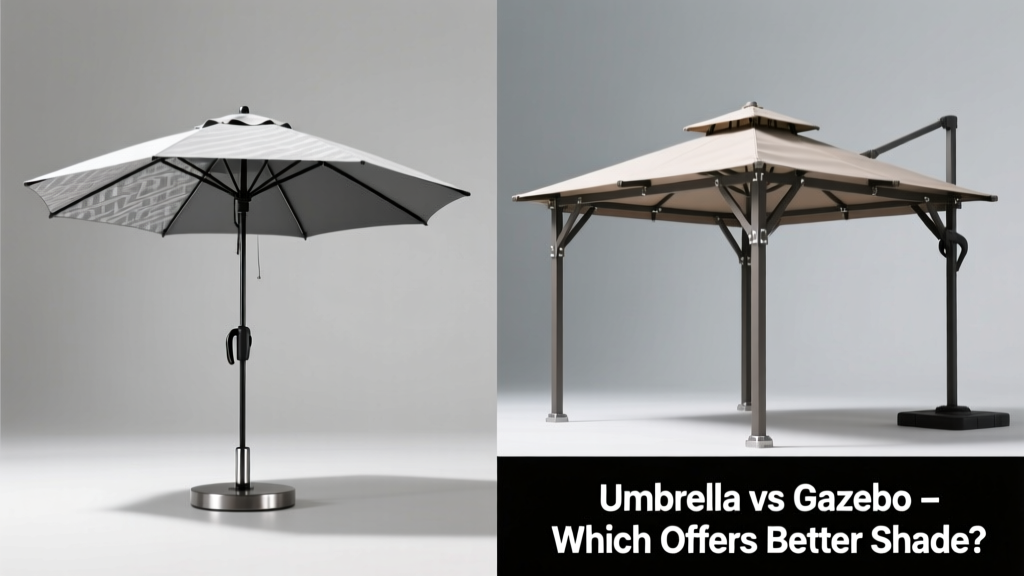
You’re standing in your backyard, squinting at the sun, debating whether to drop $90 on a cantilever umbrella or $1,200 on a hardtop gazebo. Both promise shade — but they solve different problems, serve different spaces, and wear out in entirely different ways.
Quick Verdict
An umbrella wins for flexibility, lower cost, and small patios; a gazebo excels for all-day coverage, weather resistance, and long-term value on larger decks or yards. According to the American Society of Landscape Architects’ 2022 Outdoor Living Survey, 68% of homeowners with under 300 sq ft of outdoor space chose umbrellas — while 79% of those with dedicated entertainment zones opted for permanent or semi-permanent structures like gazebos.
Side-by-Side Comparison
| Feature | Umbrella | Gazebo |
|---|---|---|
| Typical Cost (installed) | $45–$350 | $800–$4,500+ |
| Coverage Area | 6–12 ft diameter (up to 113 sq ft) | 8×8 ft to 12×16 ft (64–192 sq ft) |
| Setup Time | 5–15 minutes | 4–16 hours (DIY) or 1–3 days (pro) |
| Wind Resistance | Safe up to 15–20 mph (with base) | Rated for 50–70 mph winds (hardtop models) |
| Lifespan (avg.) | 2–5 years (fabric & frame) | 10–25 years (aluminum/cedar) |
| Permit Required? | No | Often yes (if >120 sq ft or attached) |
Deep Dive on Umbrellas
Umbrellas are the Swiss Army knives of shade: lightweight, adjustable, and instantly deployable. Most freestanding models use a weighted base (30–100 lbs) or in-ground sleeve, and tilt/swivel mechanisms let you chase the sun across the afternoon.
Pros
- Under $200 gets you a UV-resistant polyester canopy with aluminum frame and crank lift
- Fits tight spaces — ideal for balconies, bistro sets, or narrow side yards
- Easy to store off-season or reposition for different seating groups
- No HOA approval needed in 95% of U.S. communities (per 2023 Community Association Institute report)
Cons
- Fabric fades noticeably after 12–18 months of full-sun exposure
- Must be lowered during wind gusts over 20 mph — not usable during most summer thunderstorms
- Base stability drops sharply on pavers or grass without anchoring kits
Best for: Apartment dwellers, renters, small patios (<200 sq ft), or anyone needing temporary, movable shade for dining or lounging.
Deep Dive on Gazebos
Gazebos aren’t just shade — they’re micro-structures. Modern hardtop versions include powder-coated steel frames, polycarbonate roofs that diffuse light without glare, and optional side curtains or mosquito netting. Soft-top models (canvas or vinyl) cost less but require seasonal takedown in snow-prone zones.
Pros
- Provides full overhead + partial sidewall protection from sun, light rain, and insects
- Can double as an outdoor living room — supports ceiling fans, lighting, and even HVAC add-ons
- Increases home resale value: Remodeling Magazine’s 2023 Cost vs. Value Report notes a 64% average ROI on detached backyard structures
Cons
- Most local building departments require permits for anything over 120 sq ft or taller than 10 ft
- Assembly is labor-intensive — even “easy” kits involve 200+ parts and 8+ hours
- Soft-top models degrade faster: UV exposure reduces canvas lifespan to 3–5 years (per Fabric Structures Association, 2022)
Best for: Homeowners with stable yards, multi-person households, or those seeking year-round usability — especially in regions with high UV index (like Arizona or Florida).
When to Choose Umbrella vs Gazebo
Choose an umbrella if you host occasional dinners, rent your home, or have limited storage. Choose a gazebo if you entertain weekly, live in a high-sun climate, or want to extend outdoor use into spring/fall mornings and evenings.
According to landscape architect Maria Chen, who designed over 120 residential outdoor spaces in California:
"I recommend umbrellas for clients who move every 2–3 years — they’re the only shade solution that truly travels with you. But once someone plants a vegetable garden or builds a fire pit, it’s time to think structure — not shelter."
Alternatives to Consider
Neither option fits every need. Here are three realistic middle-ground choices:
- Pergolas: Fixed overhead beams (no solid roof), great for climbing plants and ambient shade — $2,500–$8,000 installed
- Shade sails: Tensioned fabric triangles anchored to walls or posts — highly customizable, low-profile, and wind-tolerant ($300–$1,800)
- Pop-up canopies: Portable, commercial-grade frames used for tailgating or markets — durable but not designed for daily residential use
How much wind can a patio umbrella handle?
Most standard umbrellas collapse or tip at sustained winds above 15 mph. Heavy-duty models with reinforced ribs and 100-lb bases may hold up to 25 mph — but the U.S. National Weather Service advises lowering all umbrellas when gusts exceed 20 mph to prevent property damage.
Do gazebos need a foundation?
Yes — but type varies. Gravel pads work for lightweight soft-top units. Hardtop gazebos require either concrete footings (for frost-line compliance) or engineered deck-mount brackets. Skipping proper anchoring voids most warranties and risks tipping in high winds.
Can I install a gazebo on a deck?
You can — but only if the deck framing meets local load requirements (typically 40 psf live load + 10 psf dead load). Most older decks weren’t built for that. A structural engineer’s sign-off is often required before permitting, especially in coastal or seismic zones.
Are umbrellas safe around pools?
Only if properly weighted and positioned away from the pool edge. The CPSC reports 127 umbrella-related injuries near pools between 2019–2022 — mostly from tipping onto swimmers. Use a 75–100 lb base and avoid cantilever styles directly over water.
What’s the best umbrella fabric for UV protection?
Solution-dyed acrylic (e.g., Sunbrella® or Outdura®) offers UPF 50+ and resists fading for 5+ years. Polyester with UV inhibitors is cheaper but typically degrades to UPF 15–30 after 18 months of full exposure.
If your yard has one clear priority — mobility, budget, or permanence — the choice simplifies fast. But if you’re weighing long weekends versus daily use, or renting versus owning, the right answer isn’t ‘better.’ It’s ‘right for this season of your life.’