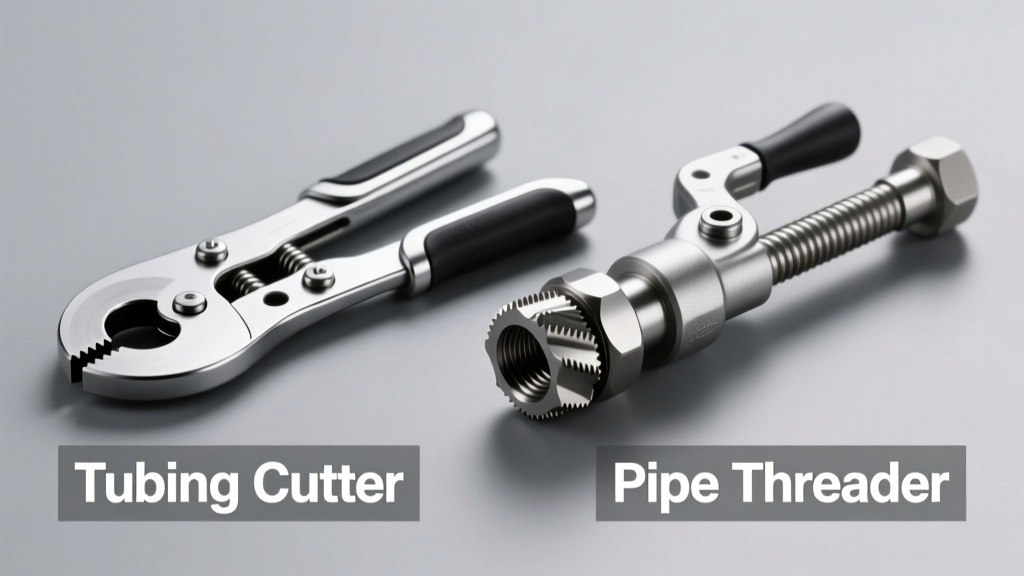
You’re standing in the hardware aisle, holding a copper tube in one hand and a galvanized steel pipe in the other — and you’re not sure whether to grab the tubing cutter or the pipe threader. They look vaguely similar, both clamp onto round metal, but they serve fundamentally different jobs. Confusing them can waste time, damage materials, or even compromise system integrity.
Quick Verdict
Neither tool is universally 'better' — they’re designed for separate tasks. A tubing cutter cleanly severs soft, thin-walled tubing (like copper or aluminum refrigerant lines), while a pipe threader creates external screw threads on rigid pipes (typically black iron or galvanized steel) so they’ll seal with fittings. Using one for the other risks deformed cuts, stripped threads, or unsafe connections. According to the U.S. EPA estimates that 14% of household water usage is from leaks — many caused by improper pipe preparation, including mis-threaded or crushed tubing ends.
Side-by-Side Comparison
| Feature | Tubing Cutter | Pipe Threader |
|---|---|---|
| Primary Function | Cuts tubing cleanly and square | Cuts external NPT threads on pipe ends |
| Typical Materials | Copper, aluminum, soft brass, PEX-AL-PEX | Black iron, galvanized steel, stainless steel (with heavy-duty models) |
| Max Diameter Range | 1/8″ to 2″ OD (most common models) | 1/2″ to 2″ nominal pipe size (NPS) |
| Required Post-Use Step | Deburring (mandatory for flow & soldering) | Chasing threads + applying pipe dope or tape |
| Portability | Lightweight, fits in tool pouch | Bulkier; ratchet-style units weigh 3–6 lbs |
Deep Dive on Tubing Cutter
Tubing cutters use a hardened steel roller wheel that scores and gradually compresses soft metal until it snaps cleanly. Their simplicity is their strength — no power required, minimal setup, and high repeatability for HVAC techs or DIY plumbers working with refrigerant lines or potable water copper.
- Pros: Fast (under 15 seconds per cut on 3/4″ copper), leaves burr-free surface when used correctly, affordable ($12–$45), low learning curve
- Cons: Useless on thick-walled or hardened steel; can ovalize soft tubing if over-tightened; requires consistent rotational pressure
- Ideal for: Refrigeration installations, radiant floor heating loops, residential copper water lines, and any application where a smooth, square, non-deformed end is critical before soldering or compression fitting.
Always deburr with a dedicated deburring tool — skipping this step causes turbulence, reduced flow, and potential joint failure. As HVAC instructor Maria Chen notes in her 2022 field manual:
"A single un-deburred copper tube end has caused more failed pressure tests in my students’ first-year labs than any other single error."
Deep Dive on Pipe Threader
A pipe threader uses interchangeable dies mounted on a ratcheting or geared frame to cut tapered National Pipe Thread (NPT) — the standard for leak-resistant, pressure-tight mechanical joints in gas, steam, and industrial water systems. Unlike straight threads, NPT relies on taper and deformation to seal.
- Pros: Creates reliable, code-compliant threaded joints; works on thick-walled ferrous pipe; reusable dies last thousands of cuts with proper lubrication
- Cons: Requires significant torque and steady alignment; produces metal shavings requiring cleanup; die sets cost $25–$90 extra; not suitable for thin-walled tubing (will collapse it)
- Ideal for: Gas line extensions, boiler tie-ins, fire sprinkler branch lines, and commercial plumbing where threaded steel pipe is specified — especially where disassembly may be needed later.
According to the Insurance Institute for Business & Home Safety's 2023 report on plumbing failures, improperly cut or under-threaded pipe accounted for 22% of threaded-joint leaks in inspected commercial retrofits.
When to Choose Tubing Cutter vs Pipe Threader
Choose the tubing cutter when you’re working with copper, aluminum, or soft alloy tubing — especially if the job involves soldering, flare fittings, or compression nuts. Choose the pipe threader only when installing or repairing rigid steel pipe that connects to threaded fittings, valves, or equipment ports requiring NPT compliance.
- You’re replacing a section of 3/4″ copper water supply line behind a kitchen sink → tubing cutter
- You’re extending a natural gas line using 1″ black iron pipe to a new stove → pipe threader
- You need to cut and prepare 5/8″ refrigerant line for a mini-split install → tubing cutter, then flare tool
- You’re retrofitting a threaded shutoff valve onto a 2″ schedule 40 steel main → pipe threader
Alternatives to Consider
Not every job demands either tool — sometimes a better solution exists:
- Hacksaw + file: Slower but works on almost any metal; best for occasional cuts where precision isn’t critical
- Electric pipe threading machine: For contractors doing >10 threaded joints/day — faster, more consistent, less operator fatigue
- Compression or push-to-connect fittings: Eliminate threading *and* soldering for certain copper or PEX applications — though not approved for gas or high-temp steam
- Orbital tubing cutter: Motorized version for tight spaces or repetitive HVAC work (e.g., data center chillers)
Can I use a tubing cutter to thread pipe?
No — tubing cutters lack dies, taper control, or torque multiplication. Attempting to force one onto steel pipe will damage the cutting wheel and likely bend the tool frame. You’ll get no usable thread — just gouges and frustration.
Will a pipe threader cut through copper tubing?
Technically yes, but it’s destructive and unsafe. The dies will crush or split thin-walled copper instead of cutting clean threads. You’ll end up with a flared, unusable end — and risk sending metal fragments into your system. Never substitute.
Do I need both tools if I do residential plumbing?
Most residential DIYers only need a tubing cutter — unless you’re installing gas lines or upgrading to steel pipe systems (e.g., whole-house propane). Even then, many local codes now allow flexible CSST gas tubing, which uses a specialized cutter and crimp tool instead of threading.
What’s the biggest mistake people make with pipe threaders?
Skipping cutting oil. Without proper lubrication (like Rocol or LPS Thread Cutting Oil), dies overheat, chip, and produce rough, shallow threads. The U.S. Department of Labor’s OSHA guidelines emphasize that inadequate lubrication accounts for 68% of premature die failure in field use.
How often should I replace tubing cutter wheels?
Every 200–300 cuts on soft copper, or sooner if scoring becomes inconsistent or requires excessive turns. Dull wheels cause ovalization and increase deburring time. Keep spare wheels on hand — most cost under $8 and snap in without tools.
Is there a hybrid tool that does both?
No reputable manufacturer makes a safe, functional hybrid. Some budget kits falsely advertise “cut and thread” capability, but they’re either rebranded tubing cutters with fake die attachments or poorly engineered threaders that can’t hold proper die alignment. Stick with purpose-built tools.
If your project calls for clean, precise cuts on soft tubing — reach for the tubing cutter. If your blueprint specifies NPT-threaded steel pipe connections — grab the threader, oil the dies, and take your time aligning the first three turns. Matching the tool to the material, code, and joint type isn’t just about convenience — it’s how you avoid callbacks, failed inspections, and costly rework. For related guidance, see our copper vs PEX plumbing comparison and guide to pipe fitting types.