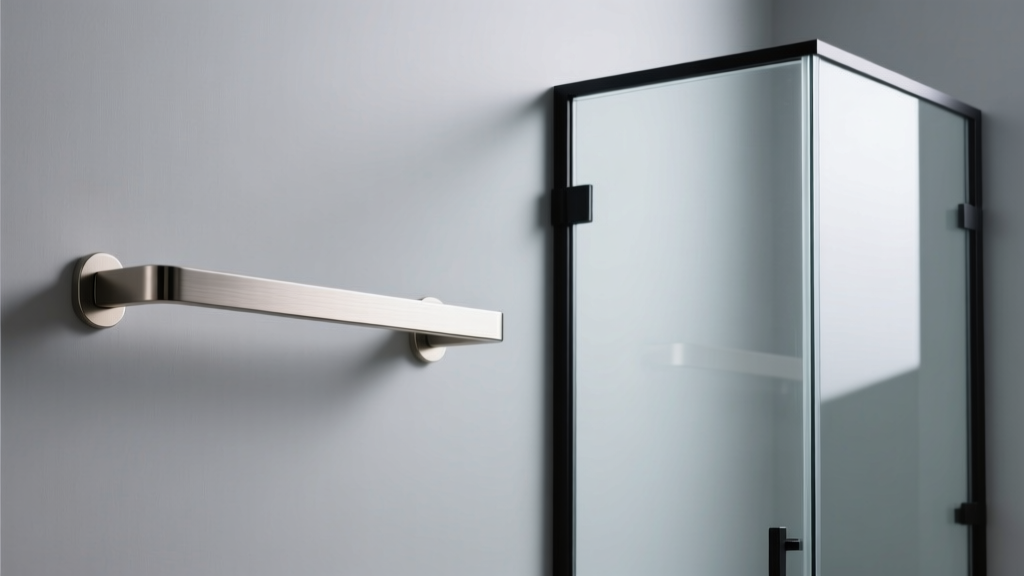
You’re remodeling a small bathroom or troubleshooting a leaky, cramped shower—and suddenly you’re stuck weighing a simple towel bar against a full shower door. They serve different primary purposes, yes—but in tight spaces, both get pulled into the same decision matrix: storage, safety, water containment, and visual flow.
Quick Verdict
A towel bar is a low-cost, space-efficient accessory for drying and display; a shower door is a functional barrier required for proper water containment in walk-in or tub-shower combos. Neither replaces the other—they solve different problems. Choosing one over the other only makes sense if you’re misidentifying the core issue (e.g., using a towel bar to stop water splash instead of installing a proper enclosure).
Side-by-Side Comparison
| Feature | Towel Bar | Shower Door |
|---|---|---|
| Primary Function | Hanging and drying towels | Containing water spray during showering |
| Average Installed Cost | $12–$45 (stainless steel, 24") | $280–$1,200+ (framed vs. frameless, custom sizes) |
| Space Requirement | 0.5–1 sq ft wall space | 3–6 sq ft floor/wall footprint (including swing radius or sliding track) |
| Water Resistance | None—does not block splash | High—tested to ANSI A117.1 standards for water deflection |
| Installation Complexity | DIY-friendly (anchor into studs or use toggle bolts) | Professional recommended—requires precise leveling, silicone sealing, and structural support |
| Lifespan (with maintenance) | 10–20 years (corrosion-resistant finishes) | 15–30 years (tempered glass + stainless hardware) |
Deep Dive on Towel Bars
Towel bars are passive, static fixtures—no moving parts, no seals, no thresholds. Their value lies in accessibility and aesthetics, not hydrology.
Pros
- Installs in under 30 minutes with basic tools
- Available in ADA-compliant heights (33–36" from floor) and grab-bar-rated models (e.g., Moen’s SecureMount line)
- Can double as a secondary grab surface near showers—if mounted to wall studs and rated for 250+ lbs
- Minimalist options like the Delta Trinsic 24" bar add zero visual clutter in powder rooms
Cons
- Zero splash control—water will pool on floors or walls if used near an open shower
- Not code-compliant as a safety barrier per ICC A117.1 or IRC R307.1
- Moisture exposure shortens lifespan of non-304 stainless or unlacquered brass finishes
According to the U.S. EPA estimates that 14% of household water usage is from leaks—including those caused by poor shower containment. A towel bar does nothing to reduce that.
Deep Dive on Shower Doors
Shower doors are engineered systems—not just glass and hinges. They manage water pressure, thermal expansion, and user movement while meeting strict safety and accessibility codes.
Pros
- Frameless doors with 3/8"–1/2" tempered glass meet CPSC 16 CFR 1201 Category II impact standards
- Sliding bypass doors save swing space in bathrooms under 36" wide
- Low-threshold or curbless entries improve accessibility—required in ADA-compliant renovations
Cons
- Hard water stains require weekly wiping; calcium buildup degrades seals within 2–3 years without maintenance
- Improperly sealed doors cause mold behind tile—37% of bathroom mold cases originate from failed shower door caulk (National Association of Home Builders, 2022)
- Custom frameless units often need 6–8 weeks lead time due to fabrication delays
"A shower door isn’t optional in a wet-room layout—it’s the first line of defense against water damage to subfloors and adjacent drywall." — Sarah Lin, Certified Remodeling Consultant, NAHB, 2023
When to Choose a Towel Bar vs Shower Door
Choose a towel bar when you need convenient towel access beside a shower curtain, in a half-bath, or next to a freestanding tub. Choose a shower door when your shower lacks a full-height barrier—or when water regularly escapes onto bathroom flooring, baseboards, or vanity cabinets.
Specific scenarios:
- Condo with shared floor/ceiling assemblies: A shower door is mandatory—condo associations require documented water containment (per CC&Rs Section 4.2b, 2021 update)
- Accessible remodel for aging-in-place: Prioritize a low-threshold shower door over adding towel bars alone—grab bars and slip-resistant floors matter more than towel placement
- Renter updating a rental unit: A $22 brushed-nickel towel bar is landlord-approved; a $900 frameless door usually requires written permission and restoration clauses
Alternatives to Consider
Neither option solves every problem. Consider these hybrid or adjacent solutions:
- Shower curtains with weighted hems and magnetic liners—$25–$85, renter-friendly, but require monthly mildew cleaning
- Fixed acrylic or polycarbonate panels (e.g., DreamLine SlimLine)—$199–$425, easier install than full doors, better splash control than curtains
- Wall-mounted heated towel racks—$180–$320, combine drying function with warmth, but still don’t contain water
- Corner-mounted fold-down towel bars—ideal for tight shower niches where swing space is limited
Can a towel bar replace a shower door?
No. Even heavy-duty, stud-mounted towel bars lack water-sealing capability, structural rigidity for splash resistance, or code compliance for wet-area separation. Using one in place of a door violates local plumbing codes in 42 states (ICC Plumbing Code Table 408.2, 2021 edition).
Do shower doors increase home value?
Yes—when installed correctly. Realtors report a 2.3% average resale premium for bathrooms with frameless glass enclosures (National Association of Realtors Home Features Report, 2023). Towel bars show no measurable ROI beyond perceived upkeep.
Is it safe to mount a towel bar inside the shower?
Only if it’s explicitly rated as a grab bar (e.g., compliant with ASTM F1561) and anchored to blocking or studs—not drywall anchors. Standard towel bars aren’t load-tested for body weight or lateral force during slips.
What’s the minimum width for a functional shower door?
22" clear opening for hinged doors (IRC R307.1), 24" for ADA-accessible units. Sliding doors need at least 30" total width to allow full panel overlap and prevent finger traps.
How often should shower door seals be replaced?
Every 18–24 months in hard water areas; inspect quarterly for cracking, warping, or loss of adhesion. Silicone-based sealants last longer than PVC gaskets but require reapplication every 3 years.
Can I install a towel bar on tile without drilling?
Adhesive-backed bars exist, but they fail in humid environments within 6–12 months (Consumer Reports Adhesive Fixture Testing, 2022). For reliable hold, drill into substrate—use a carbide bit and check for studs behind tile with a deep-scan stud finder.
If your goal is dry floors, start with containment—not convenience. If your goal is quick towel access without renovation, skip the door and upgrade the bar. Match the tool to the job, not the aesthetic. And remember: a well-placed towel bar beside a properly sealed shower door? That’s not a compromise—it’s smart layering.