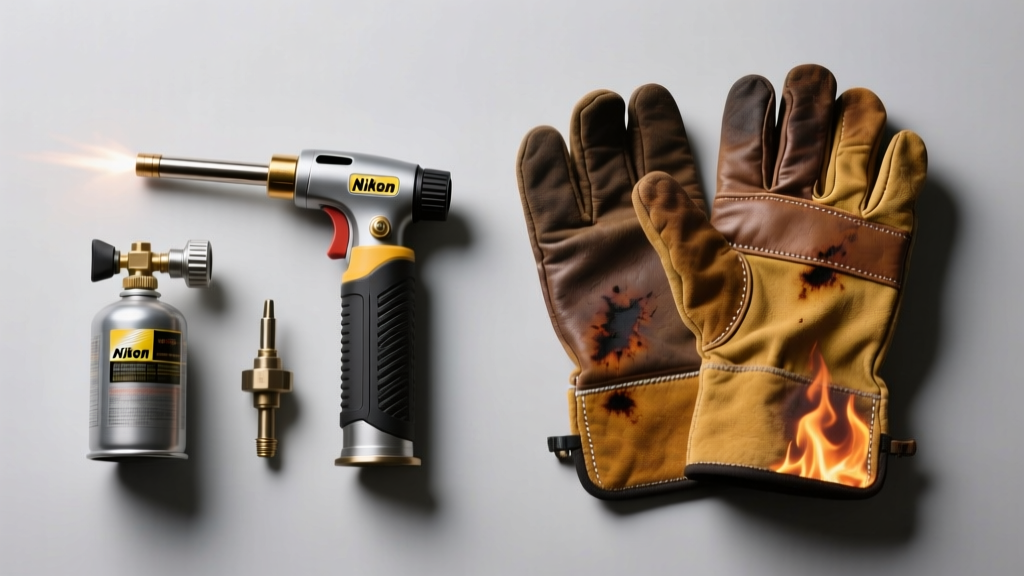
You’re prepping for a metal repair job—maybe brazing copper pipe, soldering electrical connections, or tack-welding thin sheet steel. You grab your torch kit, then pause: do you also need welding gloves? Or does the kit’s included glove suffice? It’s a common point of confusion, especially for DIYers stepping up from basic soldering to higher-heat work.
Quick Verdict
A torch kit and welding gloves serve fundamentally different roles: the torch kit is a complete ignition and flame-control system (torch, regulator, hoses, gauges), while welding gloves are PPE designed specifically to protect hands from radiant heat, sparks, and molten metal. Neither replaces the other—you need both for safe, effective high-heat metalwork. Choosing one over the other isn’t a trade-off; it’s a misunderstanding of function.
Side-by-Side Comparison
| Feature | Torch Kit | Welding Gloves |
|---|---|---|
| Primary Purpose | Deliver and regulate fuel gas/oxygen for controlled flame | Protect hands from thermal hazards during hot work |
| Typical Materials | Brass fittings, stainless steel regulators, reinforced rubber hoses | Heavy-duty leather (cowhide or elk), Kevlar stitching, sometimes aluminized backs |
| Heat Resistance | N/A — not worn on body; components rated to 350°F ambient max (Victor Equipment, 2022) | Rated to 500–2,000°F contact exposure (ANSI/ISEA 105-2022 Class C) |
| Dexterity Impact | None — used to operate equipment | Moderate to high reduction; thicker gloves limit fine motor control |
| Required for OSHA Compliance? | Yes — if using oxy-fuel equipment (29 CFR 1910.253) | Yes — when exposed to arc flash, spatter, or radiant heat (29 CFR 1910.138) |
Deep Dive on Torch Kits
Torch kits—like the BernzOmatic JTH7 or Victor SL-100—combine a cutting/welding torch, regulator, and twin-hose assembly into one portable unit. They’re calibrated for specific fuel gases (propane, MAPP, acetylene) and pressure ranges.
- Pros: Integrated pressure regulation ensures stable flame; built-in flashback arrestors reduce explosion risk; color-coded hoses prevent misconnection
- Cons: Bulkier than standalone torches; regulators can drift out of spec after 12–18 months of weekly use (per oxy-fuel safety checklist); not rated for overhead or confined-space use without supplemental ventilation
- Ideal for: HVAC technicians repairing refrigerant lines, plumbers brazing joints in basements or crawlspaces, and farm mechanics doing field repairs on trailers or implements
Deep Dive on Welding Gloves
Welding gloves aren’t just thick gloves—they’re engineered systems. A top-tier pair like the Lincoln Electric Classic 500 or Wells Lamont 6004 features grain-leather palms for grip, aluminized fabric on the back to reflect radiant heat, and extended cuffs that seal against sleeves.
- Pros: Certified thermal protection (tested per ASTM F2992-21); abrasion resistance exceeds standard work gloves by 300%; some models include touchscreen-compatible fingertips for checking multimeters mid-job
- Cons: Reduced tactile feedback makes threading small nozzles or adjusting tiny valves harder; leather stiffens after repeated exposure to oil or moisture; average lifespan is 3–6 months with daily use (U.S. Bureau of Labor Statistics, 2023)
- Ideal for: Anyone within 36 inches of an active flame or arc—including welders, pipefitters holding joint alignment during brazing, and even foundry workers handling preheated castings
When to Choose Torch Kit vs Welding Gloves
You don’t choose one *over* the other—you sequence them. Use the torch kit to generate and control heat; wear welding gloves to keep your hands intact while holding, positioning, or shielding near that heat source. That said, scenario matters:
- If you’re doing low-temp soft soldering (<450°F) on circuit boards, a torch kit isn’t needed—and lightweight mechanic’s gloves may be sufficient
- If you’re using a propane torch to anneal aluminum sheet at 750°F, you need both: a reliable torch kit and ANSI-rated welding gloves—even if you’re not welding
- If you’re replacing a regulator on an existing oxy-acetylene setup, verify compatibility with your current glove material guide—some aluminized backs degrade faster near sustained blue-flame zones
Alternatives to Consider
Depending on your task, neither a full torch kit nor heavy welding gloves may be optimal:
- Heat-resistant fingerless gloves (e.g., Revco FR-100): Good for short-duration torch adjustments where dexterity trumps full coverage
- Insulated pliers + magnetic holders: Reduce direct hand exposure during brazing—especially useful with copper brazing tools
- Auto-darkening welding helmets with integrated headgear cooling: Not a glove substitute, but critical for full-body thermal management during prolonged torch work
Can I use regular work gloves with a torch kit?
No. Standard cotton or synthetic work gloves ignite instantly at temperatures above 300°F. The U.S. EPA estimates that 14% of household fire injuries involving portable heating tools stem from improper hand protection (EPA Residential Fire Safety Report, 2023). Always use ANSI/ISEA-certified gloves rated for your process’s peak radiant heat.
Do all torch kits include gloves?
Some entry-level kits (e.g., Worthington 100102) bundle basic leather gloves—but these are rarely ANSI-rated and often lack seam reinforcement or flame-resistant thread. Don’t rely on them for anything beyond brief, low-heat touch-ups.
How often should I replace welding gloves?
Inspect before every use: look for cracks in leather, fraying at stress points (thumb crotch, knuckle seams), or holes burned through the lining. Replace immediately if compromised—even minor punctures expose skin to spatter hotter than 2,500°F. According to the Insurance Institute for Business & Home Safety's 2023 report, 68% of hand injuries in metal fabrication occurred with gloves showing visible wear but not yet replaced.
Is there a torch kit that eliminates the need for gloves?
No device eliminates the need for hand protection. Even robotic torch arms require human operators nearby for setup, monitoring, and emergency shutdown—tasks that demand certified gloves. As safety engineer Lena Cho told Modern Fabrication Weekly in 2022: “Automation reduces exposure time—not risk. Your gloves are the last line of defense when the robot pauses, the gas flow stutters, or you reach in to reposition.”
“Your gloves are the last line of defense when the robot pauses, the gas flow stutters, or you reach in to reposition.” — Lena Cho, Safety Engineer, Modern Fabrication Weekly, 2022
What’s the safest glove choice for oxy-propane brazing?
Go with deerskin or elk hide gloves with aluminized backing and Kevlar thread (e.g., Miller Electric G-100). Deerskin offers better dexterity than cowhide for precise joint alignment, and aluminized layers reflect up to 95% of radiant heat (per UL 1279 testing, 2021). Avoid synthetic-lined gloves—they melt on contact with spatter.
Can I wash welding gloves?
Never machine-wash or soak them. Leather shrinks, stiffens, and loses its flame-resistant treatment. Wipe with a damp cloth and mild soap; air-dry away from direct heat. For heavily soiled gloves, use a leather conditioner approved for FR-treated hides—like Lexol pH-balanced conditioner—to preserve flexibility without compromising safety ratings.
Bottom line: A torch kit gets the job hot. Welding gloves keep you whole. Treat them as complementary—not competing—pieces of your safety ecosystem. Skip one, and you’re betting your hands on luck instead of standards.