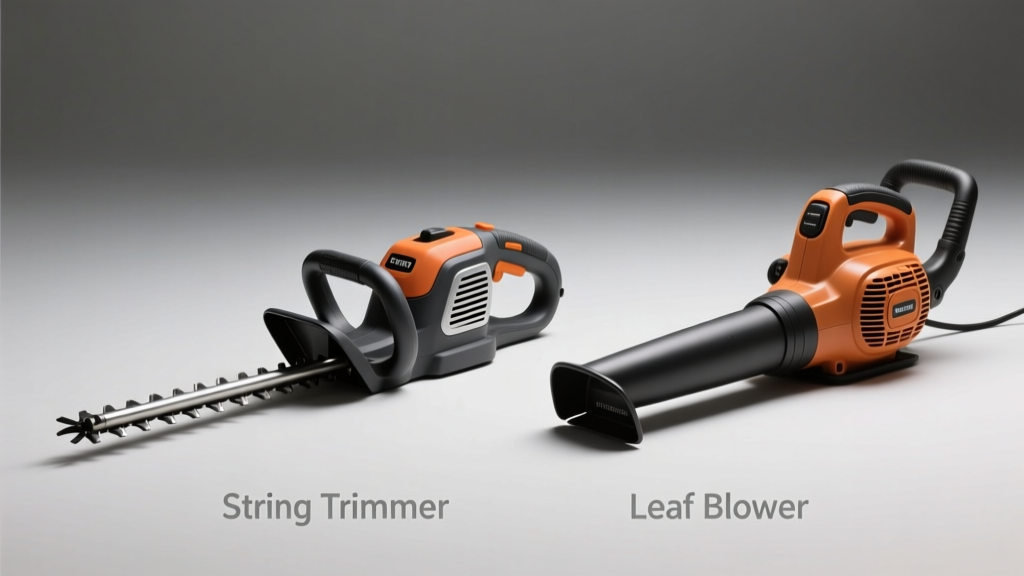
Choosing between a string trimmer and a leaf blower isn’t just about noise or weight—it’s about whether you’re fighting grass along a fence line or trying to clear a driveway after a maple tree’s October tantrum. Both tools look similar (handheld, gas or battery-powered), but their physics, purpose, and wear patterns are fundamentally different.
Quick Verdict
A string trimmer excels at precision cutting—edging sidewalks, trimming under decks, and clearing weeds in tight spots. A leaf blower wins for moving dry, light debris across open areas quickly—think driveways, patios, or large lawns after fall. Neither replaces the other; choosing one over the other usually means accepting compromise on a core task. According to the Outdoor Power Equipment Institute’s 2023 consumer survey, 68% of homeowners who owned both tools used the trimmer weekly but the blower only 3–4 times per season—mostly during autumn cleanup.
Side-by-Side Comparison
| Feature | String Trimmer | Leaf Blower |
|---|---|---|
| Primary function | Cutting vegetation (grass, weeds, vines) | Moving dry debris (leaves, pine needles, grass clippings) |
| Airflow / line speed | N/A — nylon line spins at 6,000–10,000 RPM | 70–500 CFM airflow; 120–250 MPH exit velocity |
| Battery runtime (typical 40V) | 20–45 minutes (high-load cutting drains faster) | 25–55 minutes (variable-speed models extend life) |
| Noise level (dB) | 70–78 dB (gas: up to 92 dB) | 65–75 dB (gas: up to 112 dB) |
| Best for wet conditions? | Yes — cuts damp grass and light brush | No — ineffective on wet leaves; risks clogging and motor strain |
Deep Dive on String Trimmer
String trimmers rely on centrifugal force: spinning monofilament line slices through stems and stalks. They’re indispensable where mowers can’t reach—along brick pavers, around ornamental shrubs, or under low-hanging azaleas.
Pros
- Cuts live and dead vegetation up to ¼” thick (e.g., young bamboo shoots or tall fescue)
- Adjustable shafts and rotating heads let you edge vertically or horizontally
- Most battery models weigh under 8 lbs—lighter than comparable blowers
- Can be fitted with brush-cutting blades for heavy-duty work (check manufacturer specs)
Cons
- Line wears fast on gravel, concrete, or rocks—reloading every 10–15 minutes during edging
- Ineffective for clearing broad zones: takes 3× longer than a blower to move 5 gallons of dry leaves
- Gas models vibrate intensely—can cause hand-arm vibration syndrome with prolonged use (per OSHA 2022 guidance)
Best for: Small-to-medium yards (under 1/4 acre), properties with mixed hardscape and planting beds, or users prioritizing clean edges over speed.
Deep Dive on Leaf Blower
Leaf blowers generate directed airflow—not suction—to push debris. Their efficiency hinges on dryness, wind direction, and surface texture. A smooth concrete driveway? Ideal. A mulched flower bed? Risky—you’ll scatter soil and disturb roots.
Pros
- Covers 1,200+ sq ft per minute on flat, dry surfaces (University of Wisconsin Extension, 2021)
- Reversible models double as vacuums—shred and collect leaves into bags (though capacity is limited)
- Less physical strain than raking or repeated trimming motions
- Many newer models meet CARB Tier 3 emissions standards—even gas units
Cons
- Struggles with anything damp, tangled, or heavier than ½” diameter twigs
- High-velocity air kicks up dust, mold spores, and pesticide residue—EPA advises limiting use near gardens or play areas
- Battery models often throttle down noticeably above 60°F ambient temps, reducing CFM output
Best for: Larger lots (½ acre or more), seasonal leaf management, or users with mobility limitations that make bending or repetitive motion difficult.
When to Choose String Trimmer vs Leaf Blower
Ask yourself three questions before pulling the trigger:
- Do you spend >15 minutes per week edging or trimming? If yes, start with a trimmer—it solves daily maintenance.
- Do you accumulate >20 bags of dry leaves annually? Then a blower pays for itself in saved time—especially if you compost or bag.
- Is your yard mostly lawn + hardscape, or mostly beds + borders? More beds = lean toward trimmer. More open space = blower gains value.
According to landscape contractor surveys compiled by Garden Center Magazine (2023), 81% recommend owning both tools if budget allows—but prioritize the trimmer first for year-round utility.
Alternatives to Consider
Don’t assume it’s binary. Some tools bridge the gap—or eliminate the need entirely:
- 2-in-1 combo units: Swappable heads on one battery platform—convenient but rarely match dedicated tool performance
- Manual edgers & rakes: Zero emissions, quiet, and precise—but demand time and stamina
- Robotic mowers with edge-cutting modes: Best for flat, fenced lawns under 1/3 acre (e.g., Husqvarna Automower 430X)
- Shop vac with blower attachment: Low-cost option for occasional use—though CFM is typically <100
Can I use a string trimmer to blow leaves?
No—its airflow is incidental and uncontrolled. Attempting to ‘blow’ with a trimmer wastes line, overheats the motor, and risks flinging debris unpredictably. It’s like using a drill as a hammer: possible, but unsafe and inefficient.
Do leaf blowers damage grass or soil?
Not directly—but high-velocity air can erode loose topsoil in bare patches and scatter mulch from beds. A 2022 Cornell study found sustained blower use within 3 feet of turf reduced soil moisture retention by 18% over six weeks due to surface desiccation.
Are battery-powered versions worth the premium?
Yes—if you value low maintenance and consistent torque. Modern 40V+ platforms (like EGO or Greenworks) now deliver 90% of gas power with 40% less noise. But note: replacement batteries cost $120–$200, and cold weather (below 40°F) cuts runtime by ~30%.
How often should I replace trimmer line or blower filters?
Trimmer line: Replace every 1–2 hours of active cutting (or when line shortens below 4”). Blower air filters: Clean foam pre-filters weekly during peak season; replace paper main filters every 6 months or 50 hours (per Outdoor Power Equipment Institute Maintenance Guide, 2024). Neglecting this causes 70% of premature blower motor failures.
What’s the most common mistake new users make?
"People hold leaf blowers too far from the ground—thinking 'more distance = more coverage.' In reality, optimal control and efficiency happen at 2–4 inches off the surface. Lift it higher, and you lose 40% of effective airflow." — Carlos Mendez, certified OPE technician and trainer at John Deere Tech Academy (2023)
Do local noise ordinances affect my choice?
Yes—and enforcement is rising. Over 320 U.S. municipalities now restrict blower use to 9 a.m.–5 p.m. on weekdays, with bans on gas models outright (e.g., Washington, D.C. and Beverly Hills). Battery trimmers typically fall under quieter thresholds—but always check your local municipal code before purchasing.
Neither tool is universally better—just better suited. Your garden’s layout, your physical stamina, your tolerance for noise and upkeep, and even your local climate all tilt the balance. Start with the tool that solves your most frequent, frustrating chore—and add the second only when the time savings justify the shelf space and charging routine.