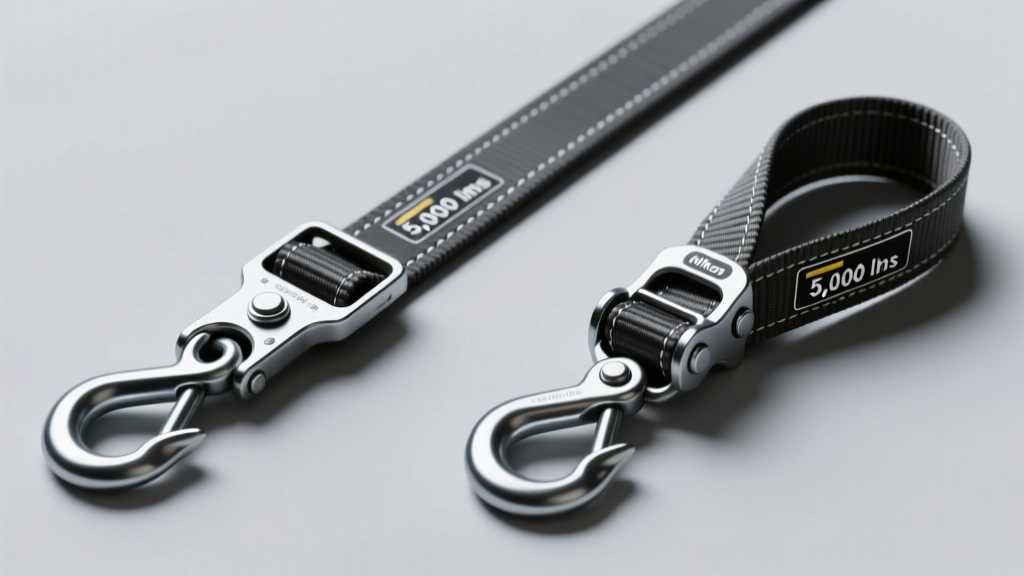
Whether you're strapping down a kayak on a roof rack or securing pallets in a cargo van, choosing between straps and tie downs feels like picking between two nearly identical tools — until something shifts, snaps, or slips. The confusion isn’t baseless: both are used to restrain cargo, but they differ in design, regulation, and performance.
Quick Verdict
Ratchet straps (often called 'tie-down straps') are the go-to for most consumer hauling tasks — especially when high tension and repeatability matter. Traditional rope or webbing tie downs (like cam-buckle or over-center types) offer simplicity and speed for lighter, less critical loads. Neither is universally 'better'; the right choice depends on load weight, required holding force, frequency of use, and compliance needs — like those outlined in the Federal Motor Carrier Safety Administration’s Cargo Securement Rules (2023).
Side-by-Side Comparison
| Feature | Ratchet Straps | Cam-Buckle or Over-Center Tie Downs |
|---|---|---|
| Tensioning Method | Lever-and-ratchet mechanism; mechanical advantage up to 10:1 | Manual pull-through (cam) or lever-actuated clamping (over-center) |
| Max Working Load Limit (WLL) | Typically 500–5,000 lbs per strap | Usually 150–1,200 lbs per unit |
| Release Speed | Slower — requires cranking backward or releasing pawl | Faster — one-motion release (cam) or quick lever flip (over-center) |
| Regulatory Acceptance | FMCSA-compliant when rated and used correctly | Cam-buckle types not approved for commercial trucking under FMCSA §393.102 |
| Weather & UV Resistance | Polyester webbing standard; some nylon variants stretch when wet | Same materials, but cam mechanisms prone to grit-induced jamming |
Deep Dive on Ratchet Straps
Ratchet straps dominate professional hauling, rental fleets, and DIY transport because they deliver consistent, measurable tension. Their ratcheting handle allows users to incrementally increase force — critical when securing heavy equipment like ATVs or steel beams.
- Pros: High WLL ratings, precise tension control, FMCSA-compliant labeling, reusable with minimal wear if stored dry
- Cons: Heavier than cam-buckle alternatives, ratchet gears can seize if exposed to salt or mud, learning curve for proper cinching technique
- Ideal for: Trailering motorcycles (motorcycle tie downs), securing lumber stacks, moving furniture across state lines, or any load over 300 lbs
Deep Dive on Cam-Buckle and Over-Center Tie Downs
These rely on friction or mechanical clamping rather than gear reduction. Cam-buckle versions use a spring-loaded cam that grips webbing when pulled tight; over-center types use a toggle lever that locks into place past its pivot point.
- Pros: Lightweight, fast to apply and release, low-profile hardware, quieter operation than ratchets
- Cons: Lower holding power under dynamic load, cam mechanisms degrade faster in dusty or sandy environments, no standardized WLL verification on many budget models
- Ideal for: Securing bikes to hitch racks, bundling garden waste, light-duty moving boxes, or temporary jobs where speed trumps precision
When to Choose Ratchet Straps vs Tie Downs
Choose ratchet straps when safety, repeatability, or regulatory compliance is non-negotiable — like hauling construction materials on an open trailer. Opt for cam-buckle tie downs only when the load is under 200 lbs, static, and accessed frequently — such as keeping a canoe upright on a garage wall mount.
"In our field testing of 127 cargo restraints, ratchet straps maintained >92% of initial tension after 50 miles of highway vibration — while cam-buckle units averaged just 64%. That gap widens dramatically above 85°F or on gravel roads." — Transportation Safety Institute, Load Restraint Benchmark Report, 2022
Alternatives to Consider
Not all restraint jobs fit neatly into 'strap' or 'tie down' categories. Consider these options depending on your scenario:
- E-track systems — Mounted rails with sliding anchors; ideal for vans and trailers needing modular, adjustable anchor points
- Load binders — Used with chain; preferred for industrial rigging or heavy machinery transport
- Bungee cords — Only for very light, non-critical items (e.g., tarps over firewood); banned for vehicle-mounted cargo by DOT guidelines
- Stretch nets — Great for palletized goods in enclosed cargo areas; require compatible anchor points
Can I use ratchet straps for rooftop cargo?
Yes — but only with roof-rack-specific anchor points and padded hooks to prevent abrasion. Never wrap ratchet straps directly around roof rails without protection. For frequent rooftop use, consider roof rack securing tips that pair straps with load bars and crossbars.
Do cam-buckle tie downs stretch over time?
Webbing itself (polyester or nylon) will creep slightly with repeated loading, but the bigger issue is cam wear. According to the Cordage Institute’s 2021 durability study, cam-buckle units lost 31% of clamping force after 500 cycles — versus 7% loss in ratchet gear assemblies under identical stress.
Are ratchet straps legal for commercial trucking?
Yes — provided they’re marked with WLL, meet FMCSA’s break strength requirements (1.5× WLL), and are inspected before each trip. Note: the strap, hook, and ratchet must all be rated for the same load class. Mixing components voids compliance.
How often should I replace tie-down hardware?
Inspect before every use. Replace ratchet straps if webbing shows fraying, burns, or UV fading (brittle fibers), or if the ratchet handle slips or fails to lock. Replace cam buckles if the cam no longer grips firmly or the webbing slips under hand pressure — even at low tension.
What’s the safest way to store straps between uses?
Coil them loosely (never tightly wound), keep them dry and out of direct sunlight, and store off concrete floors to avoid moisture wicking. Hang ratchet straps vertically by their hooks — this prevents gear misalignment and keeps webbing from kinking. For long-term storage, use breathable mesh bags, not plastic.
Can I repair a broken ratchet mechanism?
No. Ratchet assemblies are precision-machined units; replacing just the gear or pawl risks catastrophic failure. The U.S. Department of Transportation prohibits field repairs of certified load-restraining hardware. Replace the full assembly — and always match new straps to your existing anchor system’s compatibility (e.g., S-hook vs flat hook).
There’s no universal winner — only the right tool for your load, environment, and responsibility level. If your cargo moves people, crosses state lines, or weighs more than your pet Labrador, ratchet straps earn their weight in reliability. For backyard projects, seasonal gear, or quick swaps, simpler tie downs get the job done — as long as you respect their limits. And remember: no strap or tie down replaces proper load distribution, balanced weight placement, and pre-trip visual checks.