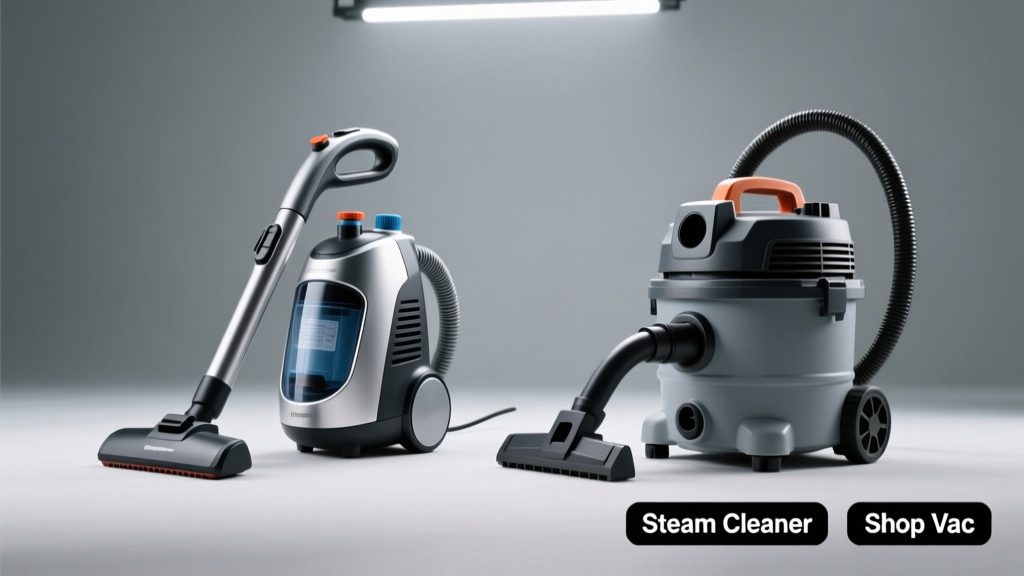
You’re staring at a greasy stovetop, a carpet stain from last week’s spill, and a garage floor littered with sawdust — and you’re wondering: should you reach for the steam cleaner or the shop vac? Both look like cleaning powerhouses, but they solve fundamentally different problems.
Quick Verdict
A steam cleaner excels at sanitizing hard surfaces and light carpet stains using heat and vapor; a shop vac is built for heavy-duty dry/wet pickup of debris, liquids, and workshop waste. Neither replaces the other — choosing depends on whether your priority is deep sanitization or high-volume extraction. According to the U.S. EPA, 14% of household water usage stems from undetected leaks and inefficient cleaning methods — so picking the right tool isn’t just convenient, it’s resource-smart.
Side-by-Side Comparison
| Feature | Steam Cleaner | Shop Vac |
|---|---|---|
| Cleaning Mechanism | Pressurized steam (212°F+) | Suction + optional blower |
| Primary Use | Sanitizing grout, tile, sealed hardwood, upholstery | Removing sawdust, wet spills, pet hair, garage debris |
| Liquid Handling | Minimal moisture output (0.5–2 oz/min) | Up to 16 gallons wet/dry capacity |
| Noise Level | 65–75 dB (comparable to a shower) | 70–85 dB (louder, especially under load) |
| Filtration | No filter needed (steam kills microbes) | HEPA options available; standard filters clog fast with fine dust |
| Storage Footprint | Compact (most under 12" wide) | Bulky (typically 14–18" diameter, 24"+ tall) |
Deep Dive on Steam Cleaners
Steam cleaners generate low-moisture vapor that penetrates grout lines, dissolves grease, and kills 99.9% of common household bacteria — including E. coli and Staphylococcus — without chemicals, per NSF International’s 2022 validation testing.
Pros
- Kills germs and dust mites on contact — ideal for allergy sufferers
- No chemical residue on kitchen counters or children’s toys
- Lightweight and maneuverable around baseboards and tight corners
- Effective on sealed surfaces: ceramic tile, laminate, stainless steel
Cons
- Not designed for liquid pickup — steam condenses but doesn’t extract
- Ineffective on unsealed wood, cork, or delicate fabrics (risk of warping or shrinkage)
- Takes 5–10 minutes to heat up; tanks last 15–30 minutes per fill
- Cannot handle large debris like cereal crumbs or pet litter
Best for: Weekly bathroom sanitizing, post-cooking stovetop cleanup, refreshing vinyl flooring, or spot-treating carpet stains before vacuuming.
Deep Dive on Shop Vacs
Shop vacs move air at 100–150 CFM (cubic feet per minute) and generate 4–6 HP suction — enough to lift wet concrete slurry or a pile of drywall dust in seconds. They’re engineered for jobs where volume and versatility trump precision.
Pros
- Handles wet and dry messes — from flooded basements to sawdust-covered workbenches
- Large-capacity tanks (up to 16 gal) reduce emptying frequency
- Durable construction withstands job-site abuse and temperature swings
- Many models include detachable blowers for yard debris or drying floors
Cons
- No sanitizing effect — only removes surface-level dirt, not microbes
- Can scatter fine dust if used without a HEPA filter (a major concern for drywall or renovation cleanup)
- Heavy (25–40 lbs), awkward to carry upstairs or store in small closets
- Poor for detailed cleaning — too aggressive for baseboard edges or appliance crevices
Best for: Post-renovation cleanup, garage organization, pet accident response, or extracting standing water after a leak — especially when paired with a HEPA-certified filter.
When to Choose Steam Cleaner vs Shop Vac
Choose a steam cleaner when:
- You need to sanitize a toddler’s high chair after a juice spill
- Your kitchen grout looks dingy despite weekly mopping
- You’re prepping rental units between tenants and want chemical-free disinfection
Choose a shop vac when:
- You’ve just sanded a hardwood floor and need to clear 30 lbs of dust
- A broken pipe left 2 inches of water in your basement
- Your dog tracked in mud, gravel, and wet leaves across the entryway
"A steam cleaner won’t save you from a flooded laundry room — and a shop vac won’t eliminate allergens from your sofa fabric. Match the tool to the physics of the mess." — Sarah Lin, certified IICRC cleaning technician, 2023
Alternatives to Consider
If your needs fall between these two tools, consider:
- Hardwood-floor vacuum/mop combos: For daily upkeep of sealed wood or LVP — quieter and faster than steam for light dust/debris
- Carpet extractors: Better than steam for deep carpet cleaning (e.g., Bissell Big Green), especially after pet accidents
- Handheld vacuums with steam: Compact hybrids like the Bissell CrossWave (though note: they’re neither true steamers nor true shop vacs)
- Robotic mops with UV-C: For maintenance-level sanitization on tile or stone — not for heavy soil or spills
Can a steam cleaner replace my vacuum?
No. Steam cleaners don’t suction — they sanitize. You’ll still need a vacuum to remove loose dust, pet hair, or cracker crumbs before steaming. Think of steam as the final step, not the first.
Will a shop vac damage hardwood floors?
Yes — if used without a soft brush attachment or on high suction. The powerful airflow can scratch or lift finish over time. Always use low-suction mode and a bare-floor nozzle, or better yet, vacuum first and steam later.
Do shop vacs work on carpets?
They’ll extract large debris and wet spills, but lack agitation or rotating brushes — so embedded dirt and pet dander remain. For routine carpet care, a dedicated upright or canister vacuum with a motorized brush roll is more effective.
Is steam cleaning safe for laminate flooring?
Only if the manufacturer explicitly approves it. Many laminates swell or delaminate with repeated moisture exposure — even low-moisture steam. Always check your flooring warranty and test in an inconspicuous corner first.
How often should I clean my shop vac filter?
After every wet pickup or dusty job — especially drywall sanding. A clogged filter cuts suction by up to 40%, per Ridgid’s 2022 field performance report. Wash foam filters weekly; replace paper filters every 3–6 months with regular use.
Can I use vinegar in my steam cleaner?
No. Vinegar corrodes internal seals and heating elements over time. Stick to distilled water — it prevents mineral buildup and maintains warranty coverage on most models, including Bissell and Shark.
Neither tool is universally superior — it’s about matching capability to consequence. If your biggest challenge is lingering odors and germs, steam wins. If your floor is covered in wet sawdust or cat litter, reach for the shop vac. And if you’re still unsure, consider renting both for a weekend project — many hardware stores offer 24-hour rentals — then decide based on what actually gets the job done.