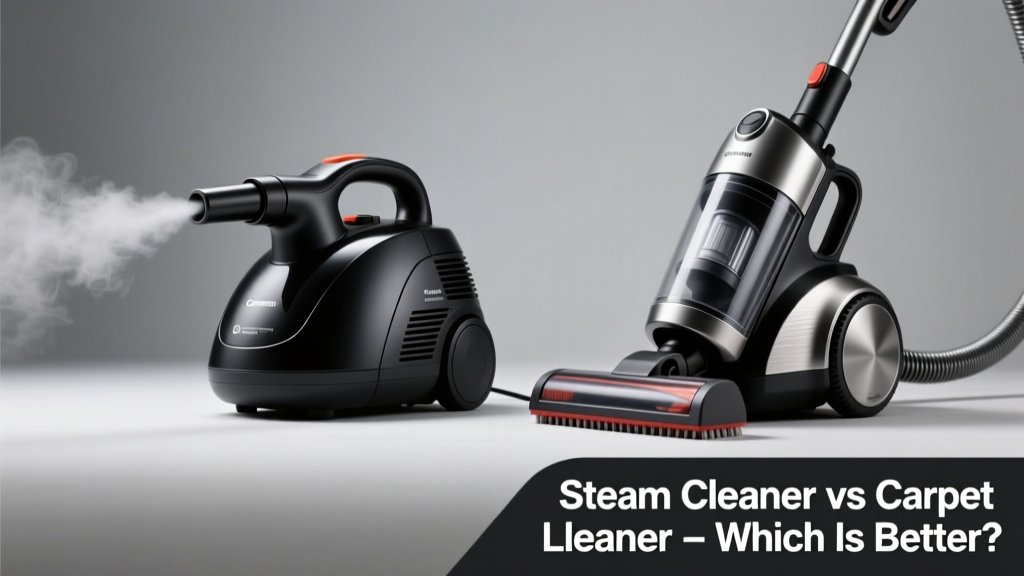
Choosing between a steam cleaner and a carpet cleaner feels like picking between a Swiss Army knife and a surgeon’s scalpel — both useful, but built for very different jobs. You’ve got stains on the rug, grime in the grout, or pet odors lingering in the living room, and you’re wondering: which machine actually delivers results without damaging surfaces or wasting time?
Quick Verdict
A steam cleaner excels at sanitizing hard floors, tile, grout, upholstery, and sealed surfaces using only water vapor — no chemicals, no residue. A carpet cleaner (often called an extraction cleaner) is purpose-built for deep-cleaning carpet fibers by injecting hot water + cleaning solution and extracting dirt and moisture. Neither is universally 'better'; the right choice depends on your primary surface type and cleaning goal. If you own mostly hard floors and want chemical-free disinfection, go steam. If you have wall-to-wall carpeting with embedded soil or pet accidents, a carpet cleaner is non-negotiable.
Side-by-Side Comparison
| Feature | Steam Cleaner | Carpet Cleaner |
|---|---|---|
| Primary cleaning method | Pressurized steam (100–300°F) | Hot water extraction (solution + suction) |
| Best for | Hard floors, grout, sealed wood, tile, vinyl, upholstery, kitchen appliances | Medium-to-high-pile carpets, area rugs, pet-stained fibers |
| Drying time | 5–15 minutes (surface-only moisture) | 4–12 hours (deep moisture removal required) |
| Chemical use | Optional (most models use plain water) | Required (detergent or solution needed for effective soil lift) |
| Sanitization claim | Yes — kills 99.9% of bacteria & dust mites per FDA-recognized protocols (IIBHS, 2022) | No — focuses on soil removal, not microbial kill |
| Average price range | $99–$399 | $149–$699 |
Deep Dive on Steam Cleaners
Steam cleaners heat tap water to produce low-moisture vapor that penetrates surface pores, loosening grease, soap scum, and organic debris. Because they rely on temperature—not detergents—they’re popular among allergy sufferers and households with kids or pets.
Pros
- Zero chemical dependency — safe for food prep areas and baby toys
- Fast dry times mean no slip hazards or mold risk from residual moisture
- Multi-surface versatility: works on windows, stovetops, shower doors, and car interiors
- According to the U.S. EPA, steam cleaning reduces airborne allergens by up to 85% when used consistently on hard surfaces (EPA Indoor Air Quality Guide, 2021)
Cons
- Not safe for unsealed wood, laminate, or delicate rugs — steam can warp or shrink materials
- Ineffective on deeply embedded carpet stains or heavy pet urine saturation
- Limited suction means it won’t extract ground-in grit — just lifts it to the surface
Deep Dive on Carpet Cleaners
Carpet cleaners function like mini industrial extractors: they spray heated cleaning solution into carpet pile, agitate with rotating brushes, then vacuum up the dirty water. This dual-action process removes soil particles trapped at the base of fibers — something steam alone cannot achieve.
Pros
- Proven efficacy on high-traffic carpet zones — the Carpet and Rug Institute rates top models at >90% soil removal (CRI Seal of Approval, 2023)
- Essential for odor neutralization in pet households; enzymatic solutions break down organic compounds
- Some models include heat recovery tech that dries carpets 25% faster than standard units
Cons
- Requires drying time — improper ventilation can encourage mildew growth beneath padding
- Higher upfront cost and recurring expense for cleaning formulas
- Bulky design limits storage and maneuverability in tight spaces or stairwells
When to Choose Steam Cleaner vs Carpet Cleaner
Opt for a steam cleaner if you maintain hardwood, luxury vinyl plank, ceramic tile, or sealed stone — especially in kitchens and bathrooms. It’s also ideal for spot-cleaning upholstery, removing candle wax, or refreshing car interiors. Choose a carpet cleaner if more than 30% of your home’s floor space is carpeted, you’ve had recent pet incidents, or your carpet hasn’t been professionally cleaned in over 12 months. The best steam cleaner for hard floors won’t replace the deep clean your Berber needs — and vice versa.
"Steam cleaning is surface-level sanitation — excellent for hygiene, but never a substitute for extraction when carpet fibers hold moisture and soil. I see too many clients try steam on wool rugs and end up with shrinkage and dye bleeding." — Maria Chen, IICRC-certified textile restoration technician (2023)
Alternatives to Consider
If your needs sit between categories, consider hybrid tools or complementary approaches:
- Upright vacuum with steam assist: Adds light sanitizing to daily vacuuming (e.g., Bissell CrossWave Pet Pro)
- Dry carpet cleaning systems: Use absorbent compounds that trap dirt — ideal for quick refreshes between deep cleans (dry carpet cleaning vs wet)
- Professional hot water extraction: For large homes or heavily soiled carpets, hiring certified pros every 12–18 months often outperforms DIY units long-term
Can I use a steam cleaner on carpet at all?
Only on low-pile, synthetic, and *completely dry* carpets — and only with a steam cleaner labeled “carpet-safe” and equipped with a low-moisture setting. Never use on wool, silk, or antique rugs. Over-steaming causes fiber distortion and backing delamination.
Do carpet cleaners damage carpet over time?
Not when used correctly. Excessive water retention — not the machine itself — causes wear. Always follow manufacturer dwell time guidelines and ensure full drying within 8 hours. The CRI recommends no more than 2–4 deep cleanings per year for residential carpet.
Is steam cleaning safe for laminate flooring?
Most modern laminate is rated for *light* steam use — but only with a handheld steamer on lowest setting and continuous motion. Prolonged contact or standing steam creates swelling at seams. Check your flooring warranty first; many brands void coverage after steam exposure.
How often should I deep-clean carpet?
The Carpet and Rug Institute advises every 6–12 months for homes with pets or children, and every 12–18 months for low-traffic spaces. High-heel traffic, smoking, or allergy concerns may shorten that window.
Can I make my own carpet cleaning solution?
You can — but with caveats. A mix of white vinegar, water, and a drop of dish soap works for light maintenance, but lacks the surfactants and pH buffers in commercial formulas. Homemade solutions risk residue buildup, which attracts new dirt. For deep cleaning, stick with CRI-approved solutions like Bissell Advanced Professional.
Are there cordless steam or carpet cleaners worth buying?
Cordless steam mops (e.g., Shark VM252) work well for small apartments and quick touch-ups, but lack sustained heat or tank capacity for whole-house jobs. Cordless carpet cleaners remain rare and underpowered — none meet CRI standards for soil removal. Stick with corded models for serious carpet work.
Ultimately, your floor plan and lifestyle dictate the better tool — not marketing claims. If your home is 70% hardwood with a few area rugs, a quality steam cleaner covers 90% of your needs. If carpet dominates your living, dining, and bedrooms, skip the steam-only route and invest in a capable extractor. And remember: the best cleaner is the one you’ll actually use consistently — so factor in weight, storage, and setup time just as much as specs.